If you’ve ever stood for hours loading or unloading wooden pallets—straining your back, fighting awkward heights, or juggling heavy loads that seem to shift the second you lift them—you know how grueling that work can get. As a lift table supplier who’s spent years talking to warehouse managers, forklift operators, and small factory owners, I hear this frustration all the time. That’s why so many of them turn to lift tables for wooden pallets, a workhorse piece of material handling equipment that does far more than just raise and lower pallets. Let’s break down what these tables are, how they work, and why they’re a non-negotiable addition to any space that moves wooden pallets. Lift Table
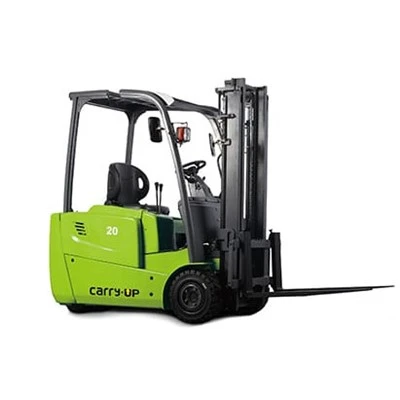
First, let’s get clear on what a lift table for wooden pallets actually is. At its core, it’s a hydraulic, mechanical, or electromechanical platform designed specifically to lift, lower, and position standard wooden pallets (the 48×40 inch GMA pallets common in North America, the EUR-pallets used across Europe, or custom sizes made for specific industries) at a comfortable, safe working height. Unlike generic lift equipment, these tables are built with pallet compatibility in mind: their surface is reinforced to handle the concentrated weight of pallets, often with cutouts or grooves to align forklift forks, and their weight ratings are calibrated for the loads pallets typically carry—ranging from 2,000 pounds for small retail stock to 10,000 pounds for heavy industrial materials.
I’ve seen a lot of people confuse lift tables with forklifts or pallet jacks, but they fill a totally different niche. Forklifts are great for moving pallets over long distances, but they’re overkill for tasks where you just need to adjust a pallet’s height to avoid bending or reaching. Pallet jacks work for moving pallets short distances at floor level, but if you’re working at waist height, a pallet jack won’t keep the load steady. A lift table bridges that gap: it lets you set a pallet to exactly the height you need—whether that’s 12 inches off the floor for restocking shelves, 36 inches for assembling products on the pallet, or 50 inches for loading into a delivery truck.
How do these tables work, exactly? Most models use a hydraulic system, which is the most common because it’s reliable and easy to operate. When you press a button (or use a foot pedal, for hands-free control), hydraulic fluid is pushed into cylinders under the platform, which extend and lift the table. To lower it, you release a valve that lets the fluid flow back out, controlled so the table moves slowly and steadily. Some smaller, manual lift tables use a scissor mechanism with a hand crank, which is perfect for smaller operations where power isn’t readily available or where you’re only lifting lighter loads (under 2,000 pounds). Electromechanical models, which use electric motors instead of hydraulic fluid, are growing in popularity because they’re low-maintenance, don’t leak, and are ideal for clean environments like food processing or pharmaceutical facilities where hydraulic leaks could contaminate products.
The design specifics are where pallet-focused lift tables stand out from generic lift equipment. For one, their platforms are sized to fit standard pallets with minimal overhang—no wasting space, no risk of a pallet shifting off the edge mid-lift. Many also have integrated pallet stops: small metal bars or sensors that hold the pallet in place while it’s moving, so you don’t have to worry about it sliding off when the table is at an angle. Some even have turntable tops, which let you rotate the pallet 360 degrees without moving the table or the pallet—super useful if you’re packing boxes from multiple sides of the pallet or loading onto a truck where the back of the pallet lines up with the door.
Now, why would a business need one? Let’s talk about the practical, on-the-job benefits, because that’s what I see every day with my customers. First, ergonomics. Back injuries are one of the most common workplace injuries in warehousing, manufacturing, and retail stock rooms, and 80% of those injuries come from lifting or bending awkwardly, according to the Occupational Safety and Health Administration (OSHA). A lift table eliminates that by letting you work at a neutral waist height. I had a customer last year who ran a small e-commerce fulfillment center; before they bought two pallet lift tables, their part-time staff was missing an average of two days a month to back strains. Six months in, that number dropped to zero. That’s not just a win for employee morale—it’s a win for lower workers’ comp costs, too.
Then there’s efficiency. If you’re loading a pallet of goods onto a delivery truck, you don’t want to have to bend down to grab each box, only to stand up and carry it to the truck, then bend back down again. A lift table lets you set the pallet to truck bed height, so you can move boxes directly from the pallet to the truck without adjusting your position. Or if you’re assembling products on a pallet—say, wooden crates for a construction job—you can keep the pallet at a comfortable height for your workers to screw or nail components, instead of hunching over the floor. A local cabinet maker I work with uses a lift table to lift pallets of raw lumber to his workbench height; he told me he cuts his assembly time by 30% because his workers don’t have to stop and adjust their posture every 10 minutes.
Safety is another huge factor. Wooden pallets can be unpredictable—they’re often worn, have splintered edges, or are loaded unevenly. A lift table’s stability means the pallet stays level while you’re working, so you don’t have to worry about it tipping or shifting. Many models also have safety features like emergency stop buttons, overload sensors that shut the table off if the load is too heavy, and guard rails to prevent fingers from getting caught between the scissor arms. I’ve had customers tell me they avoided at least one near-miss with a falling pallet after switching to a purpose-built lift table, which is way more than you can say for a random dock or a makeshift platform someone cobbled together.
Wait, but are all lift tables for pallets the same? No, that’s where it pays to work with a supplier who understands wooden pallets specifically. For example, standard wooden pallets have a notched bottom to fit forklift forks—some lift tables have forks that protrude slightly from the platform, so you can drive a forklift right onto the table to load or unload pallets without repositioning them. That’s a feature I don’t see on generic lift tables, which are built for heavier equipment or non-pallet loads. Also, wooden pallets vary in weight: a empty pallet might weigh 30 pounds, but a pallet full of bricks can weigh 2,000 pounds, and a pallet of machinery parts can go up to 10,000 pounds. A good supplier will help you match the lift table’s weight capacity to your exact pallet loads, so you’re not paying for capacity you don’t need, or worse, using a table that’s too weak for your work.
There are also niche options for specific industries. For food and beverage companies, we have lift tables with stainless steel surfaces that are easy to sanitize, so they meet FDA requirements. For construction sites, we have heavy-duty, rust-resistant lift tables that can handle the rough environment of building materials. For small warehouses or loading docks with limited space, we have low-profile lift tables that sit almost at floor level, so you can drive a pallet jack right onto them without having to lift the pallet first.
I want to be honest, too—there are common mistakes people make when choosing a pallet lift table. One is buying a table that’s too small: if your pallets are 48 inches wide and your table is 42 inches, the pallet will hang over the edges, making it unstable. Another is not considering travel height: if you’re loading into a truck that’s 54 inches high, a table that only goes up to 48 inches won’t reach, so you’ll have to adjust anyway. And some people skip the safety features because they think they’re “not needed,” but I’ve seen what happens when a worker’s hand gets caught in a scissor arm, or a pallet tips because there’s no stop to hold it in place. That’s why we take the time to ask our customers about their pallet sizes, the maximum weight of their loads, and how they’ll use the table—no one-size-fits-all here.
Let’s talk about long-term value, too. A good lift table for wooden pallets is an investment, not a cost. I’ve had customers who’ve had the same table for 10 years, with only routine maintenance (like changing the hydraulic fluid and tightening bolts every six months) and no major repairs. Compare that to the cost of a single back injury: the average workers’ comp claim for a back strain is over $40,000, according to OSHA. Over time, a lift table pays for itself in reduced injuries, faster work, and fewer damaged pallets (since a stable pallet on a lift table is less likely to be dropped or damaged during handling).
I get questions all the time from people who say, “Can’t I just use a regular lift table for my pallets?” Sure, you could—but you’re missing out on all the features that make a pallet-specific table work better. Generic lift tables often don’t have the reinforced surface for pallets, no alignment guides for forklifts, or the right weight capacity. They might be cheaper upfront, but they’ll wear out faster, be less safe, and cost you more in the long run. For example, I had a customer who bought a generic lift table for his pallets two years ago; it started having hydraulic leaks after 18 months, and the surface was warped from the concentrated weight of pallets, so pallets wouldn’t sit flat. He ended up replacing it with a purpose-built pallet lift table, and told me it’s been twice as reliable, even with heavier loads.
Another point: sustainability. Wooden pallets are a staple in supply chains, and reducing waste is a big priority for most businesses. A lift table reduces pallet damage because it handles pallets gently, instead of slamming them onto the floor or lifting them unevenly. Less damaged pallets mean fewer pallets have to be repaired or replaced, which is better for your bottom line and better for the environment. That’s something a lot of suppliers don’t talk about, but it’s a big win for businesses that are looking to cut their carbon footprint.
Let me wrap this up by saying this: if your business moves wooden pallets by hand, pallet jack, or forklift, a lift table is not a luxury—it’s a tool that will make your job easier, safer, and more efficient. Whether you’re a small retail stock room, a large manufacturing warehouse, or a construction site that moves pallets of materials, there’s a lift table tailored to your needs.
If you’re ready to stop dealing with back strains, slow work, and unstable pallets, let’s talk. I can walk you through the options, help you figure out the right size and capacity for your pallets, and make sure you get a table that fits your space and budget. No pressure, no jargon, just straight talk about what will work for your business.
Electric Pallet Truck Reference
- Occupational Safety and Health Administration. (2022). Ergonomics for Manual Lifting. U.S. Department of Labor.
- Material Handling Industry Association. (2021). Pallet Handling Equipment Best Practices. Material Handling Industry.
- National Institute for Occupational Safety and Health. (2020). Preventing Back Injuries in Warehouse and Manufacturing Settings. Centers for Disease Control and Prevention.
- Food and Drug Administration. (2019). Sanitation of Food Contact Surfaces. U.S. Food and Drug Administration.
- Lift Table Manufacturers Association. (2022). Proper Selection and Maintenance of Pallet Lift Tables. Lift Table Manufacturers Association.
Hangzhou Carry Equipment Co., Ltd.
Hangzhou Carry Equipment Co., Ltd. is one of the most professional lift table manufacturers and suppliers in China, also supports customized service. Please feel free to buy advanced lift table for sale here and get quotation from our factory. For price consultation, contact us.
Address: No.360 Tongxiang Rd., Yinzhou Economic Development Zone, Yinzhou Dist., Ningbo, China
E-mail: Sales@carryupmhe.com
WebSite: https://www.carrymhe.com/
