Hey there, thanks for stopping by—today we’re breaking down a question I get ALL the time as a stator bars supplier: what’s the actual difference between stator bars and rotor bars? If you’ve ever worked with electric motors, generators, or any industrial rotating equipment, you’ve probably heard both terms thrown around, but it’s way more than just two random parts with similar names. I’ve been selling stator bars for over 8 years now, and I’ve seen so many folks mix these two up—even some new engineers at small manufacturing shops. Let’s keep this real, no stuffy textbooks, just the stuff that matters if you’re buying parts for your next build or repair. Stator Bars
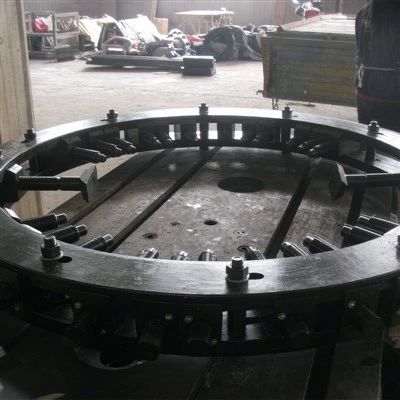
First, let’s start with the basics: both bars are part of rotating electrical machines, right? But they live in totally different places. Stator bars are for the stator—wait, the stator is the stationary part of the machine. You know, the big metal casing that doesn’t spin when the motor or generator runs? Yeah, that’s the stator. It’s got slots cut into its inner walls, and that’s where we stuff those stator bars. Rotor bars, though, go into the rotor—the part that actually spins, attached to the motor or generator’s shaft. That’s the first, most obvious difference: location. But it’s way deeper than just “one stays still, one spins.”
Let’s talk about what each bar does, because that’s where the real science hits. Stator bars carry the main alternating current (AC) that’s either powering the motor (so we feed electricity into the stator to make it spin) or coming out of a generator (the spinning rotor induces current in the stator bars). That current is high—like, really high. For big industrial generators, we’re talking thousands of amps. So stator bars need to handle that huge current, and they have to be insulated like crazy. Why? Because the stator core is made of thin steel laminations stacked together. If the bars touch the metal core, that’s a short circuit—total disaster, you’re looking at a burnt-out machine fast.
Rotor bars? They’re part of the rotor’s winding, which is usually a lower-voltage, lower-current system, especially for induction motors (the most common type out there). For an induction motor, the rotor bars are often made of aluminum or copper, and they form a “squirrel cage” winding—look inside a standard motor, you’ll see those bars running straight along the rotor slots, connected at the ends by metal rings. That setup creates a magnetic field that pulls the rotor around, no external power needed for the rotor itself. Wait, in synchronous generators or motors, the rotor might have a separate DC winding, but even then, the bars there are different—they’re not carrying the main line current like stator bars do.
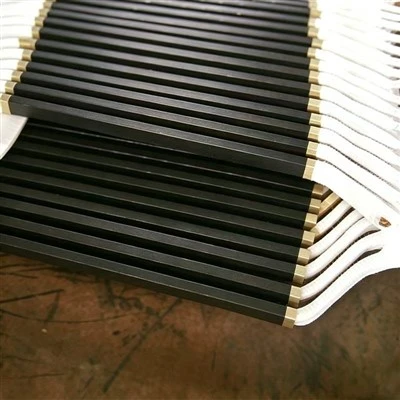
Now, materials: I can tell you from sourcing that stator bars are almost always copper, but with a big side of insulation. The copper core is thick, solid, sometimes even stranded for flexibility when we bend them to fit into stator slots. The insulation is multi-layered—mica tapes, epoxy resins, glass fibers, stuff that can handle extreme heat, vibration, and the high electrical stress from that big main current. Rotor bars? Aluminum is super common because it’s cheaper and lighter, which matters for a spinning part (less weight means less load on the shaft). Some high-performance rotors use copper, but that’s a premium thing. The insulation on rotor bars is way simpler—they don’t have to handle the same voltage as stator bars, so just a thin coating to keep them from touching the rotor core.
Next, stress. Stator bars are stuck in the stator slots, held in place with wedges (fiberglass or metal) because the machine has to handle constant vibration and thermal expansion. When the machine runs, it heats up, expands, then cools down, shrinks—stator bars have to be able to move a tiny bit without cracking their insulation. Rotor bars are moving, obviously, so they deal with centrifugal force too. When the rotor spins at 3,000 RPM (standard for big machines), those rotor bars are getting pulled outward with tons of force—so they have to be securely attached to the rotor, often with end rings cast on, not just slotted in like stator bars. That’s another key difference: stator bars are stationary, so their stress is mostly thermal and magnetic, while rotor bars have centrifugal force on top.
Wait, let’s clear up a common misconception: people sometimes think stator bars and rotor bars are interchangeable. No way. Let’s say you need to replace a stator bar in a 10MW generator for a hydroelectric dam. If you try to jam a rotor bar in there? It’s too thin, not insulated enough, can’t handle the current—you’ll blow that generator in 10 minutes. Vice versa, if you stick a thick, insulated stator bar into a rotor slot, it’s way too heavy, the centrifugal force will snap it off, and you’ve got a flying metal part inside your machine—total safety hazard. I’ve had a customer try that once, told me it was a mistake right after he called me panicking. Never again, that’s for sure.
Let’s talk about wear and tear, too. Stator bars usually fail from insulation breakdown. Over time, the heat and vibration make the insulation crack, or it gets contaminated with oil, dust, or moisture (especially in industrial environments like factories or power plants). When that insulation goes, you get a ground fault—current leaks into the stator core, burns a hole, and you’re looking at a major repair. Rotor bars, though, usually fail from things like broken bars in the squirrel cage. Constant startup and shutdown cycles, or heavy loads, can cause the end rings to crack, or the bar to break loose from the slot. That leads to uneven magnetic fields, which makes the motor vibrate more, lose efficiency, and eventually shut down. So their failure modes are totally different, which is why you can’t use the same parts for both.
As a stator bars supplier, I work with both motor repair shops and OEMs every day, and one of the most common questions I get from new customers is how to tell which part they need. Let’s make that simple for you: if the part is inside the non-spinning stator, with thick insulation and a thick copper core, that’s a stator bar. If it’s in the spinning rotor, lighter, often aluminum, with thin insulation, that’s a rotor bar. But wait—don’t just guess. Pull the old part out if you can, measure it, check the insulation thickness, and match it to your machine’s specs. That’s where a lot of people mess up: they grab a “similar” part instead of the exact one, and it doesn’t fit or work right.
Another thing: size. Stator bars are way bigger, almost always. For a small 5HP motor, a stator bar might be 1 inch wide, 1/4 inch thick. A rotor bar for that same motor is like 3/8 inch wide, 1/8 inch thick. For big generators, stator bars can be several feet long, 2 inches thick—they’re huge, heavy, and require specialized equipment to handle. Rotor bars for the same generator are maybe 10 feet long, 1 inch thick, way easier to transport. That’s a practical difference you’ll notice when you’re ordering parts: stator bars are much bulkier, so shipping costs are higher, and storage needs more space.
Let’s talk about efficiency, too. Stator bars are the main component that determines how much power a machine can handle. If your stator bars are old, or wrong size, you lose a lot of energy as heat. I’ve seen a customer with a 20MW generator that was losing 5% of its power because of worn stator bars—switching to new, properly sized stator bars fixed that. Rotor bars affect efficiency too, but not as much for the main power output—they’re more about the machine’s ability to start up and handle load. So if you’re looking to boost your machine’s efficiency, stator bars are the part to focus on first, not rotor bars.
Wait, let’s make sure we’re not skipping the technical stuff, but keep it plain. Stator bars carry the armature current—for AC machines, that’s the current that produces the magnetic field that interacts with the rotor. Rotor bars, in induction machines, carry the induced current from the rotating magnetic field, which creates the torque that spins the rotor. So their entire purpose is different: stator bars are the power “inlet” or “outlet” for the machine, rotor bars are the torque generator. That’s the core functional difference.
Now, why does this matter to you? Whether you’re a maintenance manager, an engineer, or a hobbyist building a small motor, getting the right bars isn’t just a small part—it’s the difference between your machine running for 5 more years or breaking down next week. I’ve seen way too many shops cut corners, use the wrong bar, and end up paying for a full machine rebuild that could’ve been avoided. As someone who’s been in this business, I’m not just here to sell stator bars—I’m here to make sure you get the right part for your needs, no guesswork.
If you’re reading this and you’re in need of stator bars, or you’re confused about which part you actually need for your repair or build, don’t hesitate to reach out. We’ve got a wide range of stator bars for every size of machine, from small 1HP motors up to huge 50MW generators. We can help you measure your old part, check your machine’s specs, and make sure you get exactly what you need—no wasted time, no wrong parts. Just send over the details of your machine, or the old bar, and we’ll walk you through it.
Wait, let me wrap this up real quick to make sure I didn’t miss anything. The key takeaways: stator bars are stationary, high-current, highly insulated, thick copper parts in the stator. Rotor bars are spinning, lower-current (usually), lighter parts (often aluminum) in the rotor. They’re different in location, function, materials, stress, and failure modes. Mixing them up is a costly mistake. If you’re working with stator bars, stick to a reliable supplier, and double-check your specs.
Motor Coils References
- Fitzgerald, A. E., Kingsley, C., & Umans, S. D. (2003). Electric Machinery (6th ed.). McGraw-Hill.
- Boldea, I. (2011). The Induction Motor Handbook (2nd ed.). CRC Press.
- Lipo, T. A. (2017). Synchronous Machines: Technology and Applications. Wiley-IEEE Press.
Hangzhou Purun Science & Technology Co., Ltd.
As one of the most professional stator bars manufacturers and suppliers in China, we have world-leading production equipment and strong manufacturing capabilities. Please rest assured to wholesale customized stator bars made in China here from our factory. Welcome to contact us for pricelist.
Address:
E-mail: Purun_sci_tech@163.com
WebSite: https://www.puruncoil.com/
