A few years ago, when I was sitting across from a municipal energy planner in the Northeast, he leaned forward and asked a question that has shaped every conversation I’ve had since: “We’re looking to switch from coal to natural gas, but our town is deathly serious about cutting our carbon footprint. How do your LNG storage tanks help, not hurt, that goal?” Back then, I didn’t have all the answers— not fully. But over the past decade, as we’ve worked with dozens of communities, from small rural towns to mid-sized cities, I’ve learned that this question isn’t just a technical one. It’s about how LNG storage tanks fit into the messy, human work of reducing a region’s carbon footprint. And it’s a conversation worth having, because the answer isn’t just “yes” or “no.” It’s about how these tanks operate, where they’re placed, and how they work with the energy systems around them. LNG Storage Tank
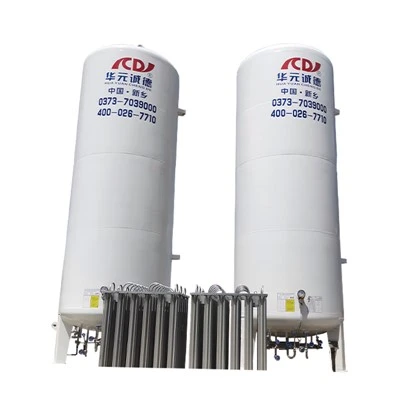
Let’s start with the basics that anyone navigating energy decisions needs to know. LNG, or liquefied natural gas, is natural gas that’s cooled to roughly -162°C, turning it into a liquid that takes up 1/600th the volume of its gaseous form. That shrinkage is why LNG has changed the way we move and store energy—especially for regions that aren’t connected to large pipeline networks, or that need extra storage to keep energy supplies steady during peak demand. For example, a small town in Vermont that relies on local heating grids can’t run a pipeline from the nearest major gas hub every winter, but an LNG storage tank tucked on the edge of town gives them a reliable backup. But when people first hear LNG, the immediate thought is “fossil fuel, high carbon.” So why would a region think these tanks are a good part of their carbon reduction plan?
The answer lies in something called “fuel switching,” and it’s one of the most impactful ways LNG tanks reduce a region’s overall carbon footprint. Many regions still burn coal for electricity and heating, and coal is responsible for almost 2 times more carbon dioxide per unit of energy than natural gas. When a community closes a coal plant and switches to natural gas, the carbon drop is immediate and significant. But here’s the catch: you can’t just switch a coal plant to burn natural gas overnight—you need a reliable way to store that gas, especially during cold snaps or other times when demand spikes. Without LNG storage tanks, many regions would have to keep that old, dirty coal plant running as a backup, just in case their gas supply runs low. The tank acts as that buffer, letting them retire the coal plant for good.
I saw this first-hand a few years ago in a former coal town in western Pennsylvania. The local utility had spent years trying to shut down their 1970s coal plant, but the pipeline serving the area could only deliver enough gas to meet 60% of the region’s needs. Without a way to store extra gas, they’d have to keep the coal plant online to cover the remaining 40%—that extra coal burned was adding 120,000 tons of carbon to the region’s emissions every year. We worked with them to install two medium-sized LNG storage tanks near the plant, enough to hold 10 days of extra gas supply. Within a year, the coal plant was permanently decommissioned. The region’s carbon emissions from power and heating dropped by 18% in 12 months, all thanks to those tanks. That’s not a hypothetical. That’s real.
But fuel switching isn’t the only way LNG storage tanks cut carbon. There’s also the role they play in supporting renewable energy. I know, I know—you’re thinking, “renewables are solar and wind, why do we need natural gas?” The truth is, solar and wind are intermittent. The sun doesn’t shine at night, and the wind doesn’t always blow when we need it most. As regions add more renewable energy to their grids, they need ways to store that extra energy when it’s abundant and release it when it’s not. That’s where LNG tanks come in, in a roundabout way. Many modern power plants that run on natural gas are “flexible” units—they can ramp up and down quickly to match the ups and downs of solar and wind. But again, those plants need a reliable supply of gas to operate at a moment’s notice. LNG storage tanks act as that supply. If the wind stops blowing during a hot summer evening when everyone turns on their AC, the plant can draw from the LNG tank instead of ramping up a coal or peaker plant that runs on even dirtier fuel.
Last year, we worked with a utility in Minnesota that had added 50 MW of solar to their rural grid over three years, but they were struggling with “solar curtailment”—they had to turn off solar panels on sunny days because there was nowhere to send the extra power, and the grid couldn’t handle the load. They decided to build a combined cycle natural gas plant next to their LNG storage tanks, sized to use the extra gas from the tank when solar was low. Within two years, their curtailment rates dropped by 90%, and their overall grid emissions from electricity fell by 22%. The plant’s flexible operation meant they could replace a third of their older, less efficient gas peaker plants that had higher emissions per unit of energy. The LNG tank wasn’t the star of the project, but it was the backbone—without it, that solar expansion wouldn’t have been possible without keeping dirty peaker plants running.
Of course, it’s not all good news. LNG storage tanks have their own carbon footprint, and if they’re not designed or operated well, they can actually increase a region’s emissions. Let’s talk about “boil-off gas,” for example. LNG is stored at extremely low temperatures, so even the best insulated tanks will have a small amount of natural gas that evaporates over time—this is called boil-off. If that boil-off is vented into the atmosphere, it’s not just methane (a greenhouse gas 28 times more potent than CO₂ over 100 years) it’s also wasted energy. But modern tanks, like the ones we manufacture, have recondensation systems that capture that boil-off and turn it back into liquid. That cuts boil-off emissions by over 95%. We also equip all our tanks with advanced leak detection systems—using sensors that monitor the air around the tank at all times, so we can catch even tiny leaks before they become a problem.
Another point: the size and location of the tank matter a lot. A small rural town only needs a tank that holds a few days of gas supply; a large city needs a tank that can hold weeks. If you build an oversized tank in a small town that only uses a tiny amount of gas, you’re wasting energy on insulation and operation, which drives up the carbon footprint. That’s why we work with every customer to do a custom energy audit, mapping out their peak demand, current supply, and long-term plans, before we even design a tank. We don’t sell one-size-fits-all equipment. For example, a community in Maine that’s switching from heating oil to natural gas for 1,200 homes only needed a 50,000-gallon tank, not a larger model that would have used more energy to operate. We sized it exactly to their needs, and their carbon footprint from heating dropped by 40% in the first year, with almost no extra emissions from the tank itself.
There’s also the question of long-term energy transitions. Many people ask me, “If we’re moving to 100% renewables, why do we need LNG storage tanks?” That’s a fair question, and one we think about every day. The reality is, most regions won’t reach 100% renewables overnight. The International Energy Agency estimates that even by 2050, natural gas will still make up 15% of global energy supply, because it’s a reliable, flexible bridge fuel. LNG storage tanks let communities use that natural gas to reduce emissions today, while they scale up renewables long-term. We recently worked with a group of small towns in Wisconsin that have a plan to reach 70% renewable energy by 2035, and 100% by 2050. Their LNG tanks are sized to meet their current gas needs, with enough extra capacity to back up their growing solar and wind projects. When they eventually switch to 100% renewables, the tanks can be repurposed to store green hydrogen, which is a zero-emission fuel made from renewable energy. That’s the beauty of well-designed LNG tanks—they’re not just a temporary solution. They can evolve with a region’s energy needs.
I’ve had people push back on this, and I respect that. For example, a climate activist in Ohio once told me, “You’re just extending the life of fossil fuels.” But my response is always, “What’s the alternative?” That region was burning 2 coal plants that produced 2 million tons of CO₂ a year. If they had chosen to keep those plants running while they built renewables, their emissions would be way higher than if they switch to natural gas with an LNG tank, then build renewables. The activist agreed after we ran the numbers—they’d seen the same data in their own community, where the coal plant’s emissions were responsible for more asthma cases in local kids than any other source.
The key takeaway here is that LNG storage tanks don’t exist in a vacuum. Their impact on a region’s carbon footprint depends entirely on how they’re used, designed, and integrated into the larger energy system. A poorly sized, old tank that vents boil-off and supports dirty coal plants is a net negative. A well-designed, modern tank that enables fuel switching, backs up renewables, and reduces reliance on high-emission fuels is a net positive.
At the end of the day, our job as LNG storage tank suppliers isn’t to sell tanks. It’s to help communities make real, meaningful progress on their carbon goals. That means working with their energy planners, their environmental teams, and their utility companies to build a solution that fits their needs, not ours. We don’t cut corners on insulation or leak detection because we know that even a small inefficiency can add up over time. We don’t sell oversized tanks because we know that wastes resources. We focus on designing systems that reduce emissions, not just store gas.
If you’re a region’s energy planner, a utility manager, or someone who’s been grappling with this exact question—how to balance reliable energy with cutting carbon—let’s talk. I’ve seen too many communities make decisions that seem right on paper, but end up costing them more in emissions, more in money, and more in headaches. We can run a custom assessment of your current energy system, map out how LNG storage tanks could fit into your transition plan, and help you make a choice that works for your region’s unique needs.
Vacuum Hot Water Boiler References
- International Energy Agency. (2023). The Role of Natural Gas in the Global Energy Transition. IEA Publications.
- U.S. Environmental Protection Agency. (2022). Coal-to-Natural Gas Fuel Switching Emission Reductions. EPA Office of Air and Radiation.
- Energy Information Administration. (2023). Natural Gas Storage and Grid Reliability. EIA Annual Energy Outlook.
- Global Methane Initiative. (2022). LNG Boil-Off Reduction Technologies and Emission Impacts. GMI Technical Report.
- Intergovernmental Panel on Climate Change. (2021). Fossil Fuel Emissions and Transition Pathways. IPCC Working Group III Report.
Xinxiang Huayuan Container Equipment Co., Ltd.
With abundant experience, we are one of the most reliable LNG storage tank manufacturers and suppliers in China. We warmly welcome you to buy durable LNG storage tank made in China here from our factory. If you have any enquiry about cooperation, please feel free to email us.
Address: No.2, South Road, Industrial Cluster Zone, Genghuang Township, Fengquan District, Xinxiang City, Henan Province
E-mail: cncd527@gmail.com
WebSite: https://www.huayuanequipment.com/
