If you’ve ever stood on a job site watching a crane swing a steel beam 50 feet in the air, or held a heavy lifting rig steady while a team adjusts a load, you’ve probably wondered: what makes the little metal loops, clevises, or brackets that connect that load to the crane actually strong enough to hold that much weight? As someone who’s spent the last 12 years running a lifting point supply business, I can tell you this isn’t a question of “just metal.” Every material we choose is tested, stress-checked, and matched to a specific job—because a lifting point that works for a construction site won’t hold up in a marine salvage operation, and vice versa. Let’s break down the most common materials we use, how each performs, and why picking the right one isn’t just a detail—it’s the difference between a safe lift and a disaster. Lifting Point
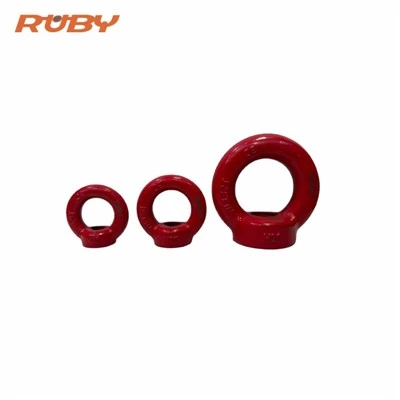
First, let’s start with the workhorse of the lifting point industry: carbon steel. If you walk into most construction yards or general manufacturing shops, 80% of the lifting points you see are made from this stuff, and for good reason. Carbon steel is an alloy of iron and a small percentage of carbon (usually between 0.05% and 2.0%, per industry standards like ASTM A36 or A572 Grade 50) that balances strength, affordability, and ease of fabrication. What sets it apart is its tensile strength—meaning it can pull apart a lot before it breaks. For A36 carbon steel, that’s roughly 58,000 pounds per square inch (psi), and for A572 Grade 50, it jumps to 71,000 psi. That’s why it’s the go-to for standard lifting points like welded lifting lugs or swivel hoist rings for general loads. But carbon steel has a flaw: it rusts. If you leave it exposed to moisture, salt air, or chemicals, it will corrode fast. That’s why we almost always coat our carbon steel lifting points with either paint or a hot-dip galvanized finish before shipping them. Hot-dip galvanizing is a process where we dip the steel in molten zinc, which forms a protective barrier that slows rust for decades. But even with that coating, carbon steel isn’t ideal for harsh environments. For jobs where the lifting point will be submerged, sprayed with salt water, or exposed to harsh chemicals, we turn to the next material.
Stainless steel is our go-to for corrosive or high-humidity environments. Made from iron, carbon, and at least 10.5% chromium, stainless steel forms a self-healing oxide layer when exposed to oxygen—think of it as a built-in rust shield. There are a few grades we use most often, and each has a specific use case. 304 stainless steel is the most common; it’s affordable, easy to machine, and resistant to corrosion from mild chemicals, food processing environments, and freshwater. That’s why it’s the top choice for lifting points in the food and beverage industry, pharmaceutical manufacturing, or even boat repairs where salt exposure is minimal. For jobs where salt air or strong chemicals are present—like offshore oil rigs, coastal construction, or chemical processing plants—we use 316 stainless steel. It adds molybdenum to the alloy, which makes it even more resistant to chloride corrosion (the kind you get from salt water). The trade-off? 316 stainless is about 30-40% more expensive than 304, and its tensile strength is slightly lower—around 75,000 psi for 304 and 79,000 psi for 316. That means you can’t just swap a carbon steel lifting point for a stainless one of the same size; you have to adjust for the material’s properties. I’ve seen too many job site mistakes where someone tried to save money by using a too-small stainless lifting point, only to have it bend under load. That’s why our team always walks clients through material specs based on their exact job conditions, not just their budget.
Next up: alloy steel. If carbon steel is the everyday workhorse, alloy steel is the heavy-duty specialist. Alloy steel is made by adding other elements like chromium, nickel, manganese, or vanadium to iron and carbon to boost specific properties—like higher tensile strength, better impact resistance, or the ability to withstand extreme temperatures. The grade we use most for lifting points is 4140 alloy steel, which has a tensile strength of around 150,000 psi—more than double that of A572 Grade 50 carbon steel. That makes it perfect for lifting heavy, oversized loads: think of a 100,000-pound turbine being moved to a power plant, or a large shipping container being lifted onto a cargo ship. Alloy steel lifting points also hold up better under dynamic loads—loads that shift or jolt during a lift, like when a crane is swinging a load through wind. The trade-off is that alloy steel is harder to machine and more expensive than carbon steel, so it’s not the best choice for small, routine lifts. But when you’re dealing with weights that push the limits of standard lifting equipment, alloy steel is non-negotiable. It’s also heat-treatable, which means we can harden it further to make it even stronger without adding extra weight—something we do for specialized lifting points used in aerospace or military applications, where every pound counts.
Wait, but what about lighter loads? Or jobs where weight is a critical factor, like in aviation or mountain rescue? For those cases, we use aluminum alloy. Aluminum is lightweight—about a third the weight of steel—but pure aluminum is too soft to hold heavy loads, so we alloy it with elements like copper, magnesium, or silicon to boost its strength. The most common grade for lifting points is 6061 aluminum, which has a tensile strength of around 45,000 psi, enough for loads up to a few thousand pounds. It’s corrosion-resistant on its own (the same oxide layer as stainless steel), and it’s easy to machine, which makes it ideal for custom lifting points for small aircraft parts, drone components, or portable lifting gear for outdoor work. The big downside of aluminum is its lower strength, so we never recommend it for loads over 10,000 pounds. We also make sure to mark all aluminum lifting points clearly so no one accidentally uses them for a load they can’t handle. I learned that lesson early in my career: a customer once tried to use an aluminum lifting point to lift a 12,000-pound generator, and it bent before they even got it 10 feet off the ground. We replaced it for free, but that mistake taught me how important it is to match material to load capacity, not just weight savings.
There’s one more material we use less often, but it’s critical for very specialized lifting jobs: high-strength polymer composites. These aren’t your average plastic parts—we use fiber-reinforced polymer (FRP) composites, which are made from a polymer matrix (like epoxy) reinforced with carbon or glass fibers. FRP lifting points are incredibly lightweight, corrosion-proof, and non-conductive, which makes them perfect for jobs near power lines, or in environments where magnetic interference is a problem, like medical equipment handling. Their tensile strength is comparable to some carbon steels, around 50,000-100,000 psi, but they’re not as heat-resistant—they start to break down at temperatures above 200°F, so they’re never used for lifts that get hot, like near furnace exhausts. We only use composite lifting points for specific, niche applications, but they’re a great option when the other materials can’t meet the job’s needs.
Now, I know what a lot of my customers ask: can’t we just use the same material for all lifting points? The short answer is no, and it comes down to a balance of three key factors: strength, environment, and cost. Let’s walk through a few examples to make that clear. If you’re lifting standard building materials like steel beams or concrete blocks at a residential construction site, carbon steel with a galvanized coating is the cheapest, strongest option for that environment. If you’re lifting food processing equipment in a brewery, 304 stainless steel will resist the acid from beer and the moisture in the plant, so it’s worth the extra cost to avoid corrosion. If you’re lifting a 50,000-pound wind turbine component at an offshore wind farm, you’ll need 316 stainless alloy lifting points that can handle salt air plus the extreme weight of the load. If you’re lifting a satellite component in a clean room, you might use aluminum alloy to keep the lifting point lightweight and non-conductive, so it doesn’t interfere with the satellite’s electronics.
As a lifting point supplier, our job isn’t just to stock these materials—it’s to help our customers pick the right one for their exact job. That means we ask a lot of questions upfront: what’s the maximum load you’ll be lifting? What environment will the lifting point be exposed to (moisture, chemicals, salt, extreme temperatures)? Will the load be shifting or dynamic during the lift? Do you have any weight or size constraints? We also test every lifting point we make to meet industry standards: OSHA regulations in the U.S., ISO standards globally, and ASME B30.20 for below-the-hook lifting devices. We never cut corners on testing, because a lifting point failure isn’t just a product issue—it’s a safety issue that can hurt workers, damage equipment, and cause costly delays.
I’ve been in this business long enough to see how much the lifting industry has changed over the years. When I started, most lifting points were simple steel lugs made from whatever scrap carbon steel was on hand. Now, customers are more focused on safety, environmental sustainability, and custom solutions for unique jobs. That’s why we’ve invested in working with all these different materials, and why we have a team of engineers who can help design lifting points that fit every need. For example, last year we worked with a team doing a coastal bridge repair project that needed lifting points strong enough to handle 80,000 pounds, resistant to salt air, and lightweight enough to transport to a remote site. We ended up designing custom lifting points from 4140 alloy steel with a 316 stainless coating—strong enough for the load, corrosion-resistant for the coastal environment, and light enough to be carried by the project’s small crane. It was a custom job, but that’s what we do best.
At the end of the day, choosing the right lifting point material is all about balancing safety, performance, and cost. You don’t want to pay for a material you don’t need, but you definitely don’t want to cut corners and use a material that can’t handle the job. As someone who’s been in the trenches with job site teams, I’ve seen the difference a well-chosen lifting point can make: a lift that goes off without a hitch, a team that gets home safe at the end of the day, a project that stays on schedule. If you’re working on a lift and you’re not sure what material you need, or if you have a custom lifting point project, we’re here to help. We can walk you through our material options, share real-world performance data, and make sure you get a lifting point that meets all your requirements. Reach out to our team to discuss your lifting point needs today—we’re ready to help you lift safely, every time.
Chain Sling References
ASTM International. (2021). Standard Specification for Carbon Structural Steel (A36/A36M).
ASTM International. (2020). Standard Specification for High-Strength Low-Alloy Structural Steel (A572/A572M).
International Organization for Standardization. (2019). Cranes — Design for loads — Part 1: General principles (ISO 12482-1).
American Society of Mechanical Engineers. (2022). Below-the-Hook Lifting Devices (ASME B30.20).
U.S. Occupational Safety and Health Administration. (2021). Cranes, Derricks, Hoists, Hooks, Couplings, Slings, and Lifting Attachments (OSHA 1910.184).
Hangzhou Ruby Imp. & Exp. Co., Ltd.
As one of the most experienced lifting point manufacturers and suppliers in China, we offer a wide range of products with superior quality. We warmly welcome you to wholesale custom made lifting point at competitive price from our factory.
Address: Taoyuan Industrial Park, Puyang Town, Xiaoshan, Hangzhou, Zhejiang, China.
E-mail: Sales5@z2lifting.com
WebSite: https://www.rubylifting.com/
