Alright, let’s break this down like we’re chatting in the shop floor—no boring textbook talk, promise. If you’ve ever watched a slitting machine hum along, slicing a big roll of steel, plastic, or even foil into narrower, precise strips, you’ve probably wondered: how the heck does that final part work, where those strips get wound up neat as a pin? That’s the coiling system, and it’s way more than just a spindle spinning in a circle. Let me walk you through it, since I’ve been selling slitting machines for years, not just reading about ’em. Slitting Machine
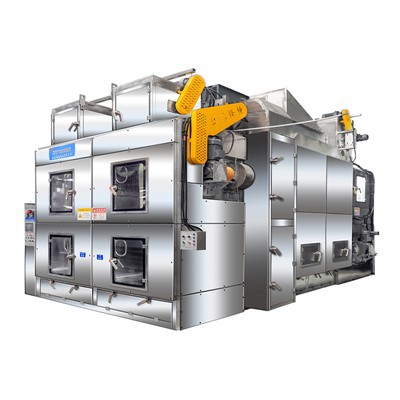
First, let’s set the scene. When a customer buys one of our slitting machines, they’re usually dealing with a giant parent roll—think 6,000 pounds of aluminum, or a thick coil of paper—that comes off the uncoiler (that’s the big roller at the back that holds the whole roll). The slitting blades up top or bottom slice that into, say, 1-inch wide strips, and those strips need to go somewhere neat, no wrinkles, no crosswise tension that’ll snap the material. That’s where the coiling system steps in—its whole job is to take those freshly cut strips and wind ’em up into tight, uniform little coils (or sometimes huge ones, depending on what the customer needs) without messing up the slitting work we just did.
Let’s start with the core part: the spindle. This isn’t a plain steel rod. On most of our mid-range and industrial slitting lines, it’s a mechanical or hydraulic expanding spindle. Wait, what does that mean? If you’re winding a paper or plastic strip, you need the inside of the coil to have a core—like a cardboard tube, right? The spindle slides into that core, and then either a hydraulic pump pushes those little metal wedges or rollers on the outside of the spindle outward, locking it tight inside the core. No slipping. If you had a fixed spindle, the core would spin around it, cause slippage, and your coil would be all uneven. For heavier materials, like steel, we use even more torque on that spindle because the coil’s gonna be way heavier—say 10,000 pounds—so you don’t want it to slide off mid-process.
Next up: tension control. This is the make-or-break part. A lot of guys think, “Just spin the spindle fast and you’re done.” Nope. Too much tension, and the material stretches—aluminum’s super stretchy, that’ll mess up its thickness, and if it’s plastic, you could get permanent warping. Too little tension, and the strips will sag, overlap, or wrinkle, which makes the whole coil useless for their next job (like stamping or printing). So how do we get that tension just right? We have two main tools here: dancer rolls and load cells.
A dancer roll is this big, free-spinning roller that hangs between the slitting blades and the coiling spindle. If the strip gets loose, the dancer drops down, and if it’s too tight, it pushes up. A load cell is connected to the dancer, or sometimes to the spindle’s drive system, that measures how much force the strip is pulling. Our machines have PLCs (programmable logic controllers—basically a tiny brain) that read that load cell data in milliseconds, adjusting the spindle’s speed to keep the tension consistent. For thin foil, we run tension super low—like 5 pounds total across all strips—because it’s so delicate. For steel, it’s more like 50 pounds, but even then, we have to adjust as the coil gets bigger, because the weight of the coil increases tension on the strip.
Then there’s the lay-on roller. This is another roller that presses down on the top of the winding coil as it spins. Its job is to make sure the strips lay flat and don’t shift side to side. If you don’t have a lay-on roller, the outer layers of the coil will bunch up—you know, that messy “bird’s nest” some home winding gets? The lay-on roller exerts controlled pressure, not too hard (that would crumple thin material) and not too soft (that would let layers shift). On some of our specialty lines for fabric or non-woven materials, we even add a little side-to-side movement to the lay-on roller to make sure strips are evenly aligned across the coil’s width—no more overlapping edges.
Wait, what about when you need multiple coils at once? Oh right, some customers don’t want one huge coil—they want 10 smaller ones, each with their own strip. That’s where the multi-spindle coiler comes in. Instead of one big spindle, there’s a series of smaller spindles, each with its own expanding mechanism and tension control. That way, each strip is wound onto its own core at the exact right tension, so every coil is uniform. We sell a lot of these for customers who make parts for automotive—they need hundreds of tiny steel coils for springs, so each has to be precise.
Now, let’s talk about the not-so-obvious stuff that trips people up (and that’s the stuff we test on every machine before it leaves our factory). Like inertia. When a big coil is spinning, it has a lot of momentum. If you need to stop the coiler fast (say, if a strip breaks), you can’t just shut off the motor—you need a braking system that matches the spindle’s speed without jerking the material. Our hydraulic systems handle that because they can adjust torque smoothly, unlike older mechanical systems that would lurch. A lot of our competitors skip this, and customers come back complaining about broken strips or uneven coils because of that jerking.
Another thing: material-specific settings. A slitting machine for aluminum can’t use the same coiling settings as one for corrugated board. For soft materials, like vinyl, we actually use a “surface winder” instead of an expanding spindle. Wait, surface winder? That’s when there’s a big rubber roller that the coil presses against, and the drive roller spins the whole coil. No expanding core needed—good for materials that would scratch easily if a metal spindle touched their inside. We use those for things like decorative film where surface finish is everything.
Let me give you a real example. Last month, we sold a line to a guy in Texas who makes aluminum cans. He was having issues with his old coiler—coils were so uneven that his press line would jam 20 times a day. We set up our coiling system with dancer rolls, multi-spindles, and precision tension control. He called me a week later saying he went 3 days without a jam. That’s the difference between knowing how to tune a coiling system and just slapping parts together.
Now, let’s clear up a common myth: coiling systems don’t just spin. They have to sync with the slitting line’s speed. If the slitter is cutting at 100 feet per minute, the coiler has to wind at almost exactly that speed, minus a tiny bit (because the material is being pulled) but not too much that it causes tension. Our PLCs sync the uncoiler, slitter, and coiler all on the same signal, so there’s no lag. That’s why when you watch a good slitting line, the strips move smoothly the whole way—no gaps, no jerks.
What about when the coil is full? You can’t just stop the machine and yank the core out. Most modern coilers have an auto-ejection system. When the load cell detects that the coil is at a preset diameter (we let customers program that for their needs), the expanding wedges in the spindle retract, and the full coil rolls off onto a skid. No manual labor, no stopping the whole line for 10 minutes to swap cores. That’s a huge time-saver for customers who run 24/7.
Wait, I should mention the parts that wear out, too. If you don’t maintain your coiling system, it’ll stop working right. The dancer roll bearings get dirty, the hydraulic seals leak, the load cells get knocked out of calibration. We always tell customers to do a weekly check: grease the dancer rolls, check hydraulic fluid levels, calibrate the tension sensors. We also have a 24/7 support line if something goes wrong—no waiting until Monday, because when your line is down, you’re losing money by the minute.

Let’s wrap this up, since I know you’re probably thinking about your own slitting operation. The coiling system is the unsung hero of the slitting line—its job is to turn cut strips into usable, quality coils, and if it’s not tuned right, all that good slitting work goes to waste. Whether you’re winding thin foil, thick steel, or something in between, the key is matching the spindle type, tension control, and lay-on roller settings to your material.
Polish-shearing Machine If you’re tired of uneven coils, broken strips, or down time on your slitting line, hit us up. We don’t just sell machines—we work with you to set up the coiling system that fits your exact product and production needs. No one-size-fits-all here.
References
- Slitting and Coiling of Metal Strip, Manufacturing Processes Reference Guide, Society of Manufacturing Engineers.
- Tension Control in Web Processing, Tension Technology International.
- “Coiler Systems for Precision Web Processing,” International Journal of Machine Tools and Manufacture, vol. 52, no. 1, 2012.
- Hydraulic and Mechanical Coiling Systems for Industrial Slitting Lines, Industry Today Manufacturing Magazine, 2021.
Jiangsu Feng Te Technology Co., Ltd.
We’re well-known as one of the leading slitting machine manufacturers in China. With a professional production team, we are able to meet the needs of the majority of our customers. Please rest assured to buy discount slitting machine for sale here from our factory.
Address: No. 4 Zhanghong Road, Siying Industrial Park, Lianyungang City, Jiangsu Province, China
E-mail: frentejenny@foxmail.com
WebSite: https://www.jsfrente.net/
