Hey everyone, if you’ve been scrolling around for patio upgrades, deck makeovers, or even just sprucing up a tiny balcony, you’ve probably seen those sleek aluminum railing systems popping up everywhere. They’re the go-to for homeowners, contractors, and even small business owners these days—way lower maintenance than wood, way less prone to rust than steel, and they look sharp enough to make any outdoor space feel pulled together. But here’s the question I get at least three times a week from folks hitting me up: “How long does it actually take to install one of these things?” No one wants to start a weekend project only to realize it’s going to drag on for days, or budget for a job and end up blowing the timeline. As someone who’s been selling and supporting aluminum railing systems for years, I’ve seen every scenario—from a guy with zero DIY skills knocking it out in a few hours to a crew on a big commercial job that wraps up in a single afternoon. Let’s break this down like we’re chatting over a coffee, no fancy jargon, just real info that’s actually useful. Aluminum Railing Systems

First off, I need to say this straight: there’s no one-size-fits-all number. A ton of factors tweak the timeline, and I’ve had way too many people act like it’s a super easy “one size fits six hours” thing, which isn’t fair. Let’s start with the basics: what kind of space are we working with, and are you hiring a pro or winging it on your own? That’s the biggest split right there.
If you’re a homeowner with a small DIY project—like a 10-foot balcony, or a tiny side deck off your back door—you’ve got this in you if you’ve ever put together a bookshelf or hung a curtain rod. Most pre-fabricated aluminum railing kits (the ones we sell, by the way, with all the pieces cut and pre-drilled so you don’t have to DIY that part) take between 2 and 4 hours for a single person. Wait, hold on—if you’re a total beginner, maybe add an hour or two just because you’re fumbling with tools or figuring out which bracket goes where. But if you’ve got a buddy to help hold posts up while you screw them in? Knock 30 minutes off that, easy. I had a customer last spring who texted me mid-install, panicking because his first post wouldn’t level. Turned out he forgot to add shims under the base plate—once he did that, it was smooth sailing, and he finished his 12-foot side deck in like 2 and a half hours. That’s the vibe we’re talking about for small DIY jobs.
Now, flip that to a bigger residential project—like a full back deck that’s 20 to 30 feet, maybe with a few corners, stairs leading down to the yard, or a split-level landing. That’s where things change. If it’s still DIY, you’re probably looking at a full Saturday, like 6 to 8 hours, maybe even splitting it over two days if you’re tired and don’t want to rush. But here’s the thing: most people with a deck that big hire a local handyman or a small contracting crew for this, and that’s where the timeline gets really good. A two-person crew can knock out a 25-foot deck (no stairs, just straight runs and a couple of corners) in 3 to 5 hours tops. If there are stairs? Add 1 to 2 hours—stairs need extra precise measuring, the balusters have to line up just right for safety, and the handrail has to slope perfectly to match the grade of the steps. I had a job last summer where a customer had a 30-foot deck with a 5-step set off one end; his two-person crew got it done in 4 and a half hours, and they were grabbing pizza on his patio an hour later. That’s the good stuff.
Now, if we’re talking commercial projects—like a restaurant patio, a retail store’s upper level, a apartment complex walkway, or a school’s outdoor terrace—this is where timelines get interesting, and it’s way faster than most people think. A small commercial job, say a 50-foot straight patio with no complex angles, a 3-person pro crew can wrap it up in 4 to 6 hours. Larger commercial spaces, like a 100-foot commercial patio with multiple corners, maybe some ADA-compliant ramps or custom sections that have to match a building’s facade? Even then, a full crew (4 to 5 people) can knock that out in a single workday, 8 hours max. The reason commercial install is so much smoother? They’ve got the gear—level lasers, cordless impact drivers that don’t die mid-job, helper tools that line up posts fast—and they do this every single week. No fumbling, no Googling “how to level a railing post” mid-project.
Wait, but hold on—there are some secret factors that sneak up and add time to any job, and I need to name these because they’re the ones that make people go “wait, why did my install take longer than your numbers?” First, pre-install prep. If the old railing is rotted wood that’s been there for 20 years? Taking it down, prying out old nails, patching gouges in the deck or balcony floor? That can add 1 to 2 hours, even for a small job. If the surface you’re mounting to isn’t flat? Like, the deck has a few uneven spots where previous installers missed? You might have to mix and add more shims to get your posts level, which isn’t hard but does eat time. Also, permits—wait, did you need a building permit for this? If you’re doing a DIY job and forgot to pull that, some cities make you come back and do an inspection before you can finish, which adds days. Pro tip: check your local building codes before you start—most places don’t require a permit for a small DIY deck, but some do, especially if it’s over a certain height.
Another big one: custom vs. pre-fabricated railings. A lot of people go with pre-fab because it’s faster, but if you’re getting custom aluminum railing—like a specific finish that’s not standard, or a special shape for a weird corner, or glass panels instead of balusters (which are super popular right now, by the way, they make a deck feel so open)—that adds time. Custom parts take longer to measure, fabricate, and fit on site. For example, a custom glass panel install on a 20-foot balcony? That’s probably going to add 2 to 3 hours to the timeline, because you have to make sure the glass doesn’t shift, the clips are spaced just right for safety, and you don’t scratch the glass. Pre-fab balusters are all cut to length, so you just pop them in—way faster.
I also need to address a common myth: aluminum is faster to install than wood or steel, right? For real. Wood railings take forever because you have to cut each piece to length, sand it, stain or paint it, and let it dry between coats. Steel rusts if you don’t prep it right, and you have to weld or drill big holes, which adds time. Aluminum is pre-finished most of the time (our systems come with a baked-on powder coat that doesn’t need painting, by the way), it’s lightweight so one person can hold a post while they drill, and the brackets and balusters snap in or screw in with basic tools—no welding needed for most residential jobs. That’s why the timelines I mentioned are way shorter than what you’d get for other materials.
Wait, let’s throw in a real example to make this concrete. Last month, I helped a couple with a 15-foot back deck they were turning into a COVID hangout spot for their grandkids. They had zero DIY experience, so we sent them our entry-level DIY kit, which had everything pre-cut, pre-drilled, and even a little video tutorial (we add those to every kit now, saves so many questions). They had an extra drill and a level, and a friend came over to help. They started at 10 a.m. on a Saturday, took a 45-minute lunch break, and were done at 1:45 p.m. Total time: 3 and a half hours. That’s not a fluke—we get notes like that all the time from DIYers who go the pre-fab route.
Another example: a local café here that wanted to replace their rickety wood rail on their front patio. They hired a two-person carpentry crew. The old wood came down in 45 minutes, the new aluminum went up—straight runs, no stairs, two small sections— in 2 and a half hours. Total time from start to finish: 3 and 15 minutes. They were serving lattes on their new rail 20 minutes after that. That’s the kind of speed aluminum brings.
Now, what about when things go a little sideways? I had a customer last year whose install took twice as long as expected. Why? Because his balcony was old, and when he pulled the old railing off, he discovered concrete that was cracked and uneven, so he had to add concrete anchors instead of the regular post bases he ordered. That added an hour to drilling, plus a little extra time waiting for the concrete to set (though wait—no, we have fast-setting anchors now, so that was only 15 minutes, but still, it added time). That’s the kind of unexpected thing that makes timelines stretch, but it’s not the norm.
Also, weather. If you’re doing a DIY job in the middle of a rainstorm? That adds time because the drill slips, the brackets get wet, you have to wait for things to dry. Same if it’s super hot out—metal expands, so you have to account for that when tightening screws, which adds a little time. Pros know to pick mild, dry days for installs, so they don’t have to deal with that.
So let’s wrap up all this info into numbers that make sense, no guesswork. For residential DIY aluminum railing (pre-fab kits, no stairs, small deck/balcony: 10-15 ft): 2-4 hours. Residential DIY, larger job (20-30 ft, maybe stairs): 5-8 hours, or a weekend split. Professional residential install (any size, up to 30 ft): 3-6 hours, even with stairs. Small commercial job (50 ft patio, no complex angles): 4-7 hours, pro crew. Larger commercial/complex jobs (custom sections, ADA ramps, big spaces): 6-8 hours, pro crew.
The biggest takeaway here is that aluminum railing is way faster to install than most other outdoor railing options, and sticking to pre-fab parts and working with a pro if you’ve got a bigger job will keep your timeline on track. The last thing anyone wants is a half-finished patio or deck sitting around while you wait for parts or figure out a tricky install.
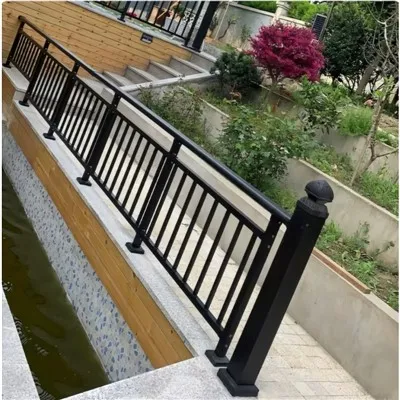
If you’re ready to plan your railing project, whether it’s a tiny balcony, a full deck, or a commercial space, feel free to reach out to us to chat through your space, get a custom timeline estimate, or pick up the right pre-fab kit (or custom parts) for your needs. We’re here to help make the process as smooth and fast as possible, no stress.
Welded Railing References:
- North American Deck and Railing Association. (2022). "Residential Railing Installation Timeline Guide"
- Aluminum Association. (2023). "Aluminum Railing System Install Efficiency Report"
- Professional Deck Builder Magazine. (2021). "Commercial Railing Installation Time Benchmarks"
Jiangxi Hengmei New Materials Co., Ltd.
We’re well-known as one of the leading aluminum railing systems manufacturers in China, featured by quality products and good service. Please rest assured to buy bulk aluminum railing systems made in China here from our factory. We also accept customized orders.
Address: Wanfu Industrial Park, Wuning County, Jiujiang City, Jiangxi Province
E-mail: 13979274798@163.COM
WebSite: https://www.hengmeiindustry.com/
