If you’ve ever worked in electronics manufacturing, pharmaceuticals, or cleanroom environments, you’ve almost certainly relied on anti static plastics without even realizing it. Last month, a regular client of mine— a mid-sized circuit board assembler—sent me an urgent request: they’d had three production lines stall after a batch of standard plastic bins generated a static discharge that burned out $12,000 worth of microchips. The root of the problem? They’d been using cheap, off-the-shelf plastic that can hold static for days, enough to fry tiny, sensitive components in a fraction of a second. That’s where our work as anti static plastics suppliers comes in, and it’s worth breaking down exactly how these materials work, because it’s not just about “static-proofing”—it’s about engineering materials that balance conductivity, durability, and real-world performance for every industry that depends on them. Anti Static Plastics

Let’s start with the basics, because static electricity is one of the most misunderstood forces in manufacturing. Every material has a specific triboelectric charge: when two dissimilar surfaces rub together (think a plastic bin sliding on a factory floor, or a circuit board being lifted out of a mold), electrons transfer from one to the other. If the material is an insulator—like standard polyethylene, polypropylene, or even most common engineering plastics—those electrons can’t move freely. They build up on the surface, creating a static charge that can reach thousands of volts. For context, the static shock you get from a doorknob is around 2,000 volts, but a single microchip can be destroyed by a discharge as small as 10 volts. That’s why even minor friction can spell disaster for electronics, or contaminate sterile pharmaceutical products or cleanroom environments where particulate buildup is a safety hazard.
Standard insulators don’t cut it, so that’s where anti static plastics step in. The core function of any anti static plastic is to prevent that static charge from building up, and there are two primary ways we achieve this: dissipative antistatic and conductive antistatic (sometimes called static-dissipative and static-conductive, respectively). The difference between these two is critical for clients, because one is designed for gentle static control while the other handles higher-charge environments, and getting the wrong one for the job is just as bad as using regular plastic.
Let’s break down the manufacturing process, because that’s where the science gets practical, not just theoretical. There’s no magic additive that gets injected into plastic and suddenly makes it anti static—though that’s the idea some cheap suppliers push to cut corners. We work with two main additive families, plus a newer, more advanced class of material called intrinsically conductive polymers (ICPs) that’s transformed the industry in the last 10 years.
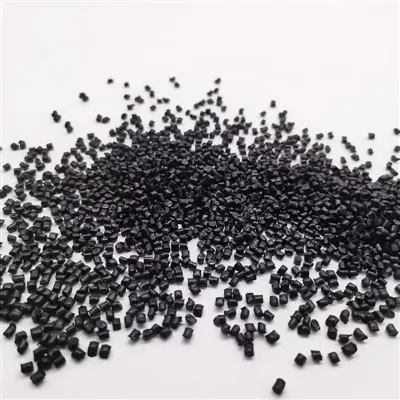
The first, and most common for general-purpose anti static plastics, is carbon-based additives: carbon black, carbon nanotubes, or graphene. When you mix these tiny, conductive particles into the plastic resin (usually polyethylene, polypropylene, or ABS, depending on the application), they form a continuous, interconnected network inside the plastic matrix. That network acts like a highway for electrons, so any charge that builds up on the plastic’s surface can flow through the material and dissipate into the surrounding air or a grounded surface before it builds up to dangerous levels. For example, our standard static-dissipative plastic bins for circuit board parts use a 2% carbon black additive that creates this network—we test every batch to make sure its surface resistivity falls between 10^6 and 10^11 ohms per square, the sweet spot for gentle, controlled charge dissipation that prevents shocks without interfering with sensitive electronics.
The second additive class is metallic: fine silver, copper, or nickel particles, which create a higher-conductivity network, pushing surface resistivity below 10^6 ohms per square. This is conductive antistatic plastic, designed for high-friction environments like automated assembly lines where plastic parts slide dozens of times a minute, or for shielding electrostatic-sensitive devices (ESDs) from external electromagnetic interference. We only use metallic additives for specific applications, though, because they add cost and can cause issues if a client needs to weld or mold the plastic in a way that could expose the metal.
The third, and most innovative, is intrinsically conductive polymers (ICPs), which are a class of plastic that’s conductive on their own, no additives needed. Before ICPs, anti static plastics had a big flaw: over time, surface additives would wear off, leach out, or get scrubbed away, turning a “permanent” anti static bin into a regular insulator in six months or less. ICPs solve that, because the conductivity is built into the molecular structure of the plastic itself. We use ICPs for cleanroom applications where even tiny amounts of leached additive could contaminate sterile drugs or semiconductor wafers—one client makes insulin pens, and their production lines can’t risk any foreign particles leaching from storage bins, so ICP-based plastic is non-negotiable for their needs.
A lot of new clients ask us why we don’t just use metal for all these parts, and the answer comes down to application and usability. Metal is heavier, more expensive, can scratch delicate circuit boards, and doesn’t have the same moldability as plastic. A 50-gallon metal bin for electronic components would be 10 times heavier than a plastic one, impossible to fit on a standard pallet, and would corrode in high-humidity cleanrooms. Anti static plastics strike the perfect balance: they’re lightweight, moldable into custom shapes, durable enough to last for years, and most importantly, they control static exactly where it’s needed.
Testing is the biggest part of our work as a supplier, because there’s no universal standard for “anti static” performance. A bin that works for a automotive electronics plant might fail in a hard disk drive manufacturing facility, where components are even more sensitive. We test every batch of anti static plastic we ship to three key standards: the ESD Association’s STM 11.11 for surface resistivity, the MIL-STD-810G for resistance to wear (so additives don’t wear off), and ISO 14644 for cleanroom particulate outgassing for sensitive environments. Last year, we had a client who’d been buying anti static plastic from a no-name supplier that cut corners: their bins had a surface resistivity of 10^12 ohms per square, which is actually above the static-dissipative threshold—meaning they were just regular insulators, with no ability to dissipate charge. We tested the same resin with our standard carbon additive, and adjusted the mix to hit 10^8 ohms per square, which solved their static problem for good.
Another common misconception is that anti static plastics only work in dry environments. Everyone knows static is worse in winter, when indoor humidity drops below 30%, but we engineer our materials to work across a wide humidity range. The early carbon-additive plastics had a flaw: at high humidity, moisture would cling to the plastic surface and create an unwanted conductive layer, which could lead to stray charge buildup. We fixed that by surface-treating our anti static plastics with a cross-linked polymer coating that repels excess moisture, so the material’s internal conductivity network remains the primary charge-dissipating path, even in 90% humidity environments like pharmaceutical manufacturing cleanrooms.
It’s also important to talk about real-world use cases, because the science only matters if it translates to solving problems. Last year, we supplied custom anti static plastic pallets to a drone manufacturer that was having issues with propeller circuit boards being damaged during shipping. Their original wooden pallets with metal fasteners were generating static when moved by forklifts, and they were losing 2% of their monthly production to ESD damage. Our custom pallets, made from static-dissipative ABS with a carbon nanotube additive, eliminated that damage entirely because any charge generated when the pallet moves is dissipated through the plastic to the ground, no discharge to the components inside. Another recent client is a pharmaceutical contract manufacturer that stores vials of monoclonal antibodies—their original glass storage racks were generating static that attracted airborne particulates, leading to a 5% contamination rate. We supplied modular anti static plastic racks, made from ICP-based polyethylene, that eliminate static buildup, bringing their contamination rate down to less than 0.1%.
As a supplier, we don’t just sell plastic parts—we solve specific static-related problems, and that means working with clients to choose the right material for their exact needs. For example, if a client needs a flexible bin to carry small resistors, we’d recommend a static-dissipative low-density polyethylene (LDPE) with carbon black, which is flexible and durable. If they need a rigid tray for automated assembly line use, we’d recommend high-impact polystyrene (HIPS) with metallic additives for maximum conductivity. For cleanroom environments where leaching is a concern, ICP-based polypropylene is the only option.
The biggest challenge in our industry right now is balancing performance with sustainability. Many anti static plastics use carbon or metallic additives that aren’t easily recycled, which is a problem for clients looking to reduce their carbon footprint. We’ve invested in a line of recyclable anti static plastics, made with bio-based resin from sugarcane and carbon nanotubes sourced from recycled materials, that meet all ESD standards. Last year, we launched this line, and it’s now used by three major consumer electronics brands that have set net-zero goals for their supply chains.
If you’re reading this and have ever dealt with static-related damage to your products, or you’re looking for a reliable anti static plastic supplier that understands the science and the real-world needs of manufacturers, we’re here to help. Whether you need custom molded parts, standard bins, pallets, or cleanroom materials, we work with clients across electronics, pharmaceuticals, aerospace, and more to deliver anti static plastics that perform as promised. Don’t let static damage eat into your production or bottom line—reach out to our team to discuss your specific needs, and we’ll help you find the right solution.
Conductive Polymer References
- ESD Association. (2020). ANSI/ESD STM11.11-2020: Surface Resistivity Measurement – Materials.
- MIL-STD-810G. (2008). Environmental Engineering Considerations and Laboratory Tests. United States Department of Defense.
- ISO 14644-1. (2015). Cleanrooms and associated controlled environments – Part 1: Classification of air cleanliness by particle concentration.
- Zhang, Y., et al. (2018). Intrinsically Conductive Polymers for Electrostatic Discharge Applications. Journal of Polymer Science, Part B: Polymer Physics.
- Triboelectric Series Reference. (2021). National Institute of Standards and Technology (NIST) Internal Report.
Jiangxi Sugo Advanced Materials Co., Ltd.
With abundant experience, we are one of the most professional anti static plastics manufacturers in China. Please feel free to buy high quality anti static plastics in stock here and get free sample from our factory. We also accept customized orders.
Address: 1st Fugong Rd, Futian Industrial Park, Dingnan, Ganzhou City, Jiangxi Prov., R.P.C 341900
E-mail: EILEEN@SUGOPLAS.COM
WebSite: https://www.sugo-esd.com/
