If you’ve ever stood at a construction site, a landfill, or a roadwork project and watched a heavy compactor rumble into place, the first thing you might notice is that thundering, steady force it exerts—enough to flatten dirt, asphalt, or even demolition debris into a solid, uniform layer. As someone who’s spent the last 12 years selling, repairing, and refining hydraulic compactors for a living, I get it: a lot of folks think that raw power just comes from a big engine and a sturdy metal frame. But that’s only half the story. The magic, the precision, and the reason these machines can adjust to different surfaces and materials is almost entirely their hydraulic system. Hydraulic Compactor

I’ve had mechanics come to me confused, standing around a broken compactor, scratching their heads, saying things like “The engine’s running fine, why isn’t the drum pushing down right?” The answer’s usually a misaligned hydraulic hose, a worn seal, or a component they didn’t realize was as critical as the compactor’s engine. Hydraulic systems aren’t just a “add-on” for compactors—they’re the backbone that turns rotational engine power into the controlled, variable force that makes a compactor actually work. Let’s break this down, plain and simple, no engineering jargon that makes your eyes glaze over.
First, let’s start with the basics: what a compactor’s hydraulic system is, in layman’s terms. A hydraulic system works on a super old, super reliable principle: Pascal’s Law, which says pressure applied to an enclosed fluid is transmitted undiminished to every part of the system. Instead of using gears or levers to move heavy loads (which would be clunky, slow, and hard to adjust), we use pressurized fluid—usually a special hydraulic oil, not water, because it needs to withstand high temperatures and prevent rust—to transfer force. For compactors, this system does three big jobs: it powers the compaction drum’s up-and-down movement, controls the machine’s speed and direction, and even runs auxiliary features like the blade that pushes material into place or the compacting plate.
Let’s walk through how this works step by step, using the most common type of compactor we supply: a single-drum vibratory compactor, which is the workhorse for roads, landscaping, and small demolition projects. Here’s the order of operations, from when you turn the key to when the drum starts rolling and compacting.
First, the engine. Every compactor has an internal combustion engine—either diesel, since it’s more reliable for heavy work and long hours, that powers two main things: a traditional mechanical system for moving the machine forward and backward, and the hydraulic pump, which is the heart of the whole hydraulic system. The pump’s job is to take the engine’s rotational power and convert it into fluid power. Think of it like your car’s alternator, but instead of making electricity, it makes pressurized oil. We use two types of pumps most often: gear pumps, which are simpler and cheaper for smaller compactors, and piston pumps, which are more efficient and can adjust pressure on the fly for larger, high-force compactors. If you’re working on a delicate job—like compacting soil around a building’s foundation—you don’t need the same force as compacting asphalt for a highway, right? Piston pumps let us dial that force up or down, which is why we sell compactors with those for heavy construction sites.
Next, that pressurized oil leaves the pump and flows to the next big component: the hydraulic control valve. This is like the traffic light of the system. It directs where the pressurized oil goes, whether that’s to the drum’s actuators (the parts that move the drum) or to the travel motors that make the compactor roll. If you want the drum to lower onto the ground, the control valve opens a path for oil to flow into the side of the actuator that pushes the drum down. If you want to lift the drum to move the compactor to another spot, it diverts oil to the opposite side of the actuator, lifting the drum up. It also controls vibratory action—most compactors have a rotating weight inside the drum that’s spun by a hydraulic motor, and the control valve adjusts how fast that weight spins, which changes the frequency of the vibration. That’s key: vibrating compactors work way better than static ones because the vibration loosens small particles in the soil or asphalt, letting the heavy drum settle into all the gaps. Without hydraulic control, you couldn’t adjust that vibration to match the material—too much vibration can break fragile materials like old brick, too little won’t compact dirt at all.
Then we get to the actuators and motors that do the actual work. For the drum’s up-and-down movement, most compactors use linear actuators, which are like big, strong hydraulic cylinders. You’ve seen them on dump trucks, right? The thing that lifts the bed is a hydraulic cylinder. Same idea here, just built to handle the weight of the 2,000-pound or even 10,000-pound compactor drum. Each side of the drum has its own cylinder, so if the ground is uneven, the hydraulic system can adjust the height of each side independently. That’s a huge advantage over older, non-hydraulic compactors—they’d lurch if the ground was lumpy, but ours stay level, so you get even compaction across the whole path.
For the vibration, we use a rotary hydraulic motor inside the hollow steel drum. The motor spins an unbalanced weight—sort of like a sledgehammer swinging off-center. When that weight spins, it creates a force that pushes the drum up and down thousands of times a minute. The hydraulic motor controls how fast that weight spins, so for fine-grading soil, we run it at a lower, slower speed, and for asphalt, we crank it up higher to get the firm, smooth surface you need for roads.
Now, none of this works without a couple of unsung heroes: the hydraulic reservoir, the filter, and the relief valve. The reservoir is just a big tank that holds the hydraulic oil, and it has to be vented to keep pressure steady, so the oil doesn’t get sucked into the pump with air bubbles. Air bubbles are the worst—they make the system “spongy,” so when you push the control lever, the drum doesn’t move right away, and you get uneven compaction. That’s why we always tell our customers to check the oil level before every shift, and make sure it’s the right type of oil—using the wrong oil, or letting it get dirty, is the number one reason hydraulic systems fail. We also put a filter between the pump and the control valve to catch tiny metal shavings or dirt; if those get into the cylinders or valves, they’ll scratch the seals, and then you get leaks or lost pressure.
The relief valve is another critical part. Think of it as a pressure regulator. If the drum hits a rock that’s too big, or you accidentally push the lever too far, the pressure inside the system can spike so high it bursts a hose or breaks a cylinder. The relief valve opens at a set maximum pressure, letting excess oil flow back to the reservoir, so the system doesn’t get damaged. I’ve seen this save dozens of compactors over the years—one customer was running over a concrete chunk half as big as his compactor, and the relief valve kicked in, no damage. If that valve wasn’t there, he’d be out $15,000 for a new cylinder before lunch.
Now, let’s talk about common problems I see all the time, because that’s the stuff that matters to someone buying a compactor. A lot of new operators think that power is just about the size of the engine, but 70% of the issues we get called for are hydraulic-related. For example, if your drum is lifting slow or not lifting at all, it’s almost never the engine—it’s either a clogged filter, a leaky seal, or a misadjusted control valve. Or if the vibration fades while you’re working, that’s usually a worn hydraulic motor inside the drum, which is a lot cheaper to fix than replacing the whole drum. That’s why when our customers ask us which compactor to buy, we don’t just talk about engine size—we talk about the quality of the hydraulic components. Cheaper compactors often use low-quality piston pumps or seals, which fail after a few thousand hours of use. Our compactors use precision-machined components from reputable manufacturers, so they can handle 10,000 hours of heavy work without major hydraulic repairs.
Another thing that sets our hydraulic compactors apart is the precision control. Some compactors only have two settings: fast or slow, high force or low. Ours have infinitely variable control, so you can adjust the drum’s force by just moving a lever a little. That’s a game-changer for jobs like compacting around underground pipes—you don’t want to smash the pipe, but you need enough force to compact the dirt so it doesn’t settle later. The hydraulic system lets you dial that in exactly, which is something a lot of our competitors’ models can’t do.
I know a lot of people reading this might be site managers or small construction company owners who are shopping for a compactor. Let’s be honest: buying a compactor is a big investment, and the hydraulic system is the part that will make or break how well that investment works. A compactor with a bad hydraulic system is just a fancy paperweight. A good one will last decades, and work reliably on every job you throw at it.
At the end of the day, the hydraulic system isn’t just a set of pipes and hoses—it’s the reason a compactor can adapt to whatever you need. It’s the reason you can flatten soft soil one minute and hard asphalt the next, without stopping to adjust gears or pulleys. It’s the quiet workhorse that’s hidden under the metal frame, doing all the heavy lifting while the engine just does its job.
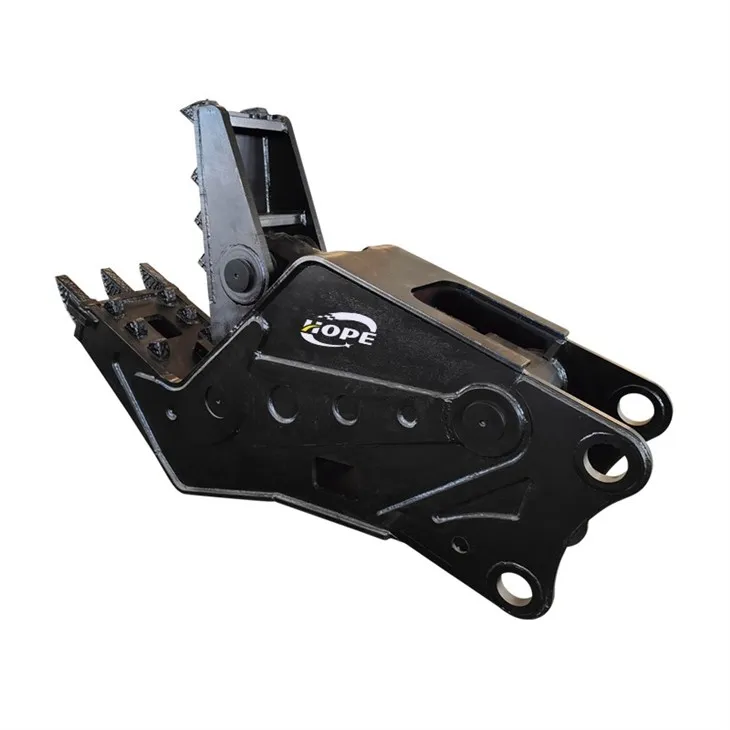
If you’re in the market for a hydraulic compactor that’s built to last, with a system engineered for consistent power and easy maintenance, we’re here to help. We can walk you through the different models, answer your questions about hydraulic performance, and help you find the right compactor for your specific jobs. Don’t hesitate to reach out to discuss your requirements and find the perfect solution for your operations.
Hydraulic Compactor References
Hydraulic Component Design and Application. Industrial Press, 2019.
Construction Equipment Hydraulic Systems: Operation and Maintenance. McGraw-Hill, 2021.
Vibratory Compaction Technology for Civil Engineering Projects. CRC Press, 2020.
Hope Precision Machinery Co., Ltd.
As one of the most professional hydraulic compactor manufacturers and suppliers in China, we also support customized service. Please feel free to buy high quality hydraulic compactor for sale here from our factory. For more information, contact us now.
Address: No.8 Shenzhen Street, Development Zone, Yantai,Shandong ,China
E-mail: lulu@hope-breaker.com
WebSite: https://www.hopeequip.com/
