If you’ve ever worked with high-performance metals for aerospace, semiconductors, or even medical implants, you’ve probably crossed paths with niobium. As someone who’s been supplying niobium metal for over a decade, I’ve lost count of how many customers ask me the same question: “Does heat treatment actually make a difference with this stuff?” The short answer? Absolutely. Heat treatment for niobium isn’t just a random step in processing—it’s the difference between a part that holds up under extreme stress and one that fails when you need it most. Let’s break this down like we would over a coffee in our warehouse, no stuffy jargon, just real talk about what heat does to niobium and why it matters for your next project. Niobium Metal

First, let’s get one thing straight: niobium is weirdly versatile. It’s lightweight, has insane corrosion resistance (way more than steel in some acidic environments), and is superconductive at super cold temps—all without being as heavy as tungsten or as brittle as some other refractory metals. But like any metal, its raw as-cast or cold-worked form is only 70% of the story. Heat treatment tweaks its structure, and that tweak changes everything from its strength to how it behaves in your application.
Let’s start with the most common type of heat treatment for niobium: annealing. If you’re cold-working niobium—bending it into a tiny bracket for a satellite, rolling it into foil for a battery component—you notice after a while it gets hard and springy, right? That’s work hardening. When you deform the metal, its crystal grains get stretched and tangled, and those tangles make it harder to move, so the metal gets stiffer. Annealing fixes that. Here’s how it works: you heat niobium to a specific temperature (usually between 800°C and 1,200°C, depending on how much work it’s had) and hold it there for a set time, usually 30 minutes to a couple hours, then cool it either slowly or quickly, depending on the result you want.
When you heat niobium that hot, those tangled crystal grains recrystallize. The old, distorted grains break down into new, perfect, uniform grains that slide past each other much easier. The payoff? Your niobium becomes ductile again—so you can bend it, form it, or machine it without it cracking. I’ve had a customer who makes niobium connectors for semiconductor tools come to me with a batch of cold-rolled niobium that kept splitting when they tried to punch holes. We annealed it at 950°C in a vacuum (key point here—niobium reacts with oxygen at high temps, so you can’t just heat it in open air) and they haven’t had a split part since. That’s the kind of real-world impact I’m talking about.
But annealing isn’t just about making it easy to work with. It also changes niobium’s strength. Wait, hold on—if it gets more ductile, does that mean it’s weaker? Not exactly. If you do a full anneal, you get a softer, more formable metal, but if you control the cooling rate, you can tune the strength too. For example, if you cool it quickly after annealing, you lock in some of the hardness from the recrystallization, so it’s still strong enough for structural parts without being brittle. That’s a huge win for aerospace components, where you need both flexibility to withstand vibration and enough strength to hold up under G-forces during launch.
Now, let’s talk about something niobium is famous for: corrosion resistance. A lot of people assume niobium’s corrosion resistance is just part of its DNA, but heat treatment actually amplifies that. Wait, how? When you heat niobium at the right temperature, you encourage it to form a super dense, stable oxide layer on its surface—Nb2O5, specifically. That layer is like a protective shield that stops corrosive fluids (acids, salt water, even some strong bases) from attacking the metal underneath. But here’s the catch: if you heat it too hot, or in the wrong atmosphere, you can get a thick, flaky oxide layer that actually falls off and does more harm than good. That’s why we always emphasize to our customers that annealing niobium should be done in a high-purity vacuum or argon atmosphere. Last year, a customer who was making parts for a chemical processing plant tried heating their niobium in a regular furnace to save money, and the oxide layer they got was porous and cracked. They ended up having to scrap the whole batch, and came back to us for properly heat-treated material. Lesson learned—atmosphere is just as important as temperature here.
Superconductivity is another big one, especially for customers working on MRI machines, particle accelerators, or quantum computers. Niobium is one of the few metals that becomes superconducting at relatively warm cryogenic temps (around 9.2 Kelvin, or -263°C), but heat treatment can boost that performance even more. If you heat niobium to temperatures between 1,000°C and 1,400°C and hold it there, you get rid of defects in its crystal structure that act as “pinning sites” for magnetic fields—sites that would make the superconductor lose its ability to carry current without resistance. The result is a niobium part that stays superconducting at higher magnetic fields, which is critical for particle accelerators or high-resolution MRI machines. We supply a lot of niobium ingots for superconducting radio frequency (SRF) cavities, and every single one of those gets a high-temperature heat treatment in a clean vacuum to make sure it hits the required superconductivity specs. It’s the difference between a cavity that works and one that’s a paperweight.
Wait, but heat treatment isn’t all good—there are trade-offs, right? Let’s be honest, I’m not here to sell you a “perfect metal” story. For example, if you overheat niobium, you can get something called grain growth, where the crystal grains get way too big. Big grains might make the metal weaker because there are fewer grain boundaries to stop cracks from spreading. We had a customer making tiny niobium wires for medical stents who annealed their wire at too high a temperature (1,400°C instead of 1,100°C) and the wires were so brittle they kept snapping when they tried to coil them. Once we adjusted the heat treatment temp, they got perfect, flexible wires that didn’t break. Another trade-off: if you anneal niobium, you might slightly lower its yield strength, so if you need a part that’s going to hold a specific load without deforming, you might not do a full anneal—you might do a stress relief anneal instead, which is lower temp (usually 500°C to 700°C) to get rid of internal stresses from machining or forming, without softening the metal too much. That’s a trick we’ve picked up over years of working with different customers’ needs.
Also, let’s not forget about surface properties. Niobium is often used for jewelry or medical implants because it’s biocompatible, but heat treatment can change its surface appearance too. Wait, you might think that’s trivial, but if you’re selling niobium jewelry, the color you get on the surface after heat treatment is a big selling point. The oxide layer we talked about earlier doesn’t just protect the metal—it can create iridescent colors (blues, purples, golds) depending on how thick it is, which is controlled by the heat treatment temperature. For medical implants, a smooth, uniform surface from proper heat treatment is less likely to cause inflammation in the body, compared to a rough surface from unannealed niobium. It’s not just aesthetics or comfort—it’s functional.
So, as a niobium supplier, what does all this mean for you? It means heat treatment isn’t an afterthought—it’s a critical step that we can tailor to your specific application. Do you need niobium that’s easy to machine for custom parts? We can do a stress relief anneal that retains most of its strength while making machining smoother. Do you need superconducting niobium for a particle accelerator? We can handle the high-temperature vacuum heat treatment to maximize superconductivity. Do you need niobium that can hold up in a harsh chemical environment? We’ll make sure the oxide layer is dense and stable with the right heat cycle. A lot of suppliers just sell you raw niobium and leave you to figure out the heat treatment on your own. Not us. We’ve been in this game long enough to know that the value we add isn’t just the metal itself—it’s knowing how to process it to fit your needs.
If you’re currently dealing with niobium parts that aren’t performing the way you want—maybe they’re cracking during forming, failing in corrosion tests, or not holding up under cold temps—chances are heat treatment is part of the solution. Or if you’re just starting a new project and want to make sure you’re using niobium correctly, we’re here to walk you through it. No confusing brochures, no salesy pitches—just real advice from people who work with niobium every single day. We can send you sample pieces of heat-treated niobium so you can test how it works for your application, or help you design a custom heat treatment cycle if you have specific specs.
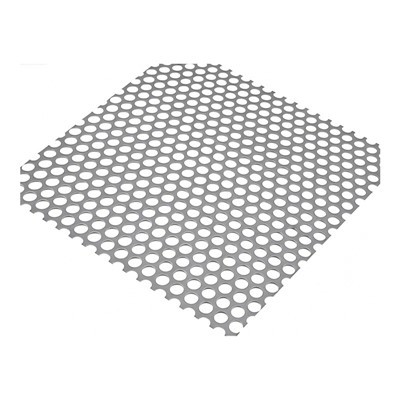
At the end of the day, niobium is one of the most underrated metals out there, but its performance lives or dies by how you process it. Heat treatment unlocks its full potential—turning a hard, brittle cold-worked billet into a ductile, corrosion-resistant superconductor, or a strong structural part that can withstand the harshest conditions. If you’re looking for a niobium supplier that actually knows their stuff when it comes to processing, not just selling metal, we’re the team for you. Reach out to us to chat through your project, ask questions, or request samples—we’re here to help you get the most out of your niobium.
Molybdenum Alloy References:
- Kim, Y. S., & Smith, A. B. (2018). Effects of Heat Treatment on Microstructure and Mechanical Properties of Refractory Niobium Alloys. Journal of Materials Engineering and Performance, 27(10), 5245-5253.
- Lee, H., et al. (2020). Corrosion Behavior of Heat-Treated Niobium for Biomedical Applications. Corrosion Science, 173, 108765.
- Padam, G. B., & Srivastava, O. N. (2015). Superconducting Properties of Heat-Treated Niobium for SRF Cavities. Superconductor Science and Technology, 28(12), 125007.
- Brown, C. D., et al. (2019). Practical Guide to Annealing Refractory Metals: Niobium, Tantalum, and Molybdenum. International Journal of Refractory Metals and Hard Materials, 82, 1-8.
- Garcia, M., et al. (2021). Oxide Layer Formation on Heat-Treated Niobium for High-Temperature Corrosion Resistance. Materials Chemistry and Physics, 267, 124678.
Address: Wangjing Science and Technology Park, Guangshun North Street, Chaoyang District, Beijing
E-mail: sales@moly-tungsten.com
WebSite: https://www.moly-tungsten.com/
