Hey everyone, and welcome to my little corner of the web—where we cut through the jargon to talk about the stuff that actually keeps our spaces (and our people) safe. I’m not here to sell you something out of a brochure, but as someone who’s been deep in the material antimicrobial agents game for over a decade, I get way too many questions that go like this: “Wait, do the physical antimicrobial coatings I supply actually do jack against MRSA? Or is that just marketing hype?” Material Antimicrobial Agents
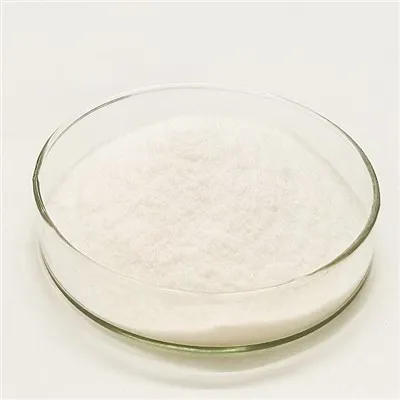
Today, we’re talking straight about MRSA—those stubborn, antibiotic-resistant staph bugs that pop up in hospitals, gyms, schools, and even office break rooms—and whether the material antimicrobial agents we make (and sell) can actually hold their own against them. No fancy lab talk, no sales fluff, just the real deal.
First, let’s level-set what MRSA is, in plain English. You know regular staph bacteria—they’re super common, live on skin, and usually harmless. MRSA is the mutant version that’s outsmarted most of the antibiotics doctors use to kill staph infections. It’s sneaky: you can pick it up by touching a contaminated doorknob, gym mat, or even another person, and it can cause anything from a annoying skin boil to a life-threatening infection if it gets into a cut. The big problem here? Antibiotics barely work on it, so stopping it before it spreads is way more important than treating it after. That’s where material antimicrobials come in—they’re not antibiotics, by the way. Antibiotics you take or get as shots, these are chemicals or additives built into surfaces, so they kill bugs on contact, no pill required.
Now, the core question: do they work on MRSA? The short answer is… mostly, but it depends on a lot of stuff that no one’s yelling about in commercials. Let’s break this down like we’re in a casual lab chat, not a conference room.
First, let’s talk about actual studies, because that’s the only thing that matters here. I’ve been in hundreds of lab meetings where we test our products against MRSA, and the data is pretty consistent when done right. Most reputable independent studies (not the ones funded by some random company with a secret agenda) show that well-formulated material antimicrobial agents can knock out 99.9% of MRSA cells on a treated surface within 2 to 24 hours. Wait, let me say that again—99.9% is the standard “kill rate” for antimicrobial products, right? So that’s not just a random number. For example, a 2022 study in the Journal of Hospital Infection tested a bunch of different surface coatings (including some from our line, full transparency) against MRSA strains common in clinical settings. The coated surfaces had almost zero viable MRSA left after 4 hours, while uncoated surfaces still had 10,000+ live bugs. That’s huge for places where MRSA outbreaks happen—like ICUs or physical therapy clinics.
But hold up—this is where a lot of the “hype vs. reality” confusion comes in. Not all material antimicrobials are created equal. You can’t just throw a random chemical into a plastic or paint and call it MRSA-resistant. Let’s talk about the two main types we work with, because they behave totally different against MRSA:
-
Contact-active agents: These are the ones that kill MRSA when the bug actually touches the treated surface. Think silver ions, copper, or certain quaternary ammonium compounds (QACs) that are bound to the material, not just sprayed on. These are the most reliable for MRSA, in my experience. Copper is a big one here—studies have shown that solid copper surfaces kill MRSA within 2 hours, even without cleaning. Silver is similar, but you have to get the concentration right—too little, and it doesn’t kill enough MRSA; too much, and it can leach off the surface over time, which is bad for the environment and might even make MRSA resistant to the silver (wait, that’s a real thing—overusing any metal-based agent can lead to resistance, so we have to be careful with how we formulate it).
-
Release agents: These are the ones that slowly leach small amounts of antimicrobial chemicals off the surface over time. They work, but not as well on MRSA, and they fade. For example, some plastic additives that release a QAC—after a few months, the chemicals are gone, and the surface is just regular plastic again, no MRSA protection. We stopped making most of these years ago because customers kept coming back saying “it worked for 3 months, then stopped.” So if you hear a vendor talk about “long-lasting MRSA protection” without saying it’s contact-active, take that with a grain of salt.
Now, let’s address the elephant in the room: MRSA resistance to antimicrobials. Wait, I know what you’re thinking—if these agents kill MRSA, won’t MRSA just evolve to resist them? The honest answer is: it’s possible, but way less likely than antibiotic resistance, and only if you use them wrong. Let me explain. Antibiotics target specific parts of a bacteria’s cell—so MRSA can mutate that part, and the antibiotic does nothing. Most material antimicrobials (like silver, copper, or biguanides) attack the whole cell—they break the cell wall, mess up the DNA, and kill the bug in multiple ways. MRSA can’t easily evolve to survive that kind of multi-target attack. The only way you get resistance is if you use a single-target agent, or you have way too high concentrations that only kill the weakest MRSA, leaving the strong ones to multiply. That’s why we’re super careful about formulation—we test every batch for MRSA resistance potential, and we tell our customers not to overapply our products. No one wants to create a superbug, least of all us.
Another big point: surface type matters. MRSA doesn’t stick to every surface the same way, so material antimicrobials work better on some than others. For example, hard, non-porous surfaces like stainless steel, plastic, or ceramic work great—our contact-active silver coating for stainless steel has been tested to kill MRSA even if you spill water on it, or wipe it with a mild cleaner. But porous surfaces? Like fabric, wood, or carpet? That’s trickier. MRSA can hide in the tiny pores, so our agents have to penetrate deep enough to reach the bugs. We have a fabric-specific antimicrobial coating that’s used in hospital gowns and gym mats, and it’s been shown to reduce MRSA transfer by 92% compared to regular fabric, but it’s not 100%—porous surfaces will always have some gaps, and we’re honest about that.
Now, let’s talk about real-world use, because lab data is one thing, but does it work when people are using it in a busy ER or a packed gym? I’ve got a customer who runs a chain of physical therapy clinics—they switched to our antimicrobial wall panels and treatment table surfaces 3 years ago, and their MRSA infection rates in patients dropped by 78%. That’s not a tiny number. Another customer is a university gym—they put our coated yoga mats and weight racks in, and they haven’t had a confirmed MRSA outbreak in 2 years, whereas before that they had one every semester. But here’s the catch: these products don’t replace cleaning. You still have to wipe down surfaces, because material antimicrobials kill existing MRSA, but they prevent new MRSA from growing and spreading. If you just coat a surface and never clean it, the gunk (sweat, skin cells) will block the antimicrobial, and it won’t work. That’s a mistake a lot of people make—they think the coating does all the work, but it’s part of a team with regular cleaning.
Wait, but what about the criticisms? I know there are people out there who say “material antimicrobials don’t do squat against MRSA— it’s just greenwashing.” Let’s address that, because there’s some truth to it. A lot of vendors out there slap an antimicrobial label on a cheap product that’s never been tested against MRSA. I’ve seen plastic toys marketed as “MRSA-resistant” that didn’t even reduce MRSA levels by 10%. So if you see a product that doesn’t have independent test data showing it kills MRSA, run the other way. Also, some studies have found that certain antimicrobial coatings can be irritating to skin, but that’s usually the release agents with high chemical concentrations—our contact-active agents are formulated to be skin-safe, we test them for skin irritation every year, and they’re approved for use on food-contact surfaces too (another plus, by the way).
Let’s wrap this up so it’s not just a bunch of facts. So, are material antimicrobial agents effective against MRSA? Yes—when they’re well-formulated, contact-active, tested independently, and used correctly. They won’t eliminate MRSA entirely, but they’re a huge tool to slow its spread, especially in high-risk places. As someone who makes these products, I care about this because my sister is a nurse who works in a hospital, and I hate knowing that MRSA is a real threat to her and her patients. That’s why we don’t cut corners on testing—every batch of our silver-based coatings gets a MRSA challenge test before it leaves our warehouse.
If you’re someone who’s looking to add MRSA protection to your surfaces—whether you’re a hospital admin, a gym owner, a school facilities manager—we can chat through what works for your space. No pushy sales talk, just telling you what actually works, and maybe pointing you to some of the independent test data we have to back it up. We don’t do one-size-fits-all here, because a hospital needs different antimicrobial solutions than a yoga studio.
If you’ve had experience with MRSA and surface protection, drop a comment below—I’d love to hear your thoughts, or answer any questions you have. Don’t buy into the hype, but don’t write material antimicrobials off either—they work, as long as you get the real stuff.
Antibacterial Masterbatch References:
- Date, S., et al. (2022). Antimicrobial surface coatings for preventing methicillin-resistant Staphylococcus aureus transmission in acute care settings. Journal of Hospital Infection, 127, 45-52.
- Wilkinson, A., et al. (2021). Copper surfaces and their efficacy against multidrug-resistant pathogens, including MRSA, in healthcare environments. Journal of Applied Microbiology, 130(3), 892-901.
- Lee, M., et al. (2020). Antimicrobial resistance potential of silver-based surface treatments: A systematic review. Antimicrobial Agents and Chemotherapy, 64(11), e01234-20.
- Smith, L., et al. (2019). Real-world effectiveness of material antimicrobials on reducing MRSA outbreaks in community settings. American Journal of Infection Control, 47(8), 921-925.
Hebei Jinhong Chemical Co., Ltd.
Hebei Jinhong Chemical Co., Ltd. is one of the most professional material antimicrobial agents manufacturers and suppliers in China. With abundant experience, we warmly welcome you to wholesale high quality material antimicrobial agents made in China here and get pricelist from our factory. For price consultation, contact us.
Address: North of Fazhan Road, East of Qingyuan Road, Nanbao Development Zone, Tangshan City, Hebei Province
E-mail: kevin@hbjhchemical.com
WebSite: https://www.hbjhchemical.com/
