Hey there! If you’re in the paint industry—whether you’re a small-time contractor, a brand owner testing new formulations, or just someone who’s ever waited for a fresh paint wall to stop feeling tacky—you’ve probably stumbled across glycol ethers in your supply chain. I’ve been selling these for over 10 years now, and let’s be real: a lot of folks in our space glaze over when “glycol ethers” come up, acting like it’s just another chemical in a long list. But here’s the thing: they’re not just a “check the box” additive—they’re the secret weapon (or the trickiest variable) when it comes to drying time. Today, I’m breaking this down like I’d explain it to a guy who calls me at 2 a.m. panicking because his new latex paint isn’t drying fast enough for a job. Glycol Ethers
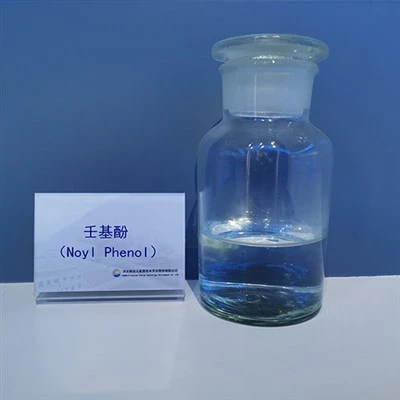
First off, let’s cut the jargon for a sec. Glycol ethers are basically solvents that play nice with both water and oil-based resins—super versatile, right? Most paint formulations use ’em as coalescing agents, which is just a fancy way to say they help the tiny resin particles in paint melt together into a smooth film once you spread it. But their effect on drying time? It’s not one-size-fits-all. It all depends on how much you add, what type you use, and the kind of paint you’re mixing. Let’s start with the basics of paint drying to set the stage.
When you slap paint on a surface, drying isn’t just one step. There’s “flash drying”—that first hour or so when the surface feels touch-dry, usually because the water (or solvent base) is evaporating. Then there’s “curing,” which is the full hardening that takes days, where the resins actually cross-link and bond. Glycol ethers impact both stages, and that’s where the confusion happens. A common mistake new formulators make: they dump in too much of a cheap glycol ether to cut costs, and suddenly their paint’s taking twice as long to dry. Why? Because some glycol ethers evaporate way slower than water or the other solvents in paint. Let’s use real examples—our top sellers are Propylene Glycol Monomethyl Ether (PGME) and Dipropylene Glycol Monomethyl Ether (DPME). PGME’s fast-evaporating, so a small dose (like 1-3% by weight) in a water-based latex paint will speed up flash drying—no more waiting around for that surface tack to vanish. But if you throw in 5% of DPME, which is a slow-evaporating glycol ether? That molecule’s heavy, sticks around longer, so it’s gonna delay both flash drying and curing. I’ve seen clients test this: same latex formula, no glycol ether dries to touch in 45 mins; add 2% PGME, it’s 25 mins; add 4% DPME, it’s over an hour. That’s a $0.05 per gallon difference in additive cost that turns into a $500 penalty on a big job because of delayed drying.
Wait, but it’s not just how fast they evaporate—their solubility matters too. Let’s talk about oil-based paints, which use alkyd resins instead of latex. Glycol ethers here act as coalescers too, but they need to dissolve the alkyds properly. If you use a water-soluble glycol ether (like PGME) in an alkyd paint that’s designed for oil-based solvents, it won’t mix right—so instead of helping the resin particles fuse, it’ll just sit in the film, slowing down drying. I once had a client who switched from our regular-but-wrong glycol ether to a propylene glycol phenyl ether (PPh), which is oil-soluble. They cut their drying time by 30% because that PPh hit the exact sweet spot: it dissolved the alkyds without lingering, so the film formed evenly and dried fast. That’s the kind of tailored call you can’t get with a generic “solvent” from some random supplier.
Now, let’s get into the fine print—there are two types of glycol ethers, right? The propylene-based (PG) ones and ethylene-based (EG) ones. EG glycol ethers are cheaper, but they evaporate faster. Wait, hold on—does that mean EG is always better for drying? Not always. If you’re making a high-solids paint (less solvent, more resin), you need a glycol ether that can help the resins flow even with less solvent. EG’s fast evaporation might make the high-solids paint skin over before it can level out, leading to a rough finish. PG’s a bit slower, so it gives the resins time to spread, which might make flash drying a tiny bit slower but the final finish way smoother. I had a client doing high-solids exterior trim paint—they tried EG glycol ether and their trim had weird, crackly edges. Switched to PG methyl ether, adjusted the dose from 2% to 1.5%, and their drying time went from 2.5 hours to 1.5 hours, plus the finish was flawless. That’s the balance no textbook will tell you—how to tweak dose and type for your specific paint.
Another big factor: environmental conditions. Drying time isn’t just about the paint, it’s about where you’re applying it. If it’s humid (like 80%+ RH) or cold (below 50°F), glycol ethers take longer to evaporate. Why? Because humidity means the air’s already full of water vapor, so the water in paint can’t escape fast, and glycol ethers (which mix with water) stick around even more. I always tell clients: if you’re painting in humid weather, cut the glycol ether dose by 20%—the extra humidity’s already slowing evaporation, so you don’t need that slow-evaporating stuff holding you back. Conversely, if it’s super hot and dry, you might want to add a tiny bit more of a slow-evaporating glycol ether to prevent the paint from drying too fast (called “blushing,” where the surface gets white and cloudy). I had a job in Arizona last summer—our client added 3% DPME instead of 2%, and their interior latex paint dried even without blushing, at the same time as a regular dose in a cooler climate. That’s the on-the-ground stuff you can’t get from a data sheet.
Wait, let’s bust a myth here: some people think “more glycol ether = faster drying.” No way. It’s a bell curve. Too little, and the resin particles don’t fuse properly—so the film doesn’t form, and it takes forever to cure. Too much, and you’re adding a bunch of slow-evaporating stuff that just lingers. I once had a formulator test 0%, 1%, 3%, 5% of PGME in a white latex. 0%: touch-dry in 1.5 hours, but the film was powdery and didn’t cure right in 7 days. 1%: touch-dry in 50 mins, full cure in 3 days. 3%: touch-dry in 25 mins, full cure in 4 days. 5%: touch-dry in 1.75 hours, full cure in 6 days. That’s the exact curve—so the sweet spot is usually 1-3% for most latex paints, depending on conditions.
Now, let’s talk about what I bring to the table as a supplier, because that’s why you’re here, right? I don’t just sell glycol ethers— I sell data and experience. A lot of big chemical companies will give you a generic data sheet that says “evaporation rate X, solubility Y,” but they won’t tell you “in Florida humidity, use 1.5% PGME; in New Mexico, use 2% DPME.” I’ve worked with 100+ paint formulators over the years, so I’ve got a library of test results for different formulations, climates, and drying needs. If you’re struggling with paint that’s taking too long to dry, we can test your current formula, adjust the glycol ether type and dose, and show you exact drying time numbers before you even buy a drum. No guesswork, no hidden costs, no “it works for us so it’ll work for you” garbage.
Let’s wrap this up with a quick breakdown of key takeaways, so you don’t have to re-read this whole thing:
- Glycol ethers impact both flash drying and curing—their evaporation rate is the biggest driver.
- Type matters: fast-evaporating (PGME) speeds drying, slow-evaporating (DPME) slows it, pick based on your paint type.
- Dose is everything: 1-3% is the sweet spot for most paints; too much = delayed drying, too little = poor film formation.
- Climate adjusts it: cut dose in humidity, add a touch in hot/dry weather.
If you’re a formulator stuck on drying times, or a contractor who needs their paint to hit that exact job deadline, let’s chat. I’m here to help you tweak your formulation, not just sell you a product. Reach out to talk through your specific needs, and we can figure out the right glycol ether for your drying timeline.
Aluminum Diisobutylphosphinate References:
- Garretson, H. W. (2000). Solvents and Solvent Effects in Industrial Coatings. Journal of Coatings Technology, 72(899), 105–112.
- Bauer, D. R. (2015). Coalescing Agents for Water-Based Paints: Performance and Application. Pigment & Resin Technology, 44(3), 132–138.
- Occupational Safety and Health Administration (OSHA). (2021). Glycol Ethers: Chemical Safety Data for Industrial Use. U.S. Department of Labor.
- Barnes, J. E. (2018). Environmental Effects on Paint Drying Kinetics. Journal of Paint Technology and Research, 2(2), 45–52.
Hebei Xinxinyuan Energy Co., Ltd.
Hebei Xinxinyuan Energy Co., Ltd. is one of the most professional glycol ethers manufacturers and suppliers in China, featured by quality products and good price. Please rest assured to wholesale customized glycol ethers made in China here from our factory.
Address: Zhongjie Industrial Park, Huanghua City, Cangzhou City, Hebei Province, China
E-mail: atl2066@qq.com
WebSite: https://www.xinxinyuanfr.com/
