If you’re running a plastic film extrusion operation—whether it’s small-batch custom wraps, agricultural mulch film, or retail packaging for your local market—chances are you already know the die is the unsung hero of your film blowing machine. Mess around with the wrong one, and you’ll end up with lopsided film, inconsistent thickness, or even blown dies mid-run that cost you hours of downtime and wasted resin. As a die supplier who’s talked to hundreds of operators over the years, I’ve seen way too many folks skip the deep dive on die selection just to “get the machine running fast”… and regret it later. Today, let’s break this down like we’re chatting over a coffee at a trade show booth—no stuffy jargon, just the stuff that actually moves the needle. Film Blowing Machine
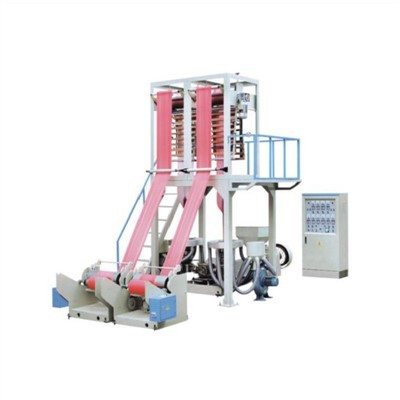
First things first: let’s get on the same page about what a die even does, because half the confusion comes from mixing up basic terms. When your machine melts resin (whether that’s LDPE, LLDPE, HDPE, or even recycled blends) and pushes it through the extruder, the die shapes that molten plastic into a hollow tube, which you then inflate into the final film. The die’s job isn’t just to make a round hole—it’s to control the flow evenly all around the circle, prevent “melt fracture” (that rough, streaky look on the film), and maintain consistent wall thickness so your finished product meets specs. I can’t tell you how many times a customer has come to me upset because their film was too thick on one side and too thin on the other—9 times out of 10, it wasn’t the extruder, it was the wrong die for their resin or output speed.
Now, let’s start with the biggest decision: resin compatibility. This isn’t just “what type of plastic are you using?”—it’s more specific. For example, LDPE is soft, has low melt viscosity, and flows really easily. That means you can get away with a simpler, narrower gap die most of the time. LLDPE, on the other hand, is stiffer, has higher melt viscosity, and is way more prone to melt fracture if the die land (the long, narrow channel that shapes the molten plastic) is too short. If you use a die built for LDPE with LLDPE, you’ll probably end up with those annoying jagged edges on your film that have to be trimmed off. HDPE is another beast entirely—it has a very high melt temperature and tends to shrink more as it cools, so you need a die with a wider die gap and maybe a special cooling channel to manage that shrinkage. And if you’re working with recycled resins? They have more contaminants and inconsistent melt flow, so you’ll need a die with a larger internal flow path to prevent clogs from gunk building up. I always ask new customers to send me a sample of their resin (or at least a full MSDS sheet) before I even mention die sizes—skip that step, and we’re already setting them up for failure.
Next up: your production output rate. This is way simpler than it sounds, but it’s the second biggest mistake people make. If your extruder can push 200 pounds of resin per hour, you can’t use a die designed for 100 pounds per hour. Think of it like a garden hose: if you turn the water up high, a small hose will burst or kink, but a big one flows smoothly. Same with dies. A die sized for your maximum output will have the right land length and flow distribution to keep the molten plastic moving evenly—too small, and you’ll get uneven thickness, too big, and you’ll waste resin and have to run the extruder slower than it can handle. Wait, but what if you want to run different output rates sometimes? That’s when we talk about adjustable dies vs. fixed dies. Adjustable dies (also called auto-adjust dies) let you tweak the die gap on the fly, which is perfect if you’re doing short runs with different output needs. But they’re more expensive, and if you’re running a consistent, high-volume product (like a million bags of the same grocery wrap), a fixed die will hold its precision longer and cost less upfront. I always tell folks: if your run length is under 50,000 pounds, go adjustable. If it’s over 100,000, fixed is the way to go.
Then there’s film width and gauge—two specs that are non-negotiable. First, film width: the die’s diameter is directly tied to the maximum blown film width you want. Let’s say you want to blow a 48-inch wide film tube. The die’s die diameter (the opening that the plastic comes out of) should be around 20-25% smaller than the final flattened film width? Wait, no—let me correct that. Actually, the flattened film width is roughly equal to π times the die diameter, right? Wait, no, when you inflate the tube, the circumference of the blown tube becomes the flattened width. So if you want a flattened width of 40 inches, your die diameter should be around 12.7 inches (40 / π ≈ 12.7). But you have to leave a little room for inflation and stretching—so if you’re new, add 10% to your target width to pick the die. Too small a die, and you can’t inflate the tube to your desired width without over-stretching the film, which makes it too thin and weak. Too big a die, and you’ll have excess resin around the edges (the “flash”) that you have to trim off, wasting material. As for gauge—how thick your film is (like 1 mil, 2 mil, etc.)—that’s tied to the die gap. A mil is 0.001 inches, so a 1 mil film needs a die gap of around 0.008 to 0.012 inches (the plastic stretches a bit as it’s blown, so the gap isn’t exactly the final thickness). Thicker films (3+ mil, like agricultural mulch) need a wider die gap, and thinner films (under 1 mil, like food packaging) need a narrower one. Again, check your resin: LLDPE needs a slightly wider gap than LDPE for the same gauge because it’s stiffer.
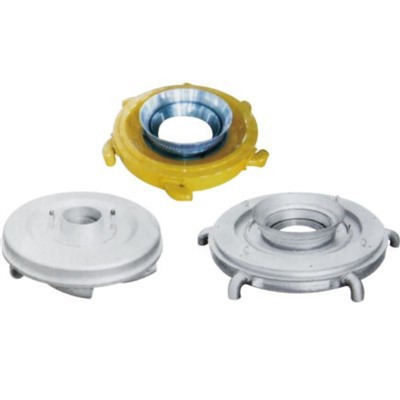
Now, let’s talk about die types, because there are a few you’ll run into, and picking the wrong one here is a quick way to ruin your day. First, the spiral die—this is the most common for most operations, and for good reason. It has spiral channels around the inside that distribute the molten plastic evenly all the way around the die, so you get consistent thickness even for large diameter dies. It works great for LDPE, LLDPE, HDPE, and even multi-layer films. Then there’s the straight-side die, which is simpler and cheaper, but it’s only good for small diameter dies and low output rates—because the flow isn’t as even around the circle. If you use a straight-side die for a large tube, you’ll get thick spots at the top and bottom and thin spots on the sides, which is a nightmare to fix. Then there’s the multi-layer die (also called co-extrusion die) if you’re making films with two or three layers—like a food wrap that has a sealant layer and a strength layer. These are more complex, with separate channels for each resin, so you have to make sure each layer’s resin is compatible in melt temperature and viscosity, otherwise the layers will separate or the thickness of each layer will be off. I always ask customers if they need multi-layer before I even start talking about die specs—if they do, we don’t waste time on single-layer dies.
Wait, another thing people forget: cooling and venting. No, the die doesn’t do the cooling—that’s the air ring, right? But the die’s design affects how the air can flow around the molten tube. If you have a die with a smooth outer surface (called a “land extension”), it helps the air ring blow air evenly around the tube, which cools the film faster and keeps it consistent. If your die has sharp edges or uneven surfaces, the air flow will be messed up, leading to wavy film or inconsistent gauge. Also, venting is important for resins that have a lot of moisture or volatiles (like recycled HDPE). A die with vent channels lets those gases escape instead of getting trapped in the film, which causes bubbles or weak spots. I had a customer last year who was using recycled resin and had constant bubbles in their film—we swapped their old die for one with vent channels, and that problem was gone overnight. That’s the kind of small detail that makes a huge difference.
Now, let’s talk about common mistakes to avoid, because even if you get all the specs right, these will mess you up. First, buying the cheapest die you can find. I get it, dies are a big investment, but a cheap die from a no-name supplier will have uneven machining, so the die gap isn’t consistent around the circle, leading to wasted film and downtime. A high-quality die is machined to within 0.0001 inches, so it holds its precision for years. Second, ignoring expansion and shrinkage. When you blow the film, it stretches both in the bubble direction (axial) and the circumference direction (hoop). If you pick a die based only on your target width, you might stretch the film too much, making it too weak. I always tell customers to test with a small die first if they’re unsure—run a trial with a lab-made film, adjust the die size, then place the order. Third, not considering future needs. If you plan to expand your output or start making different film widths in a year, don’t buy a die that’s only good for your current setup. Get a slightly larger die that you can adjust down, or an adjustable die that will work for multiple widths. I’ve had customers call me a year later saying they doubled their output and their old die was too small—instead of having to buy a whole new machine, they just swapped to a larger die, which saved them thousands.
Let’s wrap this up with a quick example to make it real. Say you have a 40mm extruder, which runs at 150 pounds per hour max. You use LLDPE, want to make 1.5 mil thick, 36-inch wide film for grocery bags. Let’s run through the steps: first, resin is LLDPE, so we need a die with a land length of 10-15 times the die gap (standard for LLDPE, since it’s stiff). Output is 150 lbs/hour, so we need a die rated for at least 150 lbs/hour (preferably 175 to give a little headroom). Film width: target flattened width is 36 inches, so die diameter should be ~11.5 inches (36 / π ≈ 11.5) plus 10% for inflation, so ~12.75 inches. Gauge is 1.5 mil, so die gap is ~0.015 inches (since LLDPE needs a slightly wider gap than LDPE). Since it’s single-layer, we’ll go with a spiral die for even flow. That’s the right die for that customer—if they’d picked a 10-inch straight-side die, they’d have uneven thickness, if they’d picked a fixed die for 500 lbs/hour, it’d be way too big and waste resin.
At the end of the day, choosing the right die isn’t about memorizing formulas—it’s about matching your die to your specific setup, resin, and goals. If you’re still stuck and don’t want to mess up, just reach out. We don’t push the most expensive die—we ask you about your resin, your output, the film you’re making, and even your budget, then give you the best option for your needs, no fine print. Whether you’re a small shop just starting out or a large operation looking to upgrade your dies, we’ve got the experience to help. Shoot us a message to chat through your needs, and we can even put together a trial run of sample film so you know it’s the right fit before you make the call.
Bag Making Machine REFERENCES
Film Blowing Extrusion Technology, R. L. Sampson, 2018
Plastic Films: Technology and Packaging Applications, J. R. Wagner, 2020
Die Design for Polymer Processing, S. G. Hine, 2019
Ruian Huawei Machinery Co., Ltd.
As one of the most professional film blowing machine suppliers in China, we’re featured by quality products and low price. Please rest assured to buy discount film blowing machine made in China here from our factory. Also, quotation is available.
Address: No. 1, Building 2, Jingye Road, Dongshan Street, Rui’an City, Zhejiang Province
E-mail: 13695753569@163.com
WebSite: https://www.hw-machines.com/
