As someone who’s spent over a decade working directly with inline pump engineering and supply, I’ve seen first-hand how the wrong material choice can turn a reliable pump into a maintenance nightmare—or even a safety hazard. When a client comes to me asking about inline pumps, the first question after performance specs is always: “What’s it made of?” It makes sense: inline pumps are workhorses, installed in everything from residential HVAC systems to industrial chemical processing plants, and their materials have to match the exact conditions of the fluid they’re moving. Over the years, I’ve learned that there’s no one-size-fits-all answer here. Let’s break down the core materials we use across our product lines, why each matters, and how we pick the right one for your application. Inline Pump
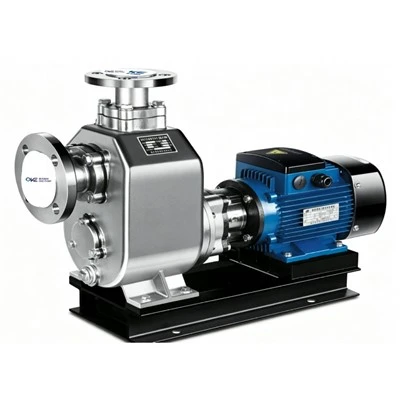
First, let’s start with the pump casing—this is the outer shell that holds the impeller and directs fluid flow, so it’s the most critical component when it comes to durability. For basic, low-stakes applications like residential water circulation or small commercial heating systems, ductile iron is still our go-to. It’s strong, affordable, and easy to machine, which makes it perfect for standard tasks. But I’ll be honest: ductile iron has a flaw. It rusts when exposed to moisture and oxygen over time, so it’s only a fit for clean, relatively neutral water. If you’re moving anything a little harsher, like slightly acidic water or wastewater with minor solids, we move to cast iron alloys with added chromium. That extra chromium creates a thin, protective oxide layer that resists corrosion way better than standard ductile iron, and it doesn’t break the bank either.
Now, for industrial applications—chemical processing, food and beverage manufacturing, pharmaceutical work—we can’t rely on iron-based materials alone. Those environments have fluids that are highly corrosive, so we turn to stainless steel. Specifically, 304 and 316 stainless steel are the workhorses here. 304 stainless is great for general corrosion resistance, handling things like mild acids, salts, and food-grade cleaning solutions. But 316 stainless is a step up; it has molybdenum added, which makes it resistant to chloride pitting. That’s a big deal for applications like marine systems, which have saltwater, or pharmaceutical plants that use salt-based sterilants. I’ve seen too many clients skip 316 to save a few dollars, only to replace a corroded pump casing within a year—so we always make sure to explain that trade-off upfront.
For even more extreme conditions, like moving strong acids, alkalis, or abrasive slurries, we use non-metallic casings. Polypropylene and PVDF are the two big ones here. Polypropylene is lightweight, resistant to a wide range of chemicals, and super affordable for low-pressure applications. It’s perfect for small-scale chemical dosing pumps or lab equipment. But if you’re working with higher pressures or harsher chemicals, PVDF is the way to go. It has a higher melting point (around 300°F, compared to polypropylene’s 220°F) and better resistance to solvents like ketones and esters. We’ve also had clients use PVDF in semiconductor manufacturing, where even tiny amounts of metal contamination from stainless steel can ruin products—non-metallic casings eliminate that risk entirely.
Next up, the impeller—this is the rotating part that moves the fluid, and its material needs to complement the casing but also handle wear from solids or turbulence. For ductile iron or cast iron casings, we typically use cast iron impellers with the same chromium alloy as the casing. That keeps the impeller matched to the casing, reducing the risk of galvanic corrosion (that’s when two dissimilar metals react when submerged in electrolyte, like water). For stainless steel casings, impellers are almost always the same grade of stainless, usually 316 for industrial use. Again, that consistency prevents corrosion, and the molybdenum helps the impeller stand up to the kind of turbulence that wears down unprotected blades.
A big upgrade for impellers in applications with abrasive solids—like mining slurry pumps, wastewater handling, or dewatering for construction—is chrome iron impellers. These have 15-30% chromium content, which makes them incredibly hard and resistant to erosion. I’ve had a mining client tell me their original chrome iron impellers lasted 18 months in slurry, while trying a standard stainless steel one only lasted 3 months. That kind of durability pays off way more than the initial lower cost of stainless. For non-metallic impellers, we use the same polypropylene or PVDF as the casing for chemical applications, but for food and beverage, we sometimes use food-grade nylon. It’s lightweight, easy to clean, and doesn’t leach chemicals into consumable fluids.
Then there’s the shaft—this connects the impeller to the motor, so it has to handle torque, be corrosion-resistant, and avoid bending. Most standard inline pumps use carbon steel shafts coated with zinc or chrome plating for protection. But again, that’s only for low-stakes, clean water. For stainless steel pump systems, we switch to solid 304 or 316 stainless steel shafts. And for marine or industrial applications with high chloride exposure, we use alloy 20 shafts—this is a nickel-iron-chromium alloy that’s extra resistant to chloride stress corrosion cracking. I’ve seen carbon steel shafts snap in saltwater systems, so alloy 20 is a small extra cost that saves a lot of downtime. For non-metallic pumps, shafts are usually the same non-metallic material (polypropylene or PVDF) or ceramic, which is super hard and non-conductive, perfect for chemical dosing.
We also can’t forget the seals—these are the parts that prevent fluid from leaking out of the pump, between the shaft and casing, and their material is just as important as the pump’s metal parts. The most common seal is a mechanical seal, which has two main components: the stationary seat and the rotating face. For standard clean water, we use carbon graphite seats and ceramic faces. Carbon is self-lubricating, which reduces friction, and ceramic is hard and wear-resistant. For chemical applications, we switch to harder faces like silicon carbide or tungsten carbide. Silicon carbide is especially good for high-temperature or abrasive fluids, and it resists corrosion way better than ceramic. For applications with very high temperatures, like moving hot water for power plants, we use metal seals with graphite packing—those can handle temperatures up to 1800°F, way more than standard mechanical seals.
Now, here’s something most clients don’t tell us when they first ask about materials: the right choice depends on more than just the fluid. It also depends on pressure, temperature, and even environmental regulations. For example, if you’re in the food and beverage industry, FDA regulations prohibit certain materials from leaching into food, so we have to use food-grade stainless steel or nylon impellers and EPDM rubber gaskets. EPDM is also the go-to for potable water systems, because it’s safe for drinking water and resists chlorine. For wastewater applications, we sometimes use nitrile rubber gaskets, which are resistant to oils and greases that are common in sewage.
I’ve learned a lot over the years about how to match materials to specific needs. Last year, we had a client in the pharmaceutical industry who needed inline pumps for a new biotech plant. Their original spec called for 304 stainless steel, but when we tested the fluid they were moving, it had small traces of chlorinated solvents that 304 couldn’t handle. We suggested 316 stainless with a silicon carbide mechanical seal, which doubled their pump lifespan and eliminated leaks. Another example: a construction company that needed dewatering pumps for a site with lots of sand. They tried a standard cast iron impeller, which wore out in 4 months, so we swapped it for a chrome iron impeller, which lasted over a year and a half. Those are the moments that matter—when material choice turns a frustrating maintenance headache into a reliable, low-upgrade workhorse.
It’s also worth noting that modern manufacturing has made advanced composite materials a more common choice for inline pumps now. We’re starting to use carbon fiber-reinforced polymers (CFRP) for impellers in some high-flow, low-pressure applications. CFRP is lighter than metal, resists corrosion, and has high tensile strength, which reduces the load on the motor. For small residential pumps, we even use thermoplastic elastomers (TPE) for some internal components, which are flexible, durable, and easy to mold, keeping costs down without sacrificing performance.
But here’s the thing: even with all these materials, there’s no way to know exactly what will work for your application without talking through the details. Every pump installation is unique. Maybe you’re moving a combination of water and mild chemicals, or operating at 100 PSI instead of 50, or dealing with a temperature that’s 180°F vs. 70°F. That’s why at our company, we don’t just sell pumps—we work with you to pick the right materials for your specific needs, not just the cheapest option.
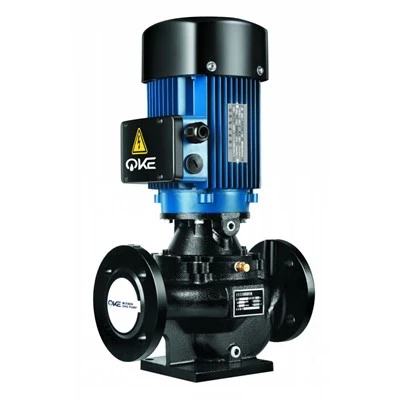
If you’re in the market for inline pumps, and you want to make sure you’re choosing materials that will hold up to your application, don’t guess. Let’s talk. We can go over your fluid type, operating conditions, durability needs, and budget, and help you pick the right casing, impeller, shaft, and seal materials to get a pump that works for you, not against you. Whether you need a small residential pump for your home’s HVAC system, or a heavy-duty industrial pump for a chemical plant, we have the expertise to make it happen. Don’t wait for a failed pump to cause downtime—reach out to our team to discuss your inline pump needs today.
Self-priming Pump References
- Karassik, I. J., Messina, J. P., Cooper, P., & Heald, C. C. (2007). Pump Handbook (4th ed.). McGraw-Hill Education.
- American National Standards Institute (ANSI). (2019). ANSI/HI 9.6.1 Rotodynamic Pumps for Materials of Construction. Hydraulic Institute.
- Stainless Steel World. (2021). “Choosing the Right Stainless Steel for Pump Applications.” KCI Media Group.
- Plastics Industry Association. (2020). “Non-Metallic Pumps for Corrosive Fluid Handling.” Plastics Technology Magazine.
- Food and Drug Administration (FDA). (2022). “Food Contact Materials: Compliance Guidelines for Pump Components.” U.S. Department of Health and Human Services.
Hangzhou Nanfang Ouke Pump Industry Co., Ltd.
As one of the most experienced inline pump manufacturers in China, we have world-leading production equipment and strong manufacturing capabilities. Please feel free to wholesale bulk customized inline pump from our factory. Welcome to contact us for pricelist.
Address: No.46, Renhe Subdistrict, Yuhang District, Hangzhou City
E-mail: Gy656169@outlook.com
WebSite: https://www.oukegroup.com/
