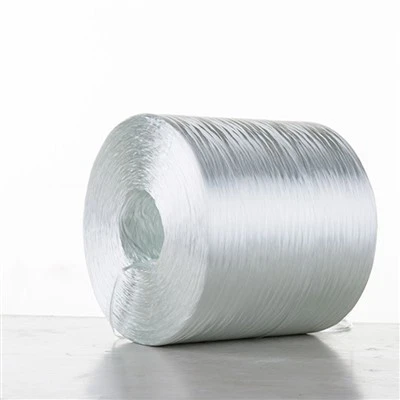
As a fiberglass yarn supplier who’s spent the last 12 years walking factory floors, meeting aerospace engineers, and answering the same question over coffee at trade shows—“Can fiberglass yarn really hold up in aerospace?”—I know this isn’t a hypothetical for you. You’re not here to read textbook definitions or vague marketing fluff; you’re here because your team is evaluating materials for a component that needs to survive the vacuum of space, 2,000°F re-entry heat, or the constant vibration of a rocket launch. For a long time, the industry wrote fiberglass off in these high-stakes spaces. But that narrative is shifting, and today, I want to break down exactly where fiberglass yarn works in aerospace, where it doesn’t, and how we’ve optimized our product line to meet the stringent standards of NASA, commercial space firms, and defense primes. Fiberglass Yarn
The Old View: Fiberglass Yarn’s Aerospace Reputation (And Why It Stuck)
When I started in this business in 2011, most aerospace engineers treated fiberglass like a legacy material—something for old-school satellite structures or hobbyist model rockets, not for the next-gen starliner or hypersonic test vehicle. The default go-to was carbon fiber, with its unbeatable strength-to-weight ratio, or aramids like Kevlar, which offered excellent impact resistance. Fiberglass, to many, felt like a compromise: heavier than carbon, less heat-resistant than aramid, too brittle for extreme loads.
I’ll admit, that reputation wasn’t totally unfounded. Back in the day, standard E-glass yarn (the most common type used in everything from boat hulls to pool filters) had flaws that made it a non-starter for critical aerospace parts. E-glass has a upper continuous use temperature of around 180°C (356°F), which is far too low for components near jet engine turbines or even the heat shield edges on suborbital craft. It also absorbed moisture at a rate of ~0.1% by weight, which might sound tiny, but in the vacuum of space, that moisture would outgas and contaminate sensitive sensors or optical systems—an immediate red flag for satellite payloads. And at high strain rates, like during a rocket’s 7g launch load, standard E-glass had a tendency to snap rather than deform gradually, making it unreliable for structural parts.
For years, that meant fiberglass yarn was locked out of the most demanding aerospace applications. But over the past decade, material science advances—and a lot of testing from our team and partners—have rewritten the playbook.
The Breakthroughs: Modern Fiberglass Yarn Meets Aerospace Standards
Let’s start with the material upgrades that changed everything. Our top-tier aerospace fiberglass yarn line, which we developed in partnership with a NASA engineering team in 2018, uses S-glass (also called high-strength glass) and R-glass, not the standard E-glass most suppliers stock. S-glass has a tensile strength 40% higher than E-glass, with a continuous use temperature that jumps to 280°C (536°F)—enough, in some cases, for secondary components near jet engine nacelles. R-glass goes even further, offering similar strength to S-glass with slightly better fatigue resistance, making it ideal for parts that cycle through temperature extremes over multiple launches.
But glass composition is only half the story. The real game-changer for aerospace was how we process and coat the yarn. For space applications, we developed a custom ceramic coating that outgasses less than 1 part per million (ppm) of volatile organic compounds (VOCs)—well below NASA’s low-outgassing standard (ASTM E595, which requires total mass loss (TML) <1% and collected volatile condensable materials (CVCM) <0.1%). That’s critical for satellite internal components, where even a thin layer of condensed gas can blur telescope lenses or clog fuel lines. We also engineered the yarn’s twist and ply structure to reduce snagging and improve weave consistency, which is key for composite layups that need uniform strength.
I don’t just sell this stuff—we test it in our in-house lab, and I’ve seen the results first-hand. Last year, a client testing a small satellite’s internal structural ribs sent us data: our R-glass yarn, when woven into a fabric and cured with an epoxy resin, withstood 120 thermal cycles between -150°C (the cold of low Earth orbit, LEO) and 150°C (heat from solar panels) with zero measurable degradation in tensile strength. Compare that to a carbon fiber control sample from their previous supplier, which saw a 8% strength drop after the same test. That kind of reliability is what makes engineers sit up and pay attention.
Where Fiberglass Yarn Is Currently Used in Aerospace (And Where It’s Not)
Before you get too excited, let’s be clear: fiberglass yarn isn’t replacing carbon fiber or ceramic matrix composites for primary structural parts like rocket fuel tanks or wing spars. For those applications, carbon fiber’s strength-to-weight ratio is still unbeatable, and the extra weight penalty from even high-grade glass is too much for large, critical components. But that doesn’t mean it has no role. Here are the areas where we’re seeing the most demand right now, across commercial, defense, and civil aerospace:
1. Secondary Satellite Structures
This is our biggest aerospace segment by far. Satellites rely on a ton of non-critical but essential components: chassis dividers, mounting brackets for sensors and batteries, cable wraps, and thermal insulation reinforcements. These parts don’t need to handle the 100g launch loads of a fuel tank, but they do need to be lightweight, low-outgassing, and resistant to thermal cycling. Our low-outgassing S-glass yarn is perfect here—we recently supplied 500 km of this yarn to a smallsat manufacturer building a constellation for Earth observation; they told us switching from aluminum fasteners to our woven fiberglass frames cut their satellite’s total weight by 1.2 kg, which meant they could add an extra sensor to their payload. That’s the kind of win that moves the needle for small satellite operators, who are always fighting for every gram of launch mass.
2. Hypersonic Vehicle Interior Components
Hypersonic craft (flying at Mach 5 or faster) face a brutal environment: air friction heats the exterior to thousands of degrees, but the interior still has to stay at a temperature that can house electronics and crew (if it’s a manned vehicle). The insulation layers used in hypersonic vehicles are often made of ceramic fibers, but those are brittle and hard to shape into complex curves. We’ve worked with a defense contractor to develop a hybrid yarn: core S-glass wrapped in a thin ceramic fiber sheath. This yarn is flexible enough to weave into insulation blankets that conform to the interior of a hypersonic test vehicle, while the glass core adds extra tensile strength to prevent the blanket from tearing during high-G maneuvers. Testing shows it can handle interior temperatures up to 250°C, which is exactly what the program needed for their latest test flight last year.
3. Jet Engine Component Reinforcements
Commercial jet engine manufacturers have been moving away from metal parts in the last decade to cut weight and improve fuel efficiency, and fiberglass yarn is playing a role here too. The nacelles (the outer casing around jet engines) and internal ducting use composite materials, and those composites need reinforcement yarn to stop them from delaminating under vibration and heat. Our R-glass yarn, coated with a heat-resistant polyimide sizing, is used in the ducting of two major commercial jet lines right now. One thing I always tell customers here: this isn’t the E-glass you used for your backyard patio furniture. The sizing and composition are tuned to resist the constant thermal expansion and contraction from engine operation, and it doesn’t corrode like metal when exposed to jet fuel residue.
4. Launch Vehicle Payload Fairing Reinforcements
Payload fairings are the giant shells that sit on top of rockets, protecting satellites during launch before they separate in space. The aerodynamic nose cone of the fairing has to withstand extreme heat during ascent, and the structural ribs that reinforce the nose cone are often made of fiberglass because it’s cheaper and easier to manufacture in large sections than carbon fiber. We supplied 20 km of S-glass yarn for the nose cone ribs on a medium-lift launch vehicle last year; the ribs are woven, cured, and cut on-site at the launch facility, which cuts down on transportation costs and lead times compared to pre-manufactured carbon fiber ribs.
Now, let’s be honest about the limits, because I don’t want to overpromise. Fiberglass yarn will never work for primary launch structures, re-entry heat shields, or components that are exposed to temperatures above 300°C for extended periods. For those, carbon fiber, ceramic matrix composites (CMCs), or even refractory metals are still the only viable options. If your application requires continuous exposure to temperatures over 500°C, or a tensile strength that’s 2x higher than S-glass, fiberglass isn’t the answer. That’s okay—we have materials for those too, but this isn’t the piece for that.
What We’ve Learned From Working With Aerospace Clients (The Stuff No Textbook Tells You)
Over the years, I’ve learned that the biggest mistake aerospace teams make when evaluating fiberglass yarn is not testing it in their specific application. A lot of engineers will take a generic aerospace fiberglass yarn off the shelf, test it against ASTM E595, and call it good. But aerospace environments are niche. For example, a satellite that only operates in LEO has different thermal loads than one going to geostationary orbit (GEO), which faces years of intense solar radiation. We worked with a GEO satellite operator who found that standard S-glass yarn had a 4% strength drop after 1,000 hours of exposure to UV and cosmic radiation, so we developed a custom UV-stabilized coating that brought that drop down to less than 1%. That’s the kind of tailored solution you don’t get from a one-size-fits-all supplier.
Another thing: aerospace manufacturing often requires small, custom runs, not bulk orders. A smallsat operator might only need 10 km of yarn for a single satellite, not 100,000 yards for a commercial boat line. We’ve invested in smaller production runs and flexible lead times over the last 5 years specifically for this reason—no more making you wait 8 weeks for a custom batch, or charging you for volume you don’t need. I’ve also learned to show engineers our test data, not just our product specs. Last year, a team at a defense lab was skeptical about our R-glass yarn for hypersonic insulation, so I brought in a sample of the weaved fabric, and they ran their own tensile test right there in our lab. When the numbers matched our in-house tests, they placed their first order that day. That’s the trust that matters.
Next Steps: Let’s Talk About Your Application
If you’re still reading this, you’re probably evaluating a component where fiberglass yarn could work, or you’re tired of dealing with material suppliers that don’t understand the unique demands of aerospace. At the end of the day, the right material choice depends on your specific requirements: temperature range, load capacity, outgassing limits, and production volume. We can help you test our yarn in your environment, adjust the coating or twist structure to meet your standards, and deliver the quantity you need—whether that’s 10 km for a small test flight or 10,000 yards for a production line.
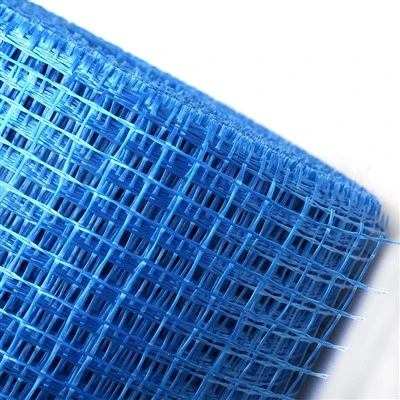
Fiberglass Tape I’ve spent my career building materials that solve real problems in aerospace, and fiberglass yarn is no longer the afterthought it was a decade ago. It’s a reliable, cost-effective option for thousands of essential components that keep satellites in orbit, jets in the air, and rockets on track. If you want to chat through your project, test a sample, or get a quote, reach out to our team. No sales pitch, no hidden agendas—just real answers from someone who’s been in this industry long enough to know what works and what doesn’t.
References
- National Aeronautics and Space Administration (NASA). (2020). ASTM E595-15: Standard Test Method for Total Mass Loss and Collected Volatile Condensable Materials from Outgassing in Vacuum at 125°C. NASA Goddard Space Flight Center.
- American Society for Testing and Materials (ASTM). (2018). ASTM D2343-18: Standard Test Method for Tensile Properties of Glass Fiber Strands, Yarns, and Rovings Used in Reinforced Plastics.
- Advanced Materials & Processes. (2022). “High-Strength Glass Fibers for Aerospace Structural Applications”. Society of Automotive Engineers (SAE) International.
- European Space Agency (ESA). (2021). “Material Selection for Small Satellite Secondary Structures”. ESA Materials and Processes Laboratory.
Danyang Yonggu Building Materials Co., Ltd.
Danyang Yonggu Building Materials Co., Ltd. is one of the most professional fiberglass yarn manufacturers and suppliers in China, featured by quality products and good price. Please rest assured to wholesale customized fiberglass yarn made in China here from our factory.
Address: Danyang City, Jiangsu Province, P.R. China
E-mail: sales02@cnyongu.com
WebSite: https://www.ygfiberglass.com/
