When you walk through a busy commercial corridor, a retail store’s entryway, or a warehouse shipping dock, the door that takes the most abuse is often the one you barely notice—until it doesn’t work. As a rolling shutter door supplier, I get at least three questions a week from potential clients, but one comes up more than any other: “Can a rolling shutter door hold up in a high-traffic area?” It’s a fair question, and one I don’t answer with a quick yes or no. High-traffic spaces have unique demands, and not all rolling shutters are built to meet them. Let’s break this down with the real-world experience that comes from years of installing, repairing, and replacing these doors for spaces that see hundreds of daily passes—not just a handful a day. Rolling Shutter Door
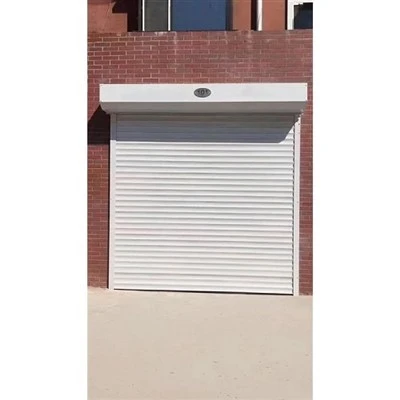
First, let’s define what a high-traffic area actually is, because that term means different things to different people. A small boutique with 500 daily footfalls is low-traffic compared to a grocery store entry that sees 5,000 people a day, or a warehouse loading dock that has forklifts, pallet jacks, and delivery trucks moving through it 18 hours a day. For context, our team at the supply company has worked with a variety of high-traffic spaces: a downtown mall entrance that sees 12,000 daily visitors, a big-box retail back dock that processes 300 truck deliveries a week, and a transit station auxiliary entrance that’s open 16 hours a day with constant foot and bike traffic. For all these spaces, the answer isn’t “can it be used”—it’s “what type of rolling shutter door do you need for that specific traffic load.”
The biggest misconception I see is that all rolling shutter doors are the same. They’re not. The core of a rolling shutter is made of interlocking slats, and the thickness, material, and interlock design of those slats is what determines how much abuse they can take. In standard residential or light-commercial applications, you’ll find 24-gauge galvanized steel slats that are thin, lightweight, and easy to operate. But in a high-traffic space, that thin steel will bend, dent, or even break after a few months of constant use. We started seeing this issue when we first installed 24-gauge shutters for a mid-sized grocery store entry in 2019; within six months, the slats had dented so badly from carts and foot traffic that the door wouldn’t close all the way. We replaced it with a 16-gauge steel rolling shutter, and four years later, it still works like it did the day we installed it. That’s not a fluke—it’s a difference in build quality.
Beyond slat thickness, the operating system is make-or-break for high-traffic areas. A manual rolling shutter is fine for a garage that’s used a few times a day, but it’s impossible to operate manually when you need to open and close the door 100 times an hour. Electric operators are non-negotiable here—but not just any electric operator. The motors designed for light use can only handle a certain number of cycles per day, usually around 500. For a high-traffic dock that needs to open and close every time a truck arrives, you’re looking at 2,000 to 3,000 cycles a day, minimum. The heavy-duty industrial motors we supply are built for that: they have thermal overload protection to prevent overheating, a reinforced gear system that doesn’t wear out quickly, and cycle ratings that go up to 10,000 cycles a day. I remember a client who ran a distribution center with 12 loading doors; a few years ago, they tried to save money by using mid-range motors on two of their bays. Within a year, those motors had burned out, and they were paying for emergency repairs during peak shipping season. Since switching to our heavy-duty operators, those doors have had zero motor issues in three years.
Another critical factor is the guide rails—the tracks that the shutter rolls along as it opens and closes. In high-traffic areas, people and objects often bump into these rails, and if they’re flimsy, they’ll bend or shift, throwing the shutter off track. We’ve seen more than one case where a retail store’s shutter came off its rails because the guide rails were only 18 gauge steel; a shopping cart clipped it, and the entire door jammed mid-way. For high-traffic spaces, we recommend guide rails that are at least 12 gauge, with reinforced brackets that are mounted every 12 inches (instead of the standard 24 inches) to keep them steady. We also add impact-resistant padding along the lower part of the guide rails for areas where carts or forklifts are common—small change that prevents major damage.
Now, this isn’t to say that rolling shutter doors work for every high-traffic area. There are some spaces where they’re not the best fit, and I always tell clients that upfront. For example, a busy restaurant dining area that’s open to the public 12 hours a day doesn’t need a rolling shutter—you want glass or swinging doors that are easier to navigate for people with mobility aids, strollers, or large carry-on bags. Rolling shutters are designed for security, weather resistance, and durability, not for high foot traffic that requires easy, unobstructed passage. But for the spaces where security and durability are top priorities, rolling shutters are often the best option. Let’s take warehouse loading docks, for example: they need to lock up tight after hours to prevent theft, resist wind and rain, and stand up to constant forklift and pallet jack traffic. A rolling shutter door is perfect here because it’s more secure than a overhead sectional door (which has more gaps that can be pried open) and easier to operate manually if the power goes out (we add a manual override crank to all our heavy-duty shutters, just in case).
Another common high-traffic space is self-storage facilities. Each unit has its own rolling shutter, and a large facility can have hundreds of units being accessed every day by tenants pulling in with trucks, pushing carts, and loading/unloading. We install rolling shutters for self-storage facilities all the time, and over 90% of those installations are still working without major repairs after five years. The key here is choosing slats that are dent-resistant—our 14-gauge steel slats with a ribbed design don’t show dents from cart bumps, and the heavy-duty motors handle the frequent opening and closing without wearing out. I had a self-storage client in Phoenix last year who told us their old supplier’s shutters were breaking every six months because they used thin slats. Since switching to our product, they’ve only had one minor repair in two years, and that was just a loose bracket, not a slat or motor issue.
There are also special considerations for high-traffic areas that face harsh weather, which is a bonus for rolling shutters. In coastal areas, where salt air can corrode metal, we supply galvanized steel slats with a powder-coat finish that resists rust. In areas with heavy snow, we add slat heating elements to the bottom of the shutter to prevent ice from building up and jamming the door. We had a client in Minnesota whose loading dock was getting snow-packed under their old shutter during the winter, which would jam the door shut. The heating element we added keeps the bottom of the slats from freezing, and they haven’t had a jam in three winters.
But here’s the thing: even the best rolling shutter door won’t last in a high-traffic area if it’s not installed correctly. I’ve seen cheap installations where the guide rails are mounted too loosely, or the motor is wired incorrectly, which causes premature wear. As a supplier, we don’t just drop off the door and leave—we work with a network of certified installers who have training specifically for high-traffic applications. They measure the space to make sure the rails are perfectly level, test the motor’s cycle rate, and do a full inspection after installation to make sure everything is aligned. We also offer maintenance plans for clients with high-traffic doors: every six months, our technicians will lubricate the gears, check the slats for damage, tighten guide rail brackets, and test the motor. This kind of preventative maintenance is what extends the life of a rolling shutter door, especially in spaces that are used constantly.
I get it—choosing a door for a high-traffic space is a big investment. You don’t want to have to replace it in a year, because that costs more money in the long run. A lot of clients come to us thinking that all rolling shutters are the same, so they go with the cheapest option, only to regret it a few months later. We’ve seen that time and time again: a downtown retail store that bought a low-cost shutter for $1,200, only to spend $800 on repairs six months later, then replace the entire door a year later for $2,500. The total cost over two years was $4,500, whereas if they’d bought our heavy-duty shutter for $2,800 with installation, they would have had a door that lasts 10+ years. That’s the math that matters for high-traffic areas—long-term durability over short-term savings.
So, to circle back to the original question: yes, a rolling shutter door can absolutely be used in high-traffic areas—but only if you choose the right type. A light-duty rolling shutter is built for low traffic, and it will fail quickly in a space with hundreds of daily passes, forklift traffic, or frequent use. A heavy-duty rolling shutter with thick slats, a high-cycle motor, reinforced guide rails, and proper installation and maintenance is built to handle that kind of abuse, and it will save you money and headaches in the long run.

If you’re designing a new space, or if your current door is failing because it’s not built for your traffic load, I’d be happy to walk through your options with you. We’ve installed hundreds of rolling shutters in high-traffic areas across the country, from shopping malls and distribution centers to self-storage facilities and transit hubs. We don’t believe in one-size-fits-all solutions—we’ll assess your specific needs, your traffic volume, and your budget to recommend the right rolling shutter door that will stand up to whatever your space throws at it. Don’t waste money on a cheap door that will need constant repairs. Invest in a rolling shutter built for high traffic, and you’ll have a reliable, secure door that works for years.
Rolling Shutter Door References
- National Fire Protection Association. (2020). Standard for Fire Doors and Other Opening Protectives (NFPA 80).
- International Building Code. (2021). Chapter 7: Fire and Smoke Protection Features.
- American Society of Mechanical Engineers. (2018). Safety Standards for Power Operated Doors.
- Rolling Shutter Manufacturers Association. (2022). Durability Guidelines for High-Cycle Rolling Shutters.
- Occupational Safety and Health Administration. (2021). Safety Requirements for Material Handling Equipment in Warehouses.
Hebei Hong’an Fire Door Co. Ltd.
Hebei Hong’an Fire Door Co., Ltd. is one of the most professional rolling shutter door manufacturers and suppliers in China, featured by quality products and low price. Please rest assured to wholesale advanced rolling shutter door made in China here from our factory. Customized orders are welcome.
Address: Bianbian Industrial Zone, Hejian City, Cangzhou City, Hebei Province, China
E-mail: hongandoor@outlook.com
WebSite: https://www.honganfd.com/
