As a dental implant prosthetics supplier, I’ve spent years collaborating with clinicians to understand how implant-supported restorations fit into a patient’s broader oral health journey. Every case is unique, and success hinges on more than just crafting a perfect crown or bridge—it depends on aligning implant prosthetics with other dental treatments to support long-term stability, function, and aesthetics. Today, I want to break down these interactions, share real-world insights from our team’s work with dental practices across North America, and clarify how prosthetics act as both a foundation and a bridge between different care modalities. Let’s start with the most common and often most impactful pairing: implant prosthetics and periodontal treatment. Dental Implant Prosthetics
When a patient needs dental implants, their gums and surrounding jawbone are non-negotiable foundation. If a patient has active periodontal disease—chronic inflammation that erodes gum tissue and bone—placing implants at the wrong time can lead to failure, and worse, can spread infection to adjacent natural teeth. I recently worked with a periodontist in Chicago who had a patient with moderate horizontal bone loss from undiagnosed periodontitis. The patient needed a full-arch implant bridge to replace failing lower molars, but delaying implant placement to complete non-surgical periodontal therapy (scaling and root planing) and pocket reduction surgery made all the difference. Our team collaborated to design a custom transitional provisional bridge that fit over pre-existing natural teeth during treatment, so the patient could eat and speak normally while their gums healed. Once the periodontist confirmed probing depths dropped below 3mm, we finalized the implant prosthetics. The result? A 5-year follow-up showed zero peri-implant inflammation, and the patient’s adjacent natural teeth remained stable. The key here is timing: implant prosthetics can only integrate well if the periodontal environment is first optimized. For patients with grafted bone to correct atrophy, our prosthetics team works hand-in-hand with oral surgeons to create temporary restorations that place minimal pressure on healing grafts, ensuring new bone can fuse with implants without disruption.
Next, let’s talk about orthodontic treatment. This is an area where I see a lot of misalignment between clinicians, leading to unnecessary complications. Implant prosthetics don’t always go after orthodontics—sometimes, they can be integrated mid-treatment, depending on the case. For example, a 28-year-old patient in Atlanta came to us needing to replace a single missing incisor from a sports injury, but she also had a crossbite that made her midline off by 2mm. Her orthodontist wanted to move the incisor into place before placing an implant, but that would have meant months of shifting adjacent teeth, and the final implant wouldn’t match her natural tooth’s position. Our solution was to co-design a temporary implant-supported provisional crown that aligned with the orthodontic archwire. We placed a mini implant (ideal for small incisor spaces) on the site of the missing tooth, and the orthodontist adjusted the wire to engage the provisional crown, using it as an anchor to move the adjacent lateral incisor into the correct position. Once orthodontics was complete, we replaced the temporary with a custom zirconia crown that matched the new midline perfectly. This approach cut treatment time by three months, and the patient didn’t have to wear a temporary removable denture for the entire orthodontic phase. The critical takeaway here is communication: orthodontic movements alter the position of gum tissue and bone, so implant prosthetics need to be designed before movement planning, not after, to avoid gaps between crowns and gums or uneven occlusion.
Now, restorative dentistry and implant prosthetics—this is the most frequent pairing, and also the one where we notice the biggest gaps if planning is overlooked. For patients with multiple missing teeth, clinicians often mix natural tooth-supported bridges with implant-supported restorations, and if not designed together, the result can be uneven wear or bite issues. Let’s take a patient in Houston who needed three posterior molars replaced: two adjacent molars were missing, and the third was failing with a large filling. The restorative dentist initially planned a natural tooth-supported bridge on the intact first molar to replace the second molar, and an implant for the third. But when we reviewed the plan, we saw the natural bridge would sit 1mm higher than the proposed implant crown, creating a premature bite point. That small difference would have led to chipping of the crowns, jaw pain, and even TMJ issues within a year. Our team adjusted the plan: we recommended removing the failing molar, placing two implants (one for each missing site) to support a three-unit implant bridge that matched the occlusal plane of the remaining natural first molar. We also added a night guard, which works alongside the implant prosthetics to distribute bite forces evenly, preventing excessive stress on both implants and natural teeth. This case is a reminder that every restoration in the mouth functions as a single unit—ignoring how implant crowns interact with natural crowns, bridges, or fillings leads to long-term damage, not just cosmetic issues. We now provide clinicians with a free digital occlusion assessment for implant restorations, because even a 0.5mm misalignment can mean the difference between a 10-year restoration and a 2-year failure.
Another area that’s often underdiscussed is endodontic treatment (root canals) and implant prosthetics. When a patient has a badly decayed tooth that’s savable with a root canal, there’s debate about whether to extract it and place an implant, or keep the natural tooth. The decision affects how implant prosthetics are planned. For example, a patient in Miami had a maxillary left central incisor with a failed root canal and a 4mm periapical cyst. The dentist offered to extract the tooth, clean the cyst, and place an implant, but we advocated for trying a root canal retreat and apicoectomy first, since the bone around the cyst was still viable for an implant later, and keeping the natural tooth would preserve adjacent tooth structure. The patient chose the retreat, had the successful endodontic treatment, and returned two years later when they decided they wanted an implant for aesthetics. We designed an implant prosthetic that was slightly smaller than the original natural tooth, so it wouldn’t compete for space, and the dentist did a minor resin build-up on the adjacent tooth to close any small gap that formed. The result was indistinguishable from the natural smile, and the patient avoided the cost of an implant unnecessarily. That said, if a tooth is non-savable, timing is key: extracting and waiting 3-6 months for bone healing before placing implants gives the best outcome, and our prosthetics team will create a temporary flipper or implant-supported provisional to maintain aesthetics during that healing period, so the patient doesn’t feel self-conscious.
Now, I want to address a topic that comes up constantly: implant prosthetics and cosmetic dentistry. Patients expect their implant restorations to look natural, blend with their gum tissue, and match the shape of their other teeth—and that means collaborating with cosmetic dentists to align prosthetic design with aesthetic goals. A patient in Dallas came to us after a previous implant crown had a gray margin at the gum line, which was noticeable when she smiled. The crown’s abutment was metal, and the gum had receded, exposing the metal. We worked with her cosmetic dentist to design a custom zirconia abutment, which is white and translucent like natural tooth structure, and a crown with a slightly longer emergence profile to encourage the gum to re-contour around it. We also used a digital scan of her entire smile to match the crown’s color, not just a single tooth, so it blended with the brightness of her other front teeth. The result was a crown that looked like it had always been part of her smile, and the gum line filled in within six months. For full-mouth rehabilitations, we work with cosmetic dentists to create a “smine line” that matches the patient’s lip position when smiling, ensuring implant bridges or overdentures look natural, not bulky. This collaboration is critical because implant prosthetics aren’t just functional—they’re a key part of a patient’s overall appearance, and misalignment here can undermine the entire treatment.

Of course, no discussion about interactions would be complete without mentioning preventive dentistry. Implant prosthetics require specific at-home care that works alongside routine cleanings, and our team educates both patients and clinicians on how to maintain implants to avoid complications. For example, implant crowns don’t get cavities, but the area around them can develop peri-implant mucositis, similar to gingivitis. We provide clinicians with custom oral hygiene guides for implant patients, including soft-bristled brushes, water flossers, and special pastes that don’t scratch implant surfaces. We also work with preventive dentists to schedule follow-up visits every six months to check implant stability, since early detection of issues like loose screws or bone loss can prevent the need for full prosthetic replacement. A patient in Phoenix skipped their six-month cleaning, and their implant crown’s screw became loose, leading to minor gum inflammation. The preventive dentist caught it during a routine check, and our team tightened the screw in 15 minutes, no additional treatment needed. If the issue had gone undetected, it could have led to bone loss that required prosthetic repair or even implant failure. This shows that implant prosthetics are part of a long-term care plan, not a one-time procedure, and partnering with preventive dentists ensures that the implant stays functional for decades.
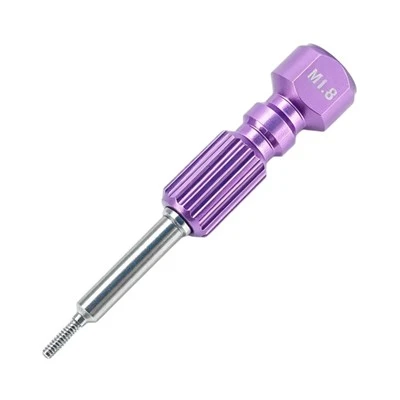
Dental Implant Kit As an implant prosthetics supplier, I’ve seen too many cases where poor communication between clinicians leads to treatment failures, unnecessary costs, and frustrated patients. The thread that runs through all these successful cases is collaboration: implant prosthetics don’t exist in a silo. They interact with every part of a patient’s oral health—from their gums and bone to their bite, smile, and routine care. Whether you’re working with a periodontist to time implant placement, an orthodontist to align archwires, a restorative dentist to match occlusion, or a cosmetic dentist to refine aesthetics, the key is to bring the prosthetics team in early. That’s why our company offers dedicated case consultation services, where our prosthetics designers review treatment plans with clinicians before implants are placed, to catch potential issues before they become problems. If you’re a clinician or practice owner looking to improve your implant outcomes and integrate prosthetics more effectively with your existing treatments, we’re here to help. To discuss your specific cases, get a custom quote for prosthetic designs, or learn more about our collaboration services, reach out to our team today. Let’s work together to deliver care that’s functional, beautiful, and long-lasting for every patient.
References
- Misch CE. Contemporary Implant Dentistry. 4th ed. Elsevier; 2020.
- Wang HL, Mount J. Interactions between orthodontics and dental implants. J Periodontol. 2015;86(10):1125-1133.
- Salinas TJ, Eckert SE. Occlusal considerations for implant restorations in the partially edentulous patient. J Prosthet Dent. 2007;98(2):104-112.
- Heitz-Mayfield LJ. Peri-implant diseases: diagnosis and risk indicators. J Clin Periodontol. 2008;35(8 Suppl):292-304.
- Garber DA, Salama MA, Salama H. The digital smile: integrating restorative and cosmetic dentistry. J Esthet Restor Dent. 2011;23(3):156-165.
Dongguan Denreal Devices Co., Ltd.
As one of the most professional dental implant prosthetics manufacturers and suppliers in China, we’re featured by quality products and low price. Please rest assured to buy bulk customized dental implant prosthetics made in China here from our factory. For free sample, contact us now.
Address: NO.622, Baoshi Road, Qishi town, Dongguan, Guangdong, China
E-mail: Chason.Yeh@Gmail.com
WebSite: https://www.denreal.com/
