Hey there! As a supplier of four wheel delivery electric vehicles, I often get asked about the power consumption rate of these nifty machines. So, I thought I’d take a deep dive into it and share all the juicy details with you. Four Wheel Delivery Electric Vehicle

Let’s start by understanding what power consumption rate really means. Simply put, it’s the amount of electrical energy an electric vehicle uses to travel a certain distance. It’s usually measured in kilowatt – hours per kilometer (kWh/km) or kilowatt – hours per 100 kilometers (kWh/100km).
Now, the power consumption rate of a four wheel delivery electric vehicle can vary quite a bit. There are several factors that play a role in determining how much power these vehicles guzzle up.
One of the biggest factors is the vehicle’s weight. You see, heavier vehicles need more energy to get moving and keep moving. Our four wheel delivery electric vehicles come in different sizes and payload capacities. If you’re using a vehicle with a larger payload capacity to carry a lot of goods, it’s going to consume more power compared to a smaller, lighter – duty vehicle. For example, a vehicle designed to carry 1000 kilograms of cargo is going to use more energy to move that weight around compared to one that can only carry 200 kilograms.
The driving style also has a huge impact on power consumption. Aggressive driving, like rapid acceleration and hard braking, can significantly increase the power usage. When you accelerate quickly, the electric motor has to work harder, drawing more power from the battery. Similarly, when you brake hard, you’re wasting the kinetic energy that could have been recovered through regenerative braking. Regenerative braking is a cool feature in our electric vehicles. When you slow down, the electric motor acts as a generator, converting the kinetic energy of the moving vehicle back into electrical energy and storing it in the battery. So, if you have a driver who uses regenerative braking effectively by braking gently and gradually, it can really help to reduce power consumption.
The terrain you’re driving on is another important factor. Driving on flat, smooth roads is much more energy – efficient than driving on hilly or rough terrains. When climbing a hill, the vehicle has to work against gravity, which requires more power. On the other hand, going downhill can be beneficial as the regenerative braking can recharge the battery. But if the road is rough, with lots of bumps and potholes, the vehicle has to work harder to maintain its speed, leading to higher power consumption.
The weather conditions also can’t be ignored. In cold weather, the battery’s performance tends to drop. The chemical reactions inside the battery slow down, which means that the battery can’t deliver as much power efficiently. This can lead to an increase in power consumption. In hot weather, the vehicle’s air – conditioning system has to work harder to keep the cabin cool, and this also adds to the power usage.
Now, let’s talk numbers. On average, our four wheel delivery electric vehicles have a power consumption rate of around 0.2 – 0.3 kWh/km. But remember, this is just an average. If you’re driving under ideal conditions – flat roads, moderate weather, and a gentle driving style – you might be able to get closer to the lower end of that range. However, if you’re dealing with heavy loads, hilly terrains, or extreme weather, the power consumption could go up to 0.4 kWh/km or even higher.
It’s important to note that understanding the power consumption rate is crucial for businesses. It directly affects the operating costs. The more power a vehicle consumes, the more it costs to charge the battery. And since charging costs can add up over time, having a clear idea of the power consumption can help businesses plan their budgets more effectively.
For example, let’s say you have a delivery route that’s 100 kilometers long. If your vehicle has a power consumption rate of 0.2 kWh/km, you’ll need 20 kWh of electricity to complete the route. If the cost of electricity is $0.15 per kWh, the charging cost for that route would be $3. But if the power consumption rate goes up to 0.3 kWh/km, you’ll need 30 kWh of electricity, and the charging cost would be $4.5. Over time, these extra costs can really eat into your profits.
At our company, we’re constantly working on improving the energy efficiency of our four wheel delivery electric vehicles. We’re investing in research and development to make our batteries more efficient, our motors more powerful with less energy consumption, and our overall vehicle design more aerodynamic. Aerodynamics plays a big role in reducing power consumption. A more aerodynamic vehicle experiences less drag as it moves through the air, which means it needs less power to maintain its speed.
We also provide training for drivers on how to drive our vehicles in the most energy – efficient way possible. By teaching them about the importance of smooth acceleration, gradual braking, and using regenerative braking effectively, we can help them reduce the power consumption of the vehicles they’re driving.
In conclusion, the power consumption rate of a four wheel delivery electric vehicle is influenced by many factors, including vehicle weight, driving style, terrain, and weather conditions. Understanding this rate is essential for businesses to manage their operating costs. Our company is committed to providing high – quality, energy – efficient electric vehicles and the support needed to get the most out of them.
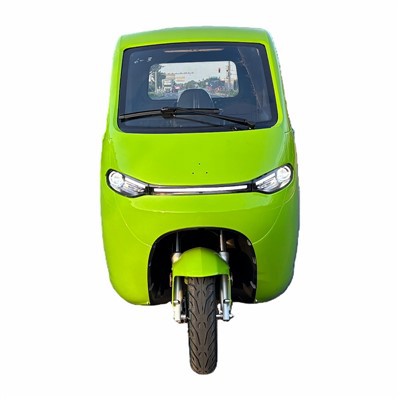
If you’re in the market for four wheel delivery electric vehicles and want to learn more about how our products can fit your business needs, or if you have any questions about power consumption or anything else related to our vehicles, don’t hesitate to reach out. We’d love to have a chat with you and discuss how we can help your business save money and be more environmentally friendly with our electric vehicles.
3 Wheeler Electric Mini Car References
- Industry reports on electric vehicle performance
- Internal research and development data from our product development team
- Conversations with real – world users of our four wheel delivery electric vehicles
Taizhou Xiangyuan New Energy Technology Co., Ltd.
As one of the leading four wheel delivery electric vehicle manufacturers and suppliers in China, we warmly welcome you to wholesale cheap four wheel delivery electric vehicle for sale here from our factory. All customized products are with high quality and low price. Contact us for pricelist.
Address: NO.7HUANGJIN ROAD,METAL RESOURCES RECYCLING INDUSTRY BASE, LUQIAO, TAIZHOU, ZHEJIANG
E-mail: order@jiajiev.com
WebSite: https://www.jiajiev.com/
