If you’re in manufacturing, pharma, food & beverage, or any industry that relies on tight process control, you’ve definitely encountered inline concentration meters. They’re the workhorses that let you track fluid density, sugar content, solvent mix, and all sorts of critical concentration levels in real time—no need to pull samples for lab testing. But if you’ve ever shopped around for one, you might’ve stumbled on two wildly different designs: some with a power cord sticking out, and others that look like tiny, self-contained pods with zero external wires. That left me with a question when I first got into this game: Do inline concentration meters even need a power supply? Spoiler: It’s not a yes/no answer—it depends on what your meter is built to do, and honestly, picking the wrong type could waste you a ton of time and money later. Inline Concentration Meter

First, let’s break down the basics of how an inline concentration meter works, because that’s where the power question starts. Inline meters are mounted right in your process line, usually in a bypass pipe or directly inserted into the main line. Their job is to measure concentration without taking samples, so they need some way to generate a signal, process the data, and send it to your control system or display. That core function is where power comes in—but how you get that power is where the split happens.
Let’s start with the meters that do need a dedicated power supply, because those are the most common if you’re using a full-featured unit. Think of the ones you see with analog 4-20mA outputs, digital Modbus, or Ethernet connections. These meters have to do more than just measure a raw physical property, right? For example, if your meter uses ultrasound to measure concentration, it needs a power source to fire those sound pulses, time how long they take to bounce back, and crunch that time into a concentration number. Same for refractometer-style inline meters: they shine a light through the fluid, measure how much it bends, and convert that to Brix or % solid content—all that light generation and sensor reading needs power. Even capacitance-based meters, which track changes in electrical field from the fluid, need power to run the sensor circuitry and output the data.
Now, why would you want (or even need) a powered meter? Let’s say you run a 24/7 chemical processing plant. You need your concentration data synced to your SCADA system so you can adjust mix ratios on the fly, catch drift before it ruins a batch, and keep compliance audits happy. A powered meter lets you do all that: you get real-time, continuous data, remote access, and easy integration into your existing control setup. These meters usually run on standard 24V DC power—super common in industrial settings, so you don’t have to rewire your whole plant. The downside? You do have to run power cables to it, which means more installation work, and if there’s an outage, your meter goes down too. But for most heavy industrial uses, that tradeoff is worth it.
But then there are the other ones—the “passive” inline concentration meters that don’t have a power cord. Wait, hold on—passive doesn’t mean they work without power at all, right? That’s the big misconception. I see customers all the time ask, “Do I need to plug this in?” and when I say, “It gets power from the process line itself,” they’re confused. These are the self-powered meters, usually called “intrinsically safe” or “harvesting-powered” units. How do they work? They tap into the process’s natural energy, usually vibration or pressure flow, to run the sensor and send data. For example, some use the movement of fluid through the pipe to spin a tiny turbine, which generates just enough electricity to read concentration and transmit a basic signal. Others use electromagnetic induction from the fluid’s conductivity (if the fluid is conductive enough) to power their circuitry. These are huge for industries where you can’t run extra wiring—like remote oil and gas sites, or food processing lines where running power into a food-grade enclosure might be a hassle. They’re also way simpler to install: you don’t have to drill new holes for power cables, you just drop them into the line and go.
But here’s the catch: passive (self-powered) meters have limitations. They’re not as precise as powered ones, and they can’t handle every type of process. For example, if your fluid is low-pressure and has almost no vibration or flow, they won’t generate enough power to run. If you need data with sub-0.1% accuracy for a pharmaceutical batch, a self-powered unit might not cut it—their signal is usually lower power, so the noise from the line can throw off readings. They also don’t do fancy outputs: most only give a basic analog signal or a LoRaWAN update every few minutes, not continuous remote access. So if you need to track concentration in real time for tight control, passive meters might leave you in the lurch.
Now, let’s talk about the gray area, because there’s a middle ground that a lot of people don’t know about: battery-assisted inline concentration meters. These aren’t mains-powered, but they do have a small, replaceable battery to cover periods when the process power isn’t enough. Say you run a beverage line that uses carbonated soda with high flow—most days, the fluid’s flow generates enough power, but during slow shifts, the flow drops. A battery-assisted meter will kick in to keep running, no gaps in data. They last 2-5 years on a single battery, so you don’t have to replace them every few months, and you still get the precision of a powered meter without the hassle of running power cables. That’s the sweet spot for a lot of mid-sized food and beverage or cosmetic manufacturers, right? They don’t want to rewire their whole line, but they need accurate, continuous data to keep their product consistent.
I’ve seen a lot of customers make the mistake of picking a meter just because it doesn’t need power, and regret it later. One guy I worked with ran a craft brewery that tried to save money on a passive meter for their wort concentration. It worked great during busy weekend shifts when the line was flowing hard, but during weekday small-batch runs, the flow was too low, so the meter would shut off. He ended up with a few bad batches because he didn’t have real-time data to catch the concentration drift. That’s why it’s not a matter of “do you need power” as much as “what power setup matches your process needs.”
Let’s break down when to go with which type, to make it concrete. If you’re:
- Running 24/7 heavy industrial processing (chemicals, oil & gas, large-scale pharma) where you need integrated control and high precision: Go with a powered 24V DC meter. It’s reliable, integrates with your existing systems, and gives you the accuracy you need. The power cable hassle is nothing compared to the cost of a bad batch or shutdown.
- Working in a remote location, or a process where running power is impossible (food processing with strict sanitation rules, offshore sites, temporary installations): Go with a passive self-powered meter. Just make sure to test if your process has enough flow/pressure to generate power—we can help you check that with a quick process audit.
- Mid-sized operations where you want accuracy without the power wiring headache: Battery-assisted is the way to go. They’re easier to install than mains-powered, last forever on a battery, and don’t have the flow limitations of passive meters.
Wait, also, there’s the safety angle to consider, especially for hazardous areas. Intrinsically safe (IS) meters—whether powered or passive—are designed not to spark, so they can be used in areas with flammable gases or dust. Powered IS meters still need 24V DC power, but they’re built to limit electrical energy so they don’t ignite anything. Passive IS meters are even better because they don’t carry any stored power, so they’re less risky. That’s a big deal for oil and gas or mining operations, so power supply type ties directly to safety compliance too.
Another thing I get asked a lot: Do inline concentration meters ever run on wireless power? Yeah, some newer models use inductive charging, like phone chargers, where you mount a charging pad near the meter to top up a battery. That’s a middle ground between mains power and battery-assisted—you don’t have to run a cable to the meter, but you do get the continuous power you need. It’s still pretty niche, but it’s growing fast for food processing facilities that want wireless convenience without sacrificing performance.
Let’s circle back to the original question: Do inline concentration meters need a power supply? The short answer is: if you want accurate, continuous, integrated data, yes—either mains power, battery power, or process-harvested power. The “no power” meters you might hear about are actually harvesting power from the process, so they still rely on power, just not external power. The key is matching the power type to your process, your accuracy needs, and your installation constraints.
At the end of the day, picking the wrong meter’s power setup is a quick way to run into headaches. Too many customers come to me after buying a cheap “no power” meter that works for a week, then dies when their flow changes, or can’t give them the data they need for their quality control. That’s why I always start by asking a few simple questions before recommending a meter: What’s your process fluid? What’s your flow rate? Do you need remote access or integration with your control system? How important is accuracy for your product?
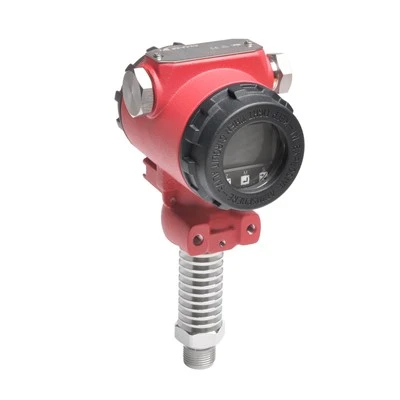
If you’re out shopping for an inline concentration meter and confused about the power setup, don’t guess. We can run a quick check of your process, walk you through the pros and cons of each power type, and make sure you get a meter that works for your specific line. It’s way better to get it right the first time than to waste time and money on a meter that doesn’t fit.
Mercury Free Melt Pressure Gauge References:
- Instrumentation, Systems, and Automation Society. (2020). Standard Practice for In-Line Process Concentration Measurement. ISA-TR91.00.01-2020.
- Food and Drug Administration. (2021). Process Control for Food and Beverage Manufacturing: In-Line Sensor Performance Guidelines. FDA Office of Food Safety.
- International Electrotechnical Commission. (2019). Intrinsically Safe Instrumentation for Process Industries. IEC 60079-0:2019.
- Process Industry Practices. (2022). Power Supply Design for Industrial Sensors. PIP Specification SENS001.
Shanghai Zhaohui Pressure Apparatus Co., Ltd.
Shanghai Zhaohui Pressure Apparatus Co., Ltd. is one of the most professional inline concentration meter manufacturers and suppliers in China, featured by quality products and good service. Please rest assured to wholesale advanced inline concentration meter in stock here from our factory. Also, customized service and 1 year warranty are available.
Address: 2-6/F, Building 8, No.115, Lane 1276, Nanle Road, Shanghai, China
E-mail: sensorsales@zhyqsensor.com
WebSite: https://www.sinosensor.net/
