When I get a call from a new potential customer, the first question I hear after “how much is the machine?” is almost always “how much space does a tire recycling machine need?” Tire Recycling Machine
I get it. If you’re setting up a new tire recycling operation, you’re not just buying a single machine—you’re planning an entire space. You need room for unloading trucks, processing tires, storing raw material, finished product, and room for staff to move around safely. Miscalculate on space, and you’re looking at bottlenecks, safety hazards, and lost production before you even unbox the first piece of equipment. As someone who’s been selling tire recycling machines for 12 years, I’ve seen it all: someone cramming a whole system into a 10×20 bay and tripping over the shredder every time they load tires, another leaving too much empty space and wasting money on rent. The sweet spot is somewhere in between, but it depends on so many factors that go beyond just the machine’s footprint.
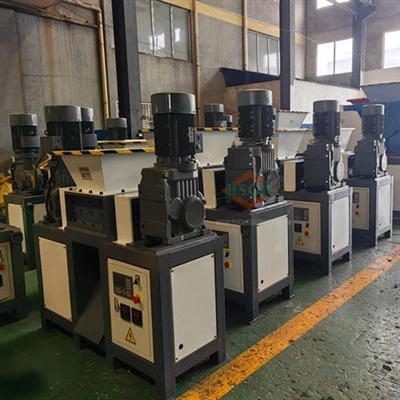
First, let’s talk about the machine itself. A basic single-shaft tire shredder—what most small-to-mid-sized operations start with—has a footprint of roughly 10 feet long by 6 feet wide. That’s just the shredder itself, though. You can’t stick it in a corner and call it a day. You need space around the infeed to load tires, especially if you’re using a forklift or a tire handler to bring whole tires into the unit. Most manufacturers, including our team, recommend at least 8 feet of clear space in front of the infeed. That’s enough room to maneuver a standard 5,000-lb forklift without clipping the machine or hitting a coworker working nearby. On the discharge side, you need room for the conveyor belt that takes shredded rubber to the next processing step, usually a granulator or a steel wire separator. For a single-shaft shredder, that’s another 8 feet to 10 feet, depending on how long you want your conveyor to be. If you’re running off-the-shelf conveyors, you might need to add another 2 feet for supports and space to adjust the belt tension.
That’s just the pre-processing step, though. If you’re going beyond basic shredding to produce granulated rubber or crumb rubber (the stuff used in playground surfaces, asphalt, or rubber mulch), you’ll need more machines, each with their own space requirements. A dual-shaft secondary shredder, which breaks down the 2- to 3-inch shreds from the primary machine into 1-inch pieces, is about the same size as the primary shredder, but it usually sits right next to or just after the primary unit, so you might not need as much extra space there. The granulator, which crushes the shredded rubber into smaller particles, is a bit larger—roughly 12 feet long by 7 feet wide. Its infeed and discharge need the same clearance as the shredder, but you also need space around the granulator for ventilation. Granulators run hot, and rubber dust is flammable, so you can’t tuck it too close to a wall or another machine without proper airflow. We tell customers to leave at least 3 feet on all sides of machines that generate heat or dust.
Then there’s the steel wire separator, a critical piece most operations skip at their own peril. Whole tires have steel belts inside, and if you don’t remove that steel, it will damage downstream machines and contaminate your final product. A standard 48-inch magnetic separator is about 10 feet long by 3 feet wide, and it sits between the shredder and granulator or right after the shredder. That one doesn’t need as much clearance, but you still need space to feed shredded material onto the magnetic belt and move removed steel to a separate bin or pile.
If you’re running a full system, not just individual machines, your total processing bay will add up. For a small operation that produces 1,000 to 1,500 pounds of crumb rubber per hour, the processing area alone will be roughly 40 feet long by 25 feet wide. That’s not including space for raw tire storage, finished product storage, or office space. Raw tire storage is a big one—whole tires take up a lot of space. A standard passenger tire is about 3 feet in diameter, so a single pallet of 20 tires takes up around 8 feet by 4 feet, but if you’re unloading whole truckloads at a time, you’ll need a designated area for stacking. Most experts recommend allowing 10 square feet of raw tire storage space for every hour of production, assuming you’re storing tires three high. Finished crumb rubber storage is even more space. Granulated rubber is lightweight and takes up a lot of volume, so you’ll need space for bags, pallets, or bulk storage silos. A 1-ton bulk bag of crumb rubber takes up about 100 cubic feet, so if you’re producing 5 tons a day, that’s 500 cubic feet of storage right there.
Now, if you’re a larger operation producing 5,000 pounds or more per hour, the space scales differently. The primary shredder here will be industrial-sized, with a footprint of 15 feet long by 8 feet wide, and you’ll need a dedicated unloading bay for semi-trucks that deliver whole tires. That bay alone can be 30 feet long by 20 feet wide, just to maneuver the truck and unload tires with a forklift or tire handler. The full processing system for that scale will take up 10,000 to 15,000 square feet of dedicated space, and that doesn’t include storage or maintenance bays. Maintenance is another factor most new customers forget. Every machine needs regular oil changes, blade sharpening, and part replacements, so you can’t stack machines together so tight that a technician can’t pull out a blade or access a motor without crawling into a space. We always recommend leaving at least 6 feet along any wall that has machine access points, and 3 feet between individual machines for walkways.
Wait, but what about indoor vs outdoor space? A lot of customers ask if they can run part of their system outdoors to save on indoor square footage. That works for storage, but most processing machines are better suited for indoor use. Rubber dust is not just a fire hazard—it’s corrosive, and if you run a shredder or granulator outside in rain or extreme temperatures, you’ll wear out bearings and motors much faster. We’ve had customers who tried putting the primary shredder outside and ended up replacing the motor twice a year, when they could have just allocated a bit more indoor space and run it inside for half the maintenance cost. For outdoor use, the only machines that work well are conveyors, raw tire stacks, and finished product storage. That way, you don’t have to condition indoor space for large tire piles, and you keep the dust outside where it’s easier to manage.
I can’t tell you how many times a customer has called me three months after buying a machine, complaining that it doesn’t fit, and they have to move or rearrange their whole facility. Most of the time, it’s because they just measured the machine’s footprint and didn’t account for clearance, storage, or maintenance space. A few years back, a guy in Ohio ordered a 10-ton-per-hour system, and he quoted me his facility was “20,000 square feet total” so it would work. He put the primary shredder in a 10×15 corner, and the conveyor only fit if he ran it through a door that was too narrow, so he had to cut part of the frame off. It took him twice as long to install, and he had to pay a welder to rebuild the conveyor, all because he didn’t ask about clearance.
So, what’s the general rule of thumb? For a small, entry-level operation (1,000 pounds per hour, single shredder + granulator), plan for 3,000 to 4,000 square feet total, including processing, storage, and walkways. For a mid-sized operation (2,500 pounds per hour, full steel separation and finished product packaging), 6,000 to 8,000 square feet. For a large commercial operation (5,000+ pounds per hour), 12,000 square feet or more. But that’s just a baseline. The biggest variables are: how you unload tires, how you store your input and output, how often you plan to run maintenance, and whether you’re adding extra features like dust collection or odor control systems.
Dust collection is one of those add-ons that adds space, but it’s non-negotiable for compliance. Most local environmental agencies require dust collection systems to capture rubber particles from shredders and granulators. A standard 5,000 CFM dust collector is about 8 feet long by 4 feet wide, and it needs its own space, usually near the main processing area, plus ductwork that runs to each machine. The ductwork can hang from ceilings or run along walls, but it needs clearance, so you might lose another 50 to 100 square feet of space just for that system.
Another thing to consider: future expansion. We’ve had a lot of customers start small, then a year later they’re producing twice as much and need to add a second granulator or a tire pyrolysis unit to turn rubber into fuel oil. If you plan ahead for extra space when you first set up, you don’t have to move everything when you outgrow your spot. I tell every new customer to leave 20% to 30% extra space in their processing bay for future equipment. That might sound like a waste at first, but it’s way cheaper than moving a whole system a year later.
Safety is also tied directly to space. OSHA has strict rules about walkways around industrial equipment, and if you don’t have enough space, you’re asking for a fall or an equipment accident. I once visited a customer who had a shredder sitting so close to a pallet of tires that a forklift driver clipped the side of the machine, spilling a ton of tires and breaking a motor. The insurance didn’t cover it, and it cost them three days of downtime. It’s not worth skimping on space to save a few square feet of rent.

At the end of the day, the space a tire recycling machine needs isn’t just about the machine’s physical size. It’s about how you plan the whole operation around it. Don’t just measure the machine’s footprint—measure the space for forklift maneuvering, raw tire storage, finished product, maintenance access, and compliance with local regulations. If you’re still figuring out how much space your setup will need, or you’re looking to invest in a tire recycling system that fits your exact space, feel free to reach out and start a conversation about your needs. We can walk you through custom layouts, recommend equipment that fits your square footage, and help you avoid the mistakes that so many new operators make when they first get started.
Motor Recycling Machine reference:
- Tire Recycling Association. (2022). "Facility Planning Guidelines for Tire Processing Operations." TRA Technical Report Series.
- Occupational Safety and Health Administration (OSHA). (2021). "Industrial Equipment Clearance and Walkway Standards for Manufacturing Facilities." OSHA Publication 3585-07R.
- Global Tire Recycling Market Report. (2023). "Space Utilization Best Practices for Small-to-Mid-Sized Tire Processing Plants." Market Insight Partners.
- European Tyre and Rubber Manufacturers’ Association (ETRMA). (2022). "Environmental Compliance Requirements for Tire Recycling Facilities." ETRMA Technical Brief.
Xi’an Grand Harvest Equipment Co., Ltd.
Xi’an Grand Harvest Equipment Co., Ltd. is one of the leading tire recycling machine manufacturers and suppliers in China. We warmly welcome you to buy or wholesale cheap tire recycling machine for sale here from our factory. All customized products for distributors and dealers are with the best quality and low price.
Address: Room 603, Building G, Wangzuo Modern City, No. 35 Tangyan Road, Hi-Tech Zone, Xi’an, Shaanxi, China.
E-mail: coppergranulator@bsghrecycling.com
WebSite: https://www.bsghrecycling.com/
