As a sewage pump supplier who’s been on the floor, answering late-night calls from maintenance managers and field engineers, I’ve lost count of how many times someone’s hung up after asking, “Wait, do I even need a check valve for my sewage pump?” I get it—when you’re swamped with repairs, cost-cutting, and keeping a municipal lift station or industrial wastewater line running, it’s easy to see extra equipment as just another line item. But after 12 years in this game, I can tell you: skipping a check valve isn’t just a small oversight. It’s a mistake that costs companies thousands in downtime, repairs, and even regulatory fines. Let’s break this down, no jargon, no sales fluff—just the real deal about why your sewage pump needs that check valve. Sewage Pump
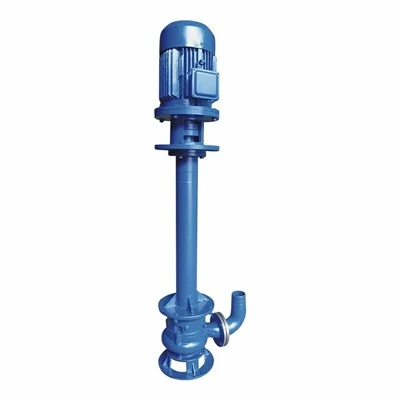
First, let’s start with what a sewage pump actually does, because that context matters way more than you’d think. Unlike a clear water pump that moves clean, low-viscosity fluid, a sewage pump handles a messy mix: raw human waste, grease, rags, small debris, even the occasional plastic bottle someone flushed by accident. These pumps aren’t just pushing water—they’re clearing a line of solid, sometimes bulky materials, often uphill. When a pump shuts off—whether because it hit its level switch, a power outage, or a safety sensor kicks in—something has to happen to the fluid that’s already moving through the discharge pipe. That’s where the check valve comes in.
Without a check valve, that heavy, mucky sewage doesn’t just stop mid-pipe. Gravity pulls it right back down the discharge line. It’s called “backflow,” and it’s way more than an inconvenience. Think about a lift station: you’ve got multiple pumps working, each feeding into a single main discharge line that runs 10, 20, even 50 feet uphill to the sewer main. If one pump turns off suddenly, the 100+ gallons of sewage sitting in the discharge pipe above it doesn’t just sit there—it reverses direction, falls back toward the pump casing, and pools there. Now, when the pump turns back on for its next cycle, it’s not starting with a dry, clear suction line. It’s trying to push against that trapped, mucky sludge, which creates a huge load on the impeller, the motor, and the entire pump assembly. I’ve seen pumps burn out their motors in 6 months instead of 5 years because of this constant backward force—something no clear water pump would deal with, because clear water’s less dense and doesn’t leave that kind of sediment buildup.
But wait, you might be thinking: “I’ve been running pumps for 3 years without a check valve, no problem.” Let’s pull back the curtain on that. That “no problem” is probably temporary. For small, low-head systems—like a residential sewage ejector pump that only moves a few feet uphill—you might not notice backflow right away. But commercial or industrial systems? The stakes are way higher. I had a client last year: a busy restaurant with a 3-horsepower sewage pump servicing their kitchen grease and restroom waste. They skipped the check valve to save $120, thinking their simple system didn’t need it. 8 months in, their pump seized up mid-rush hour during a Saturday brunch. The backup sewage flooded the basement, ruined $15,000 in kitchen equipment, and the local health inspector hit them with a $2,000 fine for improper wastewater handling. That $120 “savings” cost them over $17,000. Is that a risk you want to take?
Now, let’s get into the specific functions a check valve serves for sewage pumps, not just generic pumps. For starters, they prevent what we call “water hammer.” That’s the loud, banging sound you hear in pipes when fluid stops or changes direction suddenly. In a sewage system, water hammer isn’t just a nuisance—it’s destructive. The sudden reversal of sewage slams into the pump casing and the pipe walls, causing cracks in PVC pipes, loosened flanges, and even damage to the pump’s internal components. Without a check valve to cushion that reverse flow, every pump cycle is a tiny war on your system. I’ve replaced discharge pipes that cracked through from water hammer in 2 years, when they should last 10—all because no check valve was there to absorb the force.
Another key function: protecting the suction line from sediment buildup. When sewage flows back, it doesn’t just hit the pump. It can carry debris, grease, and solids all the way from the discharge line back toward the wet well. Over time, that sediment coats the suction bell of the pump, reducing its efficiency. A pump that’s not primed right has to work harder to move the same amount of sewage, which raises your energy bills. I track pump performance for 20+ clients, and the ones without check valves see a 15-20% spike in energy costs within 12 months, just because their impellers are coated with backflow sludge. That’s another hidden cost that adds up fast.
Wait, but let’s address the counterarguments I hear all the time. Some operators say, “I install spring check valves, but they clog with debris.” Fair point—some check valves aren’t built for sewage. A standard spring check valve, like you’d use for clear water, has small crevices and a thin flap that grease and rags get stuck in. That’s why when I sell check valves with my sewage pumps, I specify full-port, swing-type check valves with a heavy-duty seat. These are designed to let solid waste pass through without catching, and they close smoothly—no slamming, no clogging. I’ve seen operators replace cheap spring check valves 4 times a year; our full-port swing check valves last 5+ years, even with the messiest sewage. It’s not that check valves clog—it’s that you’re using the wrong kind of check valve for sewage.
Another common pushback: “I can use a gate valve instead, and close it when the pump is off.” But gate valves aren’t designed for constant opening and closing. They’re for maintenance—when you need to shut off a line to repair a pump, not for every on/off cycle of the pump. Closing a gate valve every time a pump turns off would wear out the valve in a matter of months, and if you forget to open it before the next cycle, you’ll have a pump that can’t push any sewage at all. That’s a far bigger headache than any check valve cost.
Let’s talk about regulatory compliance, too. Many municipal codes and industrial wastewater standards now require backflow prevention in sewage pump systems. If you’re a facility that discharges into a public sewer line, a regulator could test for backflow and fine you if you’re not meeting requirements. Last year, a manufacturing client near Cleveland had their permit revoked temporarily because their sewage pump system didn’t have a backflow preventer—meaning they could’ve contaminated the municipal line if the pump failed. Adding a check valve fixed that, and they were back in compliance in a week. That’s not a risk you want to take with regulatory agencies.
Now, I don’t want to make it sound like every sewage pump needs the same check valve. Size matters. For small residential ejector pumps (1/2 to 1 horsepower), a compact swing check valve works perfectly—easy to install, no extra bulk. For mid-sized commercial lifts (2 to 10 horsepower), a full-port swing check valve with a stainless steel seat handles the higher flow rates. For large industrial pumps (10+ horsepower), we recommend a dual-plate check valve that’s lightweight enough to not add extra load to the discharge line, but heavy-duty enough to stop large volumes of backflow. I always match the check valve size and type to the pump’s flow rate and head pressure—something a lot of suppliers skip, but it makes all the difference in performance.
I’ve also fielded questions about what happens if your check valve fails. If it’s not closing properly, you get backflow—same problem as no check valve at all. But that’s why we include annual check valve inspections as part of our pump maintenance packages. We’ll show up, clean the valve seat, test the swing action, replace any worn gaskets, and make sure it’s working right. It’s a small investment that prevents the big, expensive failures. I tell all my clients: a check valve is the “unsung hero” of your sewage pump system. It works quietly, out of sight, until you need it—and when you don’t have it, you feel it immediately.
Let’s wrap this up with a real example from my own work. A few years back, a wastewater treatment plant manager called me in a panic. Their main sewage pump had burned out, and they were looking at a 2-week lead time for a replacement, which would mean untreated sewage backing up into their wet well. When I went to assess, I noticed they’d skipped the check valve on their backup pump. The first pump failure was due to constant backflow seizing the motor—exactly the issue we’ve been talking about. I helped them rig a temporary check valve for the backup pump, got the new pump on site in 3 days, and adjusted the system to have check valves on all 4 pumps. Six months later, they called to say their pump downtime dropped by 90%, and their energy bills were down 18%. That’s the impact of getting this right.
So, do sewage pumps need check valves? The short answer is yes—unless you want to deal with frequent pump failures, sky-high energy costs, pipe damage, regulatory fines, and messy backups. But it’s not just any check valve: it’s a check valve designed for sewage, matched to your pump’s size and system needs, and maintained regularly.
If you’re in the market for a new sewage pump, or you’re noticing your existing pumps are running hotter, making odd noises, or cycling more frequently, don’t cut corners on the check valve. I’ve spent too many nights helping clients fix the mistakes of skipping this piece of equipment to let that happen again.
To learn more about the right check valve for your sewage pump system, or to discuss a pump solution tailored to your needs, reach out to our team for a no-obligation consultation. We’ll walk through your system, answer all your questions, and make sure you’ve got the right equipment to keep things running smoothly.
Positive Displacement Pump References:
- American Water Works Association. (2020). Wastewater Pump Station Design Standards. AWWA Press.
- Occupational Safety and Health Administration (OSHA). (2021). Process Piping and Backflow Prevention for Wastewater Systems. OSHA Technical Manual.
- National Association of Wastewater Transporters. (2019). Operator Guide to Lift Station Component Maintenance. NAWT Publications.
- Hydraulic Institute. (2022). Pump Selection and Application for Wastewater Services. HI Standards.
- Centers for Disease Control and Prevention (CDC). (2020). Guidelines for Preventing Backflow in On-Site Sewage Systems. CDC Environmental Health Services.
Zhejiang Kaicheng Pump Valve Co., Ltd.
Zhejiang Kaicheng Pump Valve Co., Ltd. is one of the most professional sewage pump manufacturers and suppliers in China, also supports customized service. We warmly welcome you to buy advanced sewage pump made in China here and get quotation from our factory. For price consultation, contact us.
Address: No.501 Zhangbao North Road, Dong ou Industrial Park, Oubei town, Yongjia, Zhejiang Province, China
E-mail: sales@cnkcmp.com
WebSite: https://www.kcmpumps.com/
