If you’ve ever stood on a bridge construction site and watched teams work through tough, uneven concrete or fractured bedrock, you might have wondered: how do they cut through such dense material without causing costly, dangerous damage to surrounding structures? As the owner of a horizontal drum cutter supply company, I get asked this question all the time—most recently by a bridge engineer who’d only used traditional saws and jackhammers on projects. The short answer is yes, horizontal drum cutters are increasingly used in bridge construction, and they’re changing how teams approach everything from deck modifications to abutment excavation. Let me break this down based on what I’ve seen firsthand on job sites, the data we’ve collected supporting our equipment, and conversations with engineers who’ve made the switch. Horizontal Drum Cutter

First, let’s clarify what a horizontal drum cutter is, for anyone new to the space. Unlike vertical saws that work in straight lines, or traditional drum cutters that rotate vertically, horizontal drum cutters are attached to excavators, skid-steers, or specialized bridge construction equipment, with a drum that spins parallel to the ground. The drum is lined with interchangeable, hardened teeth that grind, cut, or mill through materials ranging from reinforced concrete and asphalt to granite, limestone, and compacted soil. What makes them unique is their ability to create precise, uniform cuts while simultaneously removing the waste material, so you don’t need a separate vacuum or disposal tool for debris. That efficiency is a huge win on tight bridge sites, where every minute of downtime delays a project and adds costs.
Now, why does this matter for bridge construction specifically? Bridges are inherently complex: they have structural decks that need resurfacing or modification, abutments that sit on bedrock or compacted soil, piers that require adjustments, and often, existing infrastructure around them that you can’t damage. Traditional methods like jackhammers or diamond saws have major drawbacks for these tasks. Jackhammers generate intense vibration that can crack adjacent concrete, loosen rebar, or even shift the alignment of piers and abutments—something that’s a massive risk on a project where structural integrity is non-negotiable. Diamond saws are precise, but they only cut straight lines, work slowly, and produce tons of silica dust that requires expensive ventilation and personal protective equipment for crews. Horizontal drum cutters solve almost all of these issues.
Let’s look at a common bridge construction task: deck milling and resurfacing. Many older bridges need their original concrete decks removed down to a uniform level before a new, thicker deck is poured to handle heavier traffic loads. A few years back, we supplied a set of horizontal drum cutters for a rehabilitation project on a 1970s highway overpass in Ohio. The contractor had initially planned to use diamond saws to score the deck then jackhammers to break up the material, but their engineers were worried the vibration from jackhammers would crack the bridge’s support beams, which were only 12 inches below the deck surface. When they tested a horizontal drum cutter on a small section, the vibration levels measured less than 10% of what jackhammers produced, per data from the site’s structural monitoring system. They used the cutter to mill the entire 2.3-mile deck in half the time they’d budgeted for the traditional method, with zero damage to adjacent structural components. The only downside? They had to adjust their waste removal schedule to accommodate the fine, uniformly milled concrete, which is easier to recycle than broken jackhammer chunks.
Another big use case for horizontal drum cutters in bridge construction is abutment and pier excavation. Abutments are the large supports at either end of a bridge that transfer the load to the ground, and many are built on fractured bedrock or compacted glacial till. For new bridge projects, crews often need to excavate around existing pier forms or narrow footings without disturbing the surrounding soil that will support the new structure. Horizontal drum cutters are perfect here because they can cut through both rock and soil, and the operator can adjust the depth of the cut in real time—no need for separate rock saws and soil excavators. On a recent project for a new pedestrian bridge over a river in Pennsylvania, the excavation team used a horizontal drum cutter to dig 8-foot deep trenches for the new abutment footings. The site had a mix of sandstone bedrock and soft silt, and the cutter’s interchangeable teeth let them switch between grinding rock and carving out silt without changing tools. They finished the excavation in 5 days, compared to the 10 days their original timeline had allowed, because they didn’t have to wait for rock drilling and blasting crews to show up. Blasting, by the way, is another method crews used to avoid for this project—blasting creates extreme vibration that can damage adjacent ecosystems and even the old stone abutment of the nearby historic bridge. The horizontal cutter’s low vibration meant no impact to that historic structure, which saved the project hundreds of thousands of dollars in mitigation costs.
Wait, but isn’t there a time when horizontal drum cutters aren’t the best option? I’m not here to sell equipment that isn’t the right fit, so let’s be honest about limitations. They aren’t ideal for cutting extremely thick steel rebar (though some specialty teeth handle up to 2 inches of rebar) or for making very small, precise cuts that diamond saws or plasma cutters can pull off. For example, if you need to cut a 6-inch diameter hole in a bridge deck for a drainage pipe, a horizontal drum cutter would create too much of an irregular edge—you’d still use a hole saw or diamond bit for that. But for the bulk of the milling, excavation, and shaping tasks that make up 70% of a bridge construction project, horizontal drum cutters are competitive or better than traditional methods.
I’ve also seen them used for underwater bridge construction, which is a less talked-about application. Modern horizontal drum cutters can be mounted on amphibious excavators that work in shallow river or ocean water, to remove old bridge pilings or excavate underwater abutment footings. Traditional underwater cutting methods like diamond wire saws are effective but slow, and require divers to work in hazardous conditions. The horizontal cutter, when operated remotely, lets crews mill through submerged concrete and rock without putting divers at risk, and can create uniform surfaces that make it easier to place new pilings. We supplied a set of these remote-operated cutters for a bridge replacement project in the Gulf Coast, where high water currents made diver work dangerous, and the project finished 2 weeks ahead of schedule.
One of the biggest myths I hear from construction managers is that horizontal drum cutters are too expensive compared to traditional tools. Let’s do a quick cost breakdown, based on projects we’ve supported. A standard horizontal drum cutter attachment for a mid-sized excavator costs around $60,000 to $80,000, plus teeth replacements that cost roughly $1,000 per drum, depending on usage. Compare that to the cost of renting jackhammers, diamond saws, and supporting equipment (like dust extractors, rock drills, and waste disposal trucks) for a similar job. On the Ohio overpass project, the contractor’s total cost for the horizontal cutter was $120,000, including operator training and consumables, while the traditional method would have cost them $185,000 in labor, equipment rentals, and damage mitigation. The ROI was clear, and that’s before factoring in the time savings, which meant they avoided $250,000 in late penalties for missing the project deadline.
Operator training is another common concern. A lot of veteran excavator operators are used to traditional controls, so picking up a horizontal drum cutter’s system takes a few days, not weeks. We offer on-site training for all our customers, and most operators are comfortable running the cutter after 2 to 3 job days. The key is that the cutter’s controls are integrated with the excavator’s existing system, so operators don’t have to learn entirely new technology. Some newer models even have GPS guidance, so operators can set a specific cut depth and width, which reduces human error and ensures uniformity across large projects like bridge decks.
Now, let’s talk about future uses, because I don’t think horizontal drum cutters have hit their peak in bridge construction. As bridges age, there’s a growing need for “smart rehabilitation” that minimizes downtime and extends a bridge’s life. Horizontal drum cutters can work with structural monitoring systems to adjust cuts based on real-time data, like changes in concrete density or rebar location. We’re also seeing them used for deconstruction of old bridges, where crews mill the entire deck and supports, separate the concrete and rebar on site, and recycle 90% of the material. That’s a huge benefit for sustainability, which is becoming a bigger priority for state transportation departments around the country. The Federal Highway Administration recently published a case study on a bridge rehabilitation project in Minnesota that used horizontal drum cutters, noting that the project’s material recycling rate was 40% higher than the national average for similar projects.
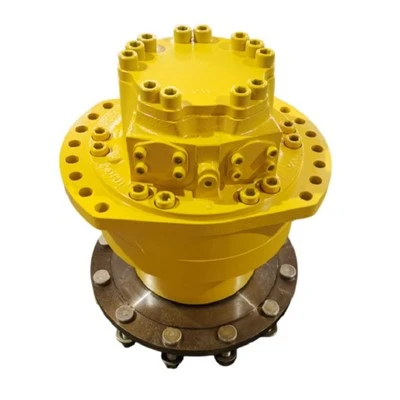
If you’re working on a bridge construction project and wondering if a horizontal drum cutter is right for your team, here are a few questions to ask yourself: Are you milling large sections of concrete deck? Excavating around structural components? Working in or near sensitive areas where vibration is a concern? If the answer is yes to any of these, a horizontal drum cutter is worth testing. I always recommend starting with a small, non-critical section to compare against traditional methods, because the results (faster timelines, lower costs, less damage) usually speak for themselves.
Drum Cutter I’ve been supplying horizontal drum cutters to construction teams for over a decade, and I’ve watched these tools go from a niche option for road repair to a standard on most major bridge projects. The shift isn’t just about new technology—it’s about solving real problems that construction teams have dealt with for years: delays, cost overruns, and the risk of damaging critical infrastructure. If you’re working on a bridge project and want to learn more about how horizontal drum cutters can fit your needs, reach out to our team. We can share case studies from similar projects, help you calculate ROI, and connect you with operators who have used the equipment on bridge sites.
References
- Federal Highway Administration. (2021). Innovative Construction Techniques for Bridge Rehabilitation. U.S. Department of Transportation.
- Construction Industry Institute. (2022). Vibration Mitigation for Structural Concrete Projects. The University of Texas at Austin.
- National Ready Mixed Concrete Association. (2020). Recycling of Milled Concrete from Infrastructure Projects. NRMCA.
- International Society of Automation. (2023). Guidelines for Remote-Operated Construction Equipment in Hazardous Sites. ISA.
Ningbo Oushijie Hydraulic Transmission Co., Ltd.
Ningbo Oushijie Hydraulic Transmission Co., Ltd. is one of the most professional horizontal drum cutter manufacturers and suppliers in China, also supports customized service. With abundant experience, we warmly welcome you to wholesale durable horizontal drum cutter at competitive price from our factory.
Address: Changshi Sanxing Industrial Zone, Jiulong Lake Town,Zhenhai District, Ningbo, Zhejiang, China
E-mail: yong@nbosj.com
WebSite: https://www.nbosj.com/
