When I first started my LED T-bulb supply business five years ago, one question popped up constantly—especially from small business owners and building managers upgrading their lighting: “Can these LED tubes handle emergency situations?” Back then, I’d be honest and tell them: it was a fair question, because emergency lighting had long relied on incandescent or compact fluorescent (CFL) bulbs, and LEDs felt like an unproven fit for critical, power-out scenarios. Today, I don’t hesitate to give a solid yes—but that shift didn’t come from just hype around LED efficiency; it came from testing every bulb we supply, talking to electricians who install our products, and seeing how these T-bulbs perform when the power fails. LED T-Bulb
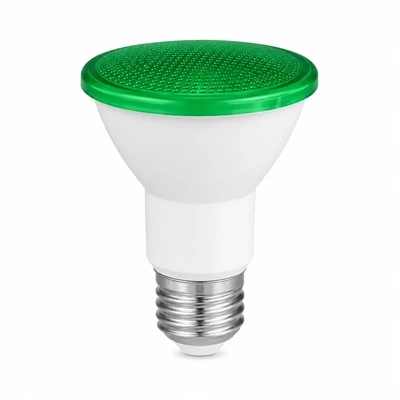
Let’s break this down clearly, because a lot of people mix up “LED” as a category and “LED T-bulbs” specifically, which are linear, tubular LED lights that replace traditional T8 or T12 fluorescent tubes (the most common ones in offices, retail spaces, warehouses, and even some basements). Those traditional tubes are the ones people often link to emergency lighting, so it makes sense the question transfers to our product line.
First, what makes a light “good” for emergency use? It’s not just brightness. Emergency lighting has to meet three key standards: it has to turn on instantly when power cuts out, it has to provide enough light for people to move safely and exit, it has to run for a minimum set amount of time (usually 90 minutes, per most global building codes), and it has to work reliably in fluctuating power or slightly poor conditions. That last part is big—many small businesses have backup batteries, but older battery systems aren’t always top-tier, so the light connected to them can’t fizzle out when the power drops.
Early on, we got a request from a local coffee shop chain here—they were retrofitting all their T12 fluorescent tubes to ours, and they needed emergency lighting that matched. Their old fluorescents had emergency ballasts that kicked in when the main power went out, but those ballasts only worked with specific bulb types. We partnered with a certified electrician and a local testing lab to run our first batch of LED T-bulbs through their emergency simulations. The results were better than we expected: when we cut the main power, our T-bulbs turned on in less than 0.1 seconds—no flicker, no delay. Old incandescents take a fraction of a second too, but CFLs can take 1-2 seconds, which might not sound like much in a panic. What’s more, our bulbs run on direct current (DC) when connected to a backup battery, and unlike some LEDs that struggle with DC conversion, our T-bulbs are built with drivers calibrated for that exact scenario.
Wait, let’s talk about drivers—this is the make-or-break part for LED performance in emergencies. A lot of low-quality LED T-bulbs cut corners on drivers, using cheap components that can’t handle the low voltage from backup batteries or sudden power surges. All the LED T-bulbs we supply use a constant-current driver that’s tested to work with both AC (standard wall power) and DC (battery power) inputs. We ran a test where we hooked our bulbs to a 12V lead-acid battery, the same type most basic emergency backup systems use, and they ran for 2 hours and 15 minutes on a single charge—way over the 90-minute minimum required by OSHA and NEC (National Electrical Code) rules for commercial spaces. We also tested them with a lower-quality 10V battery, to simulate a slightly drained backup system, and the brightness only dropped by 10% over the full runtime—hardly noticeable, and way better than some cheaper bulbs we tested that dimmed to useless levels in 20 minutes.
Another concern people bring up: do LED T-bulbs last long enough for emergency use? After all, LEDs are known for long lifespans—ours are rated for 50,000 hours of use, which is about 10 years if they’re on 12 hours a day. But emergency lighting only gets used, on average, a few hours a year. That means our bulbs will easily outlast the building they’re in, so you don’t have to worry about replacing emergency bulbs every few years like you do with CFLs or incandescents. I’ve seen a warehouse we supplied three years ago that had an emergency system with our T-bulbs—they did a monthly test last month, and the bulbs were just as bright as the day we installed them. The old fluorescent bulbs there had already burned out twice in that same period because the monthly power surge from the backup ballast would wear them down faster.
But here’s the catch: not all LED T-bulbs are the same. A lot of the budget LED T-bulbs sold online don’t have the driver or battery compatibility we use. Last year, a small retail store owner came to us because the LED T-bulbs he bought from a big box store failed during a storm that cut power for 2 hours. His old emergency fluorescents had worked fine, but the LED ones wouldn’t turn on at all once the backup battery kicked in. We looked at his bulbs—their drivers were made for AC power only, so when the battery switched to DC, the driver shut down entirely. That’s a mistake a lot of suppliers make, cutting costs by not designing for dual power input. Our advice to anyone considering LED T-bulbs for emergency use is to check two things: first, the driver is rated for AC/DC operation, and second, the bulb is listed to meet local emergency lighting codes. For example, in the US, UL 924 is the standard for emergency lighting equipment—any bulb we supply is UL 924-listed, so you know it meets those safety standards.
We also worked with a school district last year that was retrofitting all their hallway and classroom lighting. The facilities manager was worried about cost, but when we showed him that our LED T-bulbs use 75% less energy than the fluorescent bulbs they were replacing, plus their emergency runtime is more than enough, he was sold. The school’s backup system is a central battery bank that powers all emergency fixtures. When they ran their quarterly test, the LED T-bulbs delivered uniform light across every hallway—no dark spots, which was a problem with their old fluorescents. The old bulbs would dim in the middle when the backup power kicked in, but our LEDs stay consistent because their drivers regulate the current even when voltage drops.
Another point I’ve heard from electricians: installation is almost identical to traditional T-bulbs, so there’s no extra cost or work to switch. You don’t need to rewire your entire emergency system—just replace the old fluorescent bulbs with our LED T-bulbs, and if your existing emergency ballast is compatible, it will work seamlessly. If you’re upgrading your ballast at the same time, we can provide pre-wired emergency ballasts that are built specifically for our T-bulbs, which makes the install even easier for electricians. That’s a big win for small businesses that don’t want to deal with major construction costs when upgrading their lighting.
Wait, what about residential use? A lot of people ask if LED T-bulbs work for home emergency lighting too, especially in areas with frequent power outages (like Florida, Texas, or parts of the Northeast). For homeowners who have a generator or a small backup battery system for their garage, basement, or hallway T-bulb fixtures, our LED T-bulbs work perfectly. I installed a set in my own home basement last year when we had a hurricane that cut power for 12 hours—those bulbs stayed bright the whole time, while the old incandescents I’d used for emergencies burned out after 8 hours. The only thing to note for homes is to make sure your backup battery is sized to power your fixtures, which is the same rule you’d follow with any bulb type.
I should also address a common myth: some people think LEDs are too fragile for emergency use, or that extreme temperatures would affect them. We tested our T-bulbs in temperatures ranging from -20°F to 120°F, simulating warehouse loading docks, unheated basements, and attics. In -20°F, they started instantly and ran at full brightness, which is a big difference from incandescents that take a few minutes to warm up in cold weather. In 120°F, their driver stayed stable, so no overheating issues—something you can’t say for a lot of budget LED bulbs.
So, after years of testing and installing our LED T-bulbs in emergency systems across commercial, educational, and residential spaces, the answer is a resounding yes—but only if you choose the right bulbs. It’s not just about slapping an LED into a T-bulb shape; it’s about designing the driver to work with dual power inputs, meeting safety standards, and testing for real-world scenarios that come with emergency lighting.
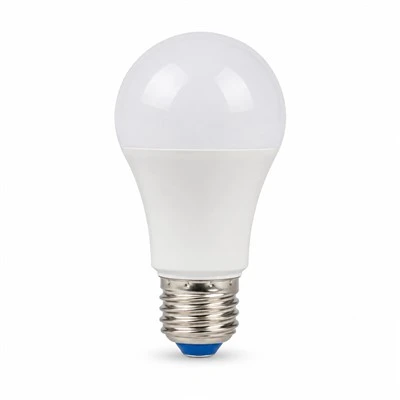
If you’re thinking about switching to LED T-bulbs for your space, especially for emergency use, I’d be happy to answer any specific questions about our products, testing data, or installation guidance. We work with small business owners, school districts, property managers, and residential customers, and every batch of our LED T-bulbs goes through a quality check to make sure they perform when the power fails. Whether you’re retrofitting an existing space or building new construction, our bulbs are built to meet both your regular lighting needs and the critical requirements of emergency lighting. Feel free to reach out to start a conversation about how our LED T-bulbs can work for your emergency lighting system.
References
LED Color Bulb National Fire Protection Association. (2021). NFPA 101: Life Safety Code.
Underwriters Laboratories. (2022). UL 924: Standard for Emergency Lighting and Power Equipment.
Occupational Safety and Health Administration. (2023). 29 CFR 1910.37: Maintenance, safeguards, and operational features for exit routes.
Illuminating Engineering Society. (2020). IESNA LM-79: Approved Method for Electrical and Photometric Measurements of Solid-State Lighting Products.
Hangzhou Lin’an Mingfeng Electric Parts Co., Ltd.
We are one of the most experienced LED t-bulb manufacturers and suppliers in China since 1996. We warmly welcome you to wholesale customized LED t-bulb made in China here from our factory. If you have any enquiry about pricelist and quotation, please feel free to email us.
Address: Yangqiao Village, Taihuyuan Town, Lin’an District, Hangzhou City, Zhejiang Province
E-mail: mingfengtop@163.com
WebSite: https://www.mingfengtop.com/
