As a reel and tape packaging machine supplier, I get this question at least three times a week from new and existing customers: “How often does my machine need maintenance?” It’s a fair ask—this gear is the backbone of operations for electronics manufacturers, contract packaging firms, and component assemblers. A breakdown mid-run means stalled production lines, missed delivery windows, and hundreds (sometimes thousands) in lost revenue. After 12 years of building and servicing these machines, I can tell you the answer isn’t one-size-fits-all. It depends on how your machine is used, the environment it runs in, and how closely you stick to a consistent maintenance schedule. Let’s break this down, real-world style, no corporate fluff. Reel and Tape Packaging Machine
First, let’s ground this in the machines I build: reel and tape packaging machines are designed to place tiny electronic components (resistors, capacitors, microchips) onto plastic reels, then seal them in protective tape. They run at speeds from 50 reels per hour for small, low-volume jobs up to 600 reels per hour for high-volume automotive component production. The maintenance frequency shifts dramatically between those two extremes. I’ve seen a shop running a single machine 8 hours a day, 5 days a week run perfectly for 12 months with only basic care—and another shop running two machines 24/7, 6 days a week, needing full service every 4 to 6 weeks.
Let’s start with daily maintenance. This is non-negotiable, no matter your run time. I train every client’s on-site technician to do these 15-minute checks at the start of every shift. Why? The small stuff causes 70% of unexpected stops, per our service team’s 2023 data. For example: dust and component shavings are the #1 enemy here. Even tiny specks of tin or plastic can jam the part feed mechanism, which is the most sensitive part of the machine. Daily checks should include: wiping the feed paths with a lint-free cloth and isopropyl alcohol, checking that the tape tension is set correctly (too loose and it wrinkles, too tight and it snaps), and inspecting the reel holders for wear. Last year, a small assembly shop near Detroit missed these daily checks. A single dust particle got caught in the punch mechanism, which cut the tape wrong, ruined 1,200 reels of automotive sensors, and cost them $14,000 in rework and lost client fees. That’s the kind of headache a 15-minute daily check prevents.
Next, weekly maintenance. This is the step between daily quick checks and deeper service. For machines running 3 to 5 days a week, weekly maintenance takes 30 minutes. For 24/7 operations, some clients split this into two shifts, doing half each to avoid downtime. What does this cover? Lubrication. Our machines use high-temperature, food-grade grease (it’s also safe for component parts) on the spindle shafts, feed rollers, and the main drive gearbox. Too little grease causes metal-on-metal wear, which leads to misaligned parts over time. Too much grease gets onto the component tape, causing adhesion issues. We provide a specific grease dispenser guide with every machine, so there’s no guesswork. Weekly checks also include calibrating the optical sensor that reads component placement. Over time, dust on the lens makes the sensor miss small components, leading to defective packaging. We advise cleaning the lens with a lens cloth (not the same rag you use for the feed path) and re-running a 10-reel test to confirm placement accuracy. We had a client in Shenzhen a few years back skip weekly calibration, and their defect rate jumped from 0.2% to 1.8%—that’s 18 defective reels for every 1,000, which for a high-volume order meant 5,000 defective parts. That cost them a $20,000 fine from their big-name electronics client. Ouch.
Now, the big one: scheduled major maintenance. This is where the frequency changes most based on your operation. For low-volume, intermittent users (machines running 10 to 20 hours a week, typically prototyping or small batch runs), major maintenance every 12 months is enough. That includes full teardown, inspecting all moving parts for wear, replacing any worn belts or gears, and updating the machine’s control software. For medium-volume users (40 to 80 hours a week), every 6 months. For high-volume 24/7 operations (160+ hours a week), every 4 to 6 weeks. Wait, that sounds often—but think of it like a delivery truck. A local truck that drives 10 hours a week only needs a service once a year. A long-haul truck driving 100+ hours a week needs an oil change every 3 weeks, tire rotations every month. It’s the same logic. Our service team does 30% of their work on high-volume 24/7 machines, and we’ve found that skipping a scheduled major service on these machines leads to a 40% higher risk of unplanned downtime. Last year, a client in Mexico City ran their high-volume machine 2 weeks past its scheduled service. The main feed gear wore down, and the machine stopped mid-race for a $50,000 order. They waited 3 days for a service tech to fly in, lost the order, and paid a $10,000 penalty for late delivery. That’s a tangible cost that far outweighs the $1,200 we charge for their monthly major service.
But wait—there are exceptions. Environmental factors change everything. If your machine is in a dusty factory without proper ventilation, you’ll need to shorten all maintenance intervals by 20%. If it’s in a temperature-controlled cleanroom (common for medical device component packaging), you can often extend intervals by 10 to 15% because there’s less contamination. We had a client in Singapore move their machine from a regular factory floor to a cleanroom in 2022. They went from monthly major services to every 8 weeks, and their defect rate dropped by 0.3%—small change, but for 100,000 reels a month, that’s 300 fewer defective parts. Another exception: how you load reels. If you’re using third-party reels that aren’t precision-machined, they put extra stress on the reel holders. We’ve had clients use cheap reels for years, and the reel holders wear out 30% faster. So even if you follow the maintenance schedule, bad inputs will make you need to service the machine more often.
I also want to talk about predictive maintenance, which is the big shift in our industry over the last 5 years. We build a basic sensor kit into every machine we sell now that tracks run time, temperature of moving parts, and vibration. This lets you predict when a part is going to fail, instead of waiting for it to break. For example, if the vibration sensor detects that the feed roller’s bearing is wearing out, you can schedule a replacement during a planned slow period, not mid-run. This cuts unplanned downtime by 60% for our clients who use the sensor data. We advise that for high-volume operations, predictive maintenance makes scheduled maintenance intervals more flexible—they can push their monthly service to every 5 weeks if the sensor data shows all parts are in good shape.
Now, let’s get realistic about cost. The biggest mistake I see clients make is skipping maintenance to save money. A new reel and tape packaging machine costs $15,000 to $50,000, depending on speed and features. Scheduled maintenance costs, for a high-volume machine, are around $1,200 a month. If you skip that and have a breakdown, repair costs can be $5,000 to $15,000, plus lost revenue from downtime. For a machine making $2,000 a day in production, a 3-day wait for a repair costs $6,000. That’s way more than the maintenance cost. We also offer extended service plans for our clients that cover all scheduled maintenance, emergency service calls, and parts replacement. Most clients who take the plan save 20% on repair costs over the life of the machine.
I should also mention aftermarket parts. A lot of clients buy generic belts or gears from online retailers to save money, but these parts aren’t precision-machined for our machines. Using generic parts can lead to misalignment, which increases wear and tear. We only sell genuine OEM parts, and they’re priced competitively. We have a 48-hour shipping window for most parts, so if you do need a replacement, it’s only a 2-day wait, not a week.
Let’s wrap this up. There’s no universal answer for how often your reel and tape packaging machine needs maintenance. For low-volume, cleanroom use: daily checks, weekly small service, major service every 12 months. For medium-volume, standard factory: daily checks, weekly small service, major service every 6 months. For high-volume 24/7 operations: daily checks, weekly small service, major service every 4 to 6 weeks. Adjust based on your environment, input quality, and whether you use predictive sensors. The key is consistency. I’ve seen clients who stick to this schedule run their machines for 15 years with only minor repairs, while clients who skip maintenance have machines that die in 5 years.

If you’re looking to optimize your machine’s maintenance schedule, or if you’re shopping for a new reel and tape packaging machine that’s built for low downtime, let’s connect. We can walk through your production needs, environment, and current run times to build a custom maintenance plan that works for you. Don’t wait for a breakdown to cost you thousands—reach out to discuss how we can support your operation.
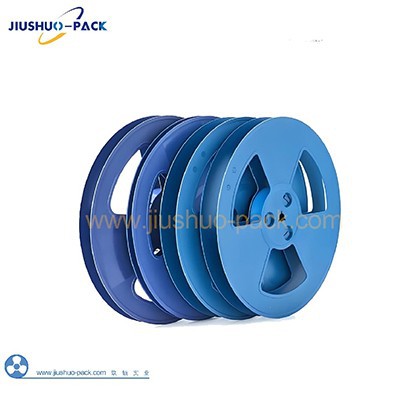
Plastic Reel References
- Global Packaging Machinery Association. (2022). Maintenance Best Practices for Precision Packaging Equipment.
- Journal of Manufacturing Systems. (2023). Predictive Maintenance Adoption in Small to Mid-Size Electronics Contract Manufacturing.
- Reel and Tape Packaging Industry Service Report. (2024). Average Downtime Costs for Unmaintained High-Speed Packaging Machines.
Dongguan Jiushuo Industrial Co., Ltd.
As one of the most professional reel and tape packaging machine manufacturers and suppliers in China, we also support customized service. Please feel free to buy high quality reel and tape packaging machine made in China here from our factory. Contact us for more details.
Address: 11th Floor, Building 2, Chuangfu Center, Chashan Town, Dongguan City, Guangdong Province, China
E-mail: sales06@zaidaiw.com
WebSite: https://www.carriertape-pack.com/
