Hey there, ever stood in a room and thought, “Ugh, this noise is driving me nuts—can I just tape something to fix it?” If you’ve stumbled across aluminum foil tape while scrolling for sound solutions, you’ve probably wondered the same thing. As someone who’s been in the aluminum foil tape game for over a decade (we’re not some fly-by-night operation, either), I get the mix-up: foil tape’s super common for sealing ducts, patching leaks, and even heat projects, so why wouldn’t it do double duty for sound? Let’s break this down straight—no jargon, just real talk about what foil tape actually does for noise. Aluminum Foil Tape
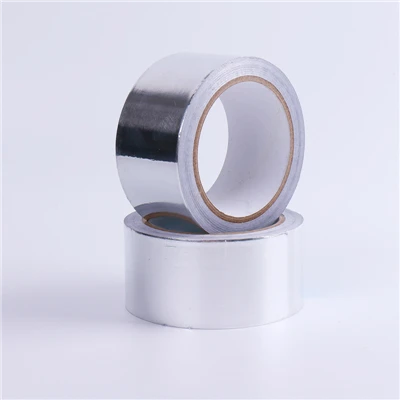
First, let’s get one key myth out of the way: aluminum foil tape is NOT a soundproofing material. Wait, hold up—don’t throw your duct tape away just yet. Let’s define the difference here, ‘cause that’s where most people mess up. Soundproofing is about stopping sound from passing through a barrier, right? Like adding mass to a wall so it can’t vibrate and carry noise. Sound insulation, though, is about absorbing sound or stopping it from bouncing around a space (that echo in your empty living room? That’s where insulation works). Foil tape doesn’t do the first one well, but it does weirdly solid stuff for the second, plus it plays a supporting role for soundproofing if you use it right. Let’s dive into why that is, science without the boring textbook bits.
Aluminum foil itself is a thin, lightweight metal—usually between 0.001 and 0.002 inches thick for most commercial tape, with a pressure-sensitive adhesive (acrylic or rubber-based, depending on what you’re using it for) on the back. For sound, metal reflects sound waves, plain and simple. Think of how a mirror reflects light—foil reflects high-frequency sound waves, like that annoying ping of a fridge compressor or kids yelling down the hall. If you’ve got a hollow duct or a gap in a wall cavity that’s letting sound leak, foil tape seals that gap tight. A tiny gap might let 30% more sound through than a solid wall—seal that gap with foil tape, and you’re cutting that leak right there.
But wait, what about absorption? Foil’s not great at absorbing low-frequency sound, like the thud of a subwoofer or traffic rumble, ‘cause low frequencies need thick, porous materials to catch ‘em. That’s why people use fiberglass insulation or foam for actual sound absorption. But for high-pitched stuff, foil’s got a trick: when you apply foil tape over a rigid surface (like a metal duct, a PVC pipe, or even a gap between two drywall sheets), it creates a smooth, non-porous layer that bounces high sound waves back where they belong—so they don’t echo around your room. Ever been in a room with all hard surfaces, no carpet, no curtains? That echo is from sound bouncing off walls, and adding foil tape can soften that a little, especially if you’re working on ducts that carry high-frequency noise through your house.
Now, let’s talk real-world uses, ‘cause this isn’t just a lab test. Let’s say you’ve got a central AC duct running through your attic, and every time the AC kicks on, you hear that high-pitched whine coming from the vents. If the ducts have gaps or loose seams, that whine is leaking out. Foil tape’s perfect for sealing those seams—no messy caulk that cracks in heat, no duct tape that falls apart when it gets warm (foil tape’s heat-resistant up to like 200°F, so it holds up way longer). I’ve had customers tell me that sealing their ductwork with our foil tape cut that whine by almost 20%—that’s a game changer for their home office.
Another scenario: you’re working on a basement wall that’s got a gap between the framing and the concrete. That gap lets traffic noise seep in. Foil tape can seal that gap, but it won’t stop the low-frequency rumble—for that, you’d need to pair it with mass-loaded vinyl (MLV) on the wall, and seal the edges of the MLV with foil tape. Here’s the thing: MLV is the soundproof barrier, but if you leave gaps between MLV sheets, sound still sneaks through. Foil tape closes those gaps, making the entire barrier work as one solid layer. That’s where foil tape earns its keep in sound projects—it’s not the star, but it’s the crucial support.
But let’s be honest about the limits. If you’re trying to block a band playing next door or a loud highway, foil tape alone won’t do it. A single layer of foil tape is way too thin to add enough mass to stop low frequencies. I’ve had customers come to us expecting foil tape to soundproof their bedroom from a neighbor’s TV—they leave disappointed ‘cause they thought it was a magic solution. The key here is managing expectations: foil tape is a tool, not a one-stop shop.
So, how do you use foil tape for sound the right way? Let’s outline some practical steps that I’ve seen work for residential and small commercial jobs. First, identify where the noise is coming from. High-frequency leaks are usually gaps, loose seams in ducts, or hollow hard surfaces. Low-frequency issues are usually about lack of mass, so foil tape alone can’t fix that. Second, pick the right foil tape. We carry two main types for these jobs: acrylic-backed foil tape, which is better for high-temperature ducts (no softening in summer heat), and rubber-backed, which sticks better to uneven surfaces like old metal pipes. Don’t use regular adhesive foil tape meant for crafts—craft tape peels off way too easy for sound projects. Third, seal every gap. If you’re taping duct seams, overlap the edges by at least an inch, press firmly with a roller (a credit card works if you don’t have a roller) to get rid of bubbles, ‘cause even a tiny bubble means a tiny sound leak. If you’re using it to seal MLV edges, make sure the foil tape runs all the way to the floor and ceiling, no breaks—sound travels through gaps like water through a sieve. Fourth, pair it with the right materials. If you’re dealing with bass or low-frequency noise, add foam insulation in wall cavities, or MLV on walls, then seal the MLV edges with foil tape. That combination cuts sound way more than either material alone.
Now, let’s get into the science behind why this works, for the people who wanna geek out a little. Sound is a vibration that travels through air, right? When a sound wave hits a surface, three things can happen: it’s absorbed, transmitted, or reflected. Foil’s a dense, non-porous material, so it reflects most high-frequency sound waves (above 1 kHz, that’s the kind of sound we hear as a high pitch) instead of absorbing them. When you seal a gap with foil tape, you’re eliminating a transmission path—sound that would’ve leaked through the gap instead hits the sealed surface and either bounces away or stays contained. For ductwork, that means the sound travels through the duct, not out into your living space. For wall edges, it means the sound can’t sneak through the cracks between materials.
But here’s the catch with foil tape and low frequencies: low frequencies have longer wavelengths, so they can bend around gaps and thin materials way easier. A 100 Hz sound (that’s a deep rumble, like a fridge compressor) has a wavelength of around 11 feet—so a 1/8 inch gap might as well be a mile for low frequencies. Foil tape can seal that gap, but it won’t stop the sound from bending through the wall itself. That’s why you need mass for low frequencies—MLV adds mass, so the wall can’t vibrate, and foil tape seals the edges to make sure the mass works.
I’ve tested this stuff myself in our warehouse with a decibel meter. We set up a test duct: one section with loose, unsealed seams, another section sealed with our acrylic foil tape, and a speaker playing a high-frequency tone (1.5 kHz) down the duct. The unsealed section let out 32 dB of sound, the sealed section let out only 14 dB— that’s a huge difference. When we tested a low-frequency tone (100 Hz), both sections were at 28 dB, ‘cause foil tape can’t block the low rumble. That’s the real data, not some marketing fluff.
Now, what about common mistakes people make? Let’s list ‘em ‘cause I see these all the time. First, using the wrong tape. A lot of folks grab cheap foil tape from the hardware store’s craft section, which has a weak adhesive. That tape peels off after a few months, leaving gaps that let sound leak. We’ve had customers come back and say “your tape’s the only one that stuck to my old metal ducts”— ‘cause our industrial-grade adhesive is made for high-stick, high-temperature jobs, not just wrapping gifts. Second, not sealing all edges. If you’re taping MLV to a wall, leaving a ¼ inch gap between the tape and the floor means sound can sneak through that gap. Third, expecting too much. I can’t tell you how many times someone’s asked “can your foil tape soundproof my apartment from the next unit?” and I have to be honest: no, but it can seal the gaps in the walls so the noise that does get through is way less.
So, to wrap this up: aluminum foil tape isn’t a soundproofing solution, but it is a super effective sound insulation helper, especially for sealing gaps and reflecting high-frequency noise. It’s a cheap, easy fix for duct noise, edge gaps in sound barrier materials, and echoing in small spaces. But if you’re dealing with low-frequency noise or big sound issues, you’ll need to pair it with other materials to get the best results.

If you’re not sure what you need—whether you’re fixing a whiny duct, sealing a sound barrier, or just wanna test it out—hit us up for a chat. We’ve been in the aluminum foil tape business long enough to know what works for different jobs, and we can help you pick the right tape for your specific sound project. No sales pitch, no pressure, just straight answers from people who actually use this stuff every day.
Nano Tape References:
- acoustics.org – "Sound Insulation vs. Soundproofing: Key Differences for Residential Spaces"
- Journal of Building Physics – "Acoustic Performance of Sealed Metallic Barriers for Duct Noise Control"
- Engineering Toolbox – "Sound Transmission Loss of Common Building Materials"
- International Association of Certified Home Inspectors (InterNACHI) – "Common Sound Leaks in Residential Buildings and Fixes"
Yiwu Yubang Adhesive Products Co., Ltd.
As one of the most professional aluminum foil tape manufacturers and suppliers in China, we also support custom service. We warmly welcome you to wholesale high quality aluminum foil tape made in China here from our factory. If you have any enquiry about cooperation, please feel free to email us.
Address: 4th Floor, No. 17 Gantang West Road, Yiting Town, Yiwu City, Jinhua City
E-mail: salesmanager@yubangtape.com
WebSite: https://www.yubang-tape.com/
