If you’ve ever navigated the complexities of implant dentistry, you know that even small, overlooked details can make a huge difference in a patient’s long-term success. As a multi-unit abutment supplier, I’ve seen firsthand how choosing the right component—rather than cutting corners on generic parts—can mean the gap between a restoration that lasts 10+ years and one that requires repeated fixes. Today, I want to break down the core advantages of multi-unit abutments (MUAs), why they’re worth prioritizing over traditional solutions, and why partnering with a specialized supplier like ours makes all the difference for clinicians and their patients. Multi-unit Abutments
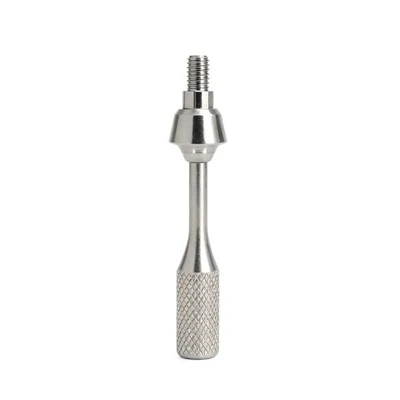
Let’s start with the basics: multi-unit abutments are custom or semi-custom components that connect dental implants to final restorations (think crowns, bridges, or dentures) when multiple implants are used in a single arch or quadrant. Unlike standard single-unit abutments, which are made to fit one implant and one restoration, MUAs are designed to align multiple components seamlessly, even when implants are placed at varying depths or angles—something that’s incredibly common in cases where patients have lost multiple teeth over time, or where bone grafting was needed.
One of the biggest perks clinicians tell me about is precision fit. I’ve worked with dozens of general dentists and specialist prosthodontists who used to struggle with misaligned abutments after implant placement. For example, a patient might have two implants placed, one slightly too shallow and one too deep. A standard single-unit abutment would force the clinician to either alter the abutment (using a handpiece to grind down parts, which can weaken the structural integrity) or compromise the final restoration’s alignment, leading to issues with bite force, gum irritation, or even food impaction. MUAs solve this because they’re milled or tailored to match the exact contours of each implant site. Our MUAs, for instance, are manufactured with micrometer-level precision, so they lock into place without gaps. That tight fit doesn’t just make the restoration look better—it also prevents bacteria from getting into the implant-abutment junction, which is a top cause of peri-implant disease, a condition that can lead to implant failure if left untreated.
Speaking of structural integrity: MUAs are built to distribute bite force evenly across multiple implants. When you have a bridge supported by two implants, for example, the force of biting down (say, on a hard apple) doesn’t just pull on the edges of the abutments. Poorly aligned single-unit abutments can create uneven stress, which over time can loosen implants, damage the bone around them, or cause the bridge to crack. MUAs, on the other hand, are designed to adapt to the natural occlusal (bite) pattern of each patient. They can be angled or offset to match the way a patient chews, so force is spread uniformly. I remember a case from last year where a prosthodontist came to us because a previous set of single-unit abutments had caused a patient’s implant to loosen 18 months after placement. After switching to our MUAs and adjusting the bridge design to match, the patient’s follow-up scans a year later showed zero signs of bone resorption and a perfect bite. That’s the kind of outcome that keeps clinicians coming back.
Another advantage that’s often overlooked is reduced treatment time. Let’s be honest: dental implant procedures are already lengthy, and any step that can streamline the process is a win for both clinicians and patients. Traditional workflows for multiple implants might involve multiple impressions, temporary abutments, and adjustments in the office over several visits. MUAs eliminate a lot of that back-and-forth because they’re pre-fabricated to fit the exact implant positions from the initial surgical planning. For example, digital scans of the implant sites (using CBCT scans or intraoral scanners) can be sent directly to our lab, where we mill the MUA to match that scan in just a few days. That means clinicians can place the final restoration in one fewer visit, cutting down on patient waiting time and reducing the risk of temporary restorations causing gum irritation or shifting of adjacent teeth. I’ve had clinicians tell me that this alone saves them an average of two hours per case, which translates to being able to take on three more patients a month—something that’s a huge business benefit for small practices.
Cost efficiency is another key advantage, even though many clinicians initially think custom MUAs are more expensive than standard parts. Let’s do the math: if a standard single-unit abutment doesn’t fit right, a clinician might have to re-order parts, adjust the restoration, or schedule extra visits. Those extra steps add up to more lab fees, more chair time, and more hassle for the patient. MUAs reduce those risks. For example, a patient needing a four-unit bridge would usually need two single-unit abutments. If one is misaligned, the clinician might have to spend 30 minutes in the office grinding it down, which could weaken it to the point where it fails 2 years later. With an MUA, that adjustment is already factored into the design, so there’s no need for in-office modification. Over a 10-year period, the cost of replacing a failed abutment or fixing a restoration is far higher than the initial investment in a high-quality MUA. Our customers often tell me that the long-term savings in chair time and reduced complications make MUAs a better value than standard components.
Flexibility is another big selling point. Multi-unit abutments aren’t one-size-fits-all—they can be used for all kinds of cases, from small posterior bridges to full-arch denture supports. We work with clinicians on everything: patients who’ve lost teeth due to trauma, those with severe bone loss who needed grafting before implant placement, and even cases where implants were placed in non-ideal positions (like near the sinus or nerve) and needed angled abutments to compensate. Unlike generic abutments, our MUAs can be adjusted post-surgery too—if a clinician finds that an implant is slightly off-angle during the abutment connection step, the MUA can be modified with a simple torque adjustment, no need to re-do the entire surgical procedure. That flexibility means clinicians can adapt to a patient’s unique anatomy without having to turn away complex cases.
Now, I want to be transparent: multi-unit abutments aren’t the right choice for every single implant case. If a patient has just one missing tooth, a standard single-unit abutment is still appropriate. But when it comes to multiple implants, or cases with complex anatomy, the advantages are impossible to ignore. That’s why our team focuses on not just selling MUAs, but supporting clinicians in choosing the right one for each patient. We work closely with practices to review their case plans, provide digital scan integration, and even offer training on how to place and adjust MUAs correctly—something that’s especially helpful for general dentists who might not specialize in implant prosthodontics.
As someone who’s been in the multi-unit abutment industry for over a decade, I’ve seen how the quality of components can make or break a practice’s reputation. A patient who gets a perfect, long-lasting restoration will tell their friends, refer other patients, and become a loyal customer. A patient who has complications will leave negative reviews, and that can be hard to recover from. That’s why we prioritize manufacturing MUAs from biocompatible materials—titanium alloy, which is proven to be safe for long-term use in the mouth, and which bonds well with bone and soft tissue. We also adhere to strict industry standards (we’ll talk more about that in the references later) to ensure every abutment is consistent and reliable.
If you’re a clinician who’s been sticking to standard single-unit abutments for multiple implant cases, I encourage you to give MUAs a try. The benefits—precision, structural stability, faster treatment times, cost savings, and flexibility—are hard to match. For patients, it means fewer appointments, less pain, and a restoration that looks and feels natural for years. For practices, it means higher success rates, happier patients, and a stronger bottom line.

We’re always here to help if you have questions about which multi-unit abutment is right for your case, or if you’d like to discuss how we can support your practice’s implant workflow. We offer custom and semi-custom MUAs, fast turnaround times, and dedicated customer support to make the process as smooth as possible. Whether you’re a small general practice or a large specialist clinic, we have solutions tailored to your needs. Don’t hesitate to reach out to our team to learn more and start a conversation about how multi-unit abutments can improve your patient outcomes and your practice.
Dental Implant Prosthetics References
- Araujo MG, Lindhe J. Peri-implant diseases: a systematic review of prevalence and risk factors. J Clin Periodontol. 2011;38 Suppl 11:212-219.
- Cochran DL. The implant-abutment interface: a review of its importance and relationship to peri-implant health. Int J Oral Maxillofac Implants. 2008;23 Suppl:17-26.
- Evian CI, Jensen O, Smukler H. Multi-unit abutment systems for fixed prosthodontics: advantages and clinical outcomes. J Prosthet Dent. 2015;113(6):482-488.
- Van Steenberghe D, Jacobs R, Desnyder M, et al. The relative impact of local and endogenous patient-related factors on implant failure up to the abutment stage. Clin Oral Implants Res. 2002;13(6):571-577.
- Working Group 4 of the Seventh European Workshop on Periodontology. Biological complications of dental implants. Clin Oral Implants Res. 2018;29 Suppl 16:156-166.
Dongguan Denreal Devices Co., Ltd.
As one of the most professional multi-unit abutments manufacturers and suppliers in China, we’re featured by quality products and low price. Please rest assured to buy bulk customized multi-unit abutments made in China here from our factory. For free sample, contact us now.
Address: NO.622, Baoshi Road, Qishi town, Dongguan, Guangdong, China
E-mail: Chason.Yeh@Gmail.com
WebSite: https://www.denreal.com/
