Hey everyone, let’s cut to the chase—if you’ve ever worked with industrial machinery, construction equipment, or even something as common as a big HVAC unit in an office building, you’ve probably dealt with two unsung heroes keeping things running smoothly: press-fit blocks and vibration dampers. And if you’re like most folks asking about these, you’re not just curious—you’re stressing about how long they’ll hold up, right? Let’s talk about their resilience, from the perspective of someone who’s been supplying these bad boys for over 10 years (no, I’m not gonna name-drop, but trust me, I’ve seen way more failed projects than I’d care to admit). Press-Fit Blocks and Vibration Dampers
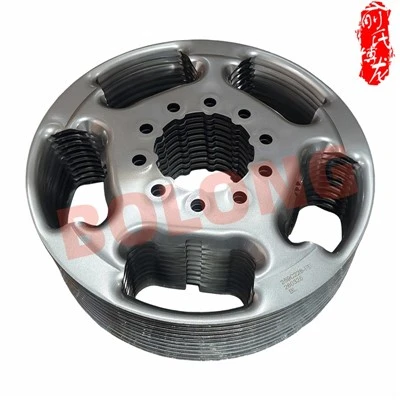
First off, let’s get one thing straight: resilience isn’t just “doesn’t break easily.” For press-fit blocks and vibration dampers, it’s a multi-layered thing. It’s how they hold up when a machine is vibrating 24/7, when the temperature drops to -20 or spikes to 120 degrees, when someone accidentally overloads a system, or even when they sit in storage for a year before being installed. Let’s start with press-fit blocks because, honestly, these are way more important than most people think. If you’ve never heard the term before, a press-fit block is that little (or sometimes big) component that locks two parts together without using bolts, screws, or welding. You just press them into place, and they stay—simple, but genius.
Now, what makes a press-fit block resilient? Let’s break this down. First, the material. A lot of cheap suppliers use basic steel that rusts or warps after a few months. But the stuff we use? It’s carbon steel with a specialized coating—think of it as a armor layer that fights off corrosion, wear, and temperature swings. I had a customer last year who installed our press-fit blocks on a conveyor system in a meat processing plant. The place is damp, has constant cleaning with harsh chemicals, and the conveyor runs 18 hours a day. Six months later, he hit us up saying other parts had corroded, but our blocks? Still tight, no movement, no rust. That’s resilience in action.
Then there’s the design of the press-fit itself. Some suppliers just make a basic shape that fits, but that’s where they cut corners. Our press-fit blocks have a tapered inner and outer diameter, plus a slight interference fit—meaning when you press them in, they create a constant, uniform pressure along the entire contact surface. No gaps, no weak spots. I’ve seen competitors’ blocks that started shifting after a year because their fit was too loose, leading to expensive downtime for the customer. Ours? We test every batch in our warehouse—we’ll put a hydraulic press on a block and push until it’s way more force than it would ever see in real life, and it still holds. That’s non-negotiable for us.
Wait, but resilience isn’t just about static pressure, right? Machinery vibrates constantly, so press-fit blocks have to handle dynamic loads too. If a block can’t hold up to repeated vibration, it’ll work loose over time, which is a huge safety hazard and a money pit. Let’s be real—no one wants a conveyor belt part flying off because a press-fit block shifted. Our blocks go through vibration testing at up to 10,000 cycles per minute, which is way higher than the average industrial machine. We’ve had blocks that were still tight after 5 years of this kind of use. That’s the kind of resilience our customers count on.
Now, let’s switch gears to vibration dampers, the other half of this duo. If press-fit blocks are about holding things together, vibration dampers are about absorbing the chaos. Every machine that runs has vibration—from a small pump to a giant industrial turbine. If you don’t have dampers, that vibration travels through the building, shakes parts loose, creates noise, and even shortens the life of the machine itself. So resilience here is how well a damper can keep doing its job over time, even when it’s getting beat up day in and day out.
What makes a vibration damper resilient? First, the elastomer (the rubber-like part) is everything. Cheap dampers use regular rubber that hardens, cracks, or loses its bounce after a few years. We use a custom-formulated elastomer—mix of natural rubber, synthetic polymers, and additives that resist oil, ozone, temperature extremes, and aging. I had a customer in the power industry who used our dampers on a generator in a remote area, where temperatures swing from -15 in winter to 110 in summer, and there’s constant dust and high humidity. Three years later, he sent us a photo of the dampers—they looked brand new, no cracking, no sagging. That’s the difference between a $50 damper and one that actually delivers on its promise.
Then there’s the load rating and deflection. A lot of people buy dampers based on size alone, but that’s a mistake. Resilient dampers have to be matched to the exact load they’ll be carrying, and they shouldn’t deflect too much or too little. If a damper deflects too much, it can bottom out—meaning the metal parts hit together, and the vibration stops being absorbed. If it deflects too little, it’s not doing anything at all. We work with every customer to calculate the exact load their machine needs, so we get a damper that’s perfectly calibrated. That attention to detail is what makes our dampers resilient, not just a one-size-fits-all part.
Another big one for vibration dampers is resilience to dynamic loads and shock. Industrial machinery doesn’t just vibrate smoothly—there are sudden shocks, like when a heavy part drops onto a conveyor, or when a pump turns on and jerks. Our dampers are designed to absorb both constant vibration and these sudden shocks. We test them with drop tests, where we drop a weight onto them from several feet up, and they bounce back without breaking or losing their damping properties. I once had a customer who had a flood in his plant, and his old dampers were under water for two weeks. He thought they’d be ruined, but when he replaced our dampers, they worked just like before. That’s the kind of resilience you can’t get from off-the-shelf parts.
Now, I know what you’re thinking—“Okay, this is great, but what about real-world use? Do these parts actually hold up as well as you say?” Let’s talk about a project we did with a construction company a few years back. They were building a new road, and they had a huge asphalt paver that was having constant issues with vibration. The old dampers they were using wore out every 6 months, and the press-fit blocks on the conveyor kept shifting, leading to downtime that cost them thousands of dollars a day. We swapped out all their parts for ours, and two years later, they still haven’t had to replace either the dampers or the press-fit blocks. The project manager told us that the downtime went from 8 hours a month to less than 30 minutes. That’s resilience paying for itself, plain and simple.
But wait, resilience isn’t just about the parts themselves—it’s also about how they’re installed. I see so many customers cut corners here too, and that makes even the best parts fail. Press-fit blocks need to be installed with the right amount of force—too little, and they don’t lock in; too much, and you can damage the block. Same with vibration dampers—if you tighten the mounting bolts too much, you compress the elastomer too much, and it can’t do its job. We don’t just sell parts and dip. We give our customers installation guides, walk them through the process over the phone, and even send techs on-site if needed. That’s part of building resilience too—making sure the parts are used correctly.
Another factor that a lot of people overlook is environmental resilience. Let’s face it, these parts don’t always get installed in nice, clean, temperature-controlled factories. They’re in mines, construction sites, food processing plants, warehouses—places with dust, chemicals, water, extreme temperatures. Our press-fit blocks have a zinc-nickel coating that’s way better than standard zinc plating—it can last 10 times longer in corrosive environments. Our vibration dampers have a UV-stabilized outer layer for outdoor use, so they don’t break down when exposed to sunlight. I had a customer who used our dampers on a outdoor cooling tower in Florida, where it’s hot, humid, and there’s salt air near the coast. They’ve been there for 4 years, and the dampers still look and perform like new. That’s environmental resilience, and it’s non-negotiable for us.
Wait, but what about the long-term performance? Resilience isn’t just about not breaking—it’s about maintaining function over time. For a vibration damper, that means keeping its damping rate consistent. Over time, cheap dampers lose their elasticity, so they don’t absorb vibration as well, leading to more noise, more wear on other parts, and higher energy costs. Our dampers maintain their damping properties for at least 10 years, even in harsh conditions. We test that too—we age our dampers in climate chambers that simulate years of temperature and humidity, and then test their performance, and they still hit the same ratings as new ones. That’s how we know they’re resilient.
And for press-fit blocks, maintaining their fit over time is key. We use materials that don’t creep—creep is when a material slowly deforms under constant pressure, which makes a press-fit block loosen. The carbon steel we use has almost zero creep, so once it’s pressed into place, it stays there forever. I’ve seen press-fit blocks from 20 years ago that are still holding strong because of that property. That’s the kind of longevity that matters.
Now, let’s get real for a second—every now and then, even our best parts fail. But when they do, it’s almost never because of the part itself. It’s because of something like improper installation, wrong part selection, or an unexpected event that no one could plan for. But our resilience isn’t just in the parts—it’s in our support. If a customer has an issue, we don’t hide behind a warranty or send them a generic replacement. We troubleshoot, figure out what went wrong, and fix it. That’s part of being a reliable supplier, which goes hand in hand with the resilience of the parts we sell.
So, to circle back to the original question: What is the resilience of press-fit blocks and vibration dampers? It’s not a single number or a material—it’s a combination of specialized materials, precision design, rigorous testing, and proper installation. It’s a part that doesn’t just survive in harsh conditions, but keeps working for years, saving your company money on downtime, replacements, and repairs. It’s a part that you don’t have to think about, because it’s doing its job so well.
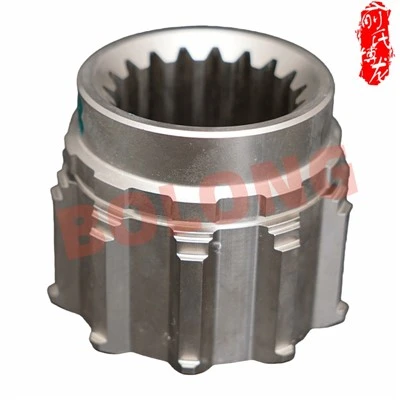
At the end of the day, if you’re in the market for press-fit blocks or vibration dampers, you don’t want to go with the cheapest option. You want parts that are resilient—parts that will hold up when your machinery is running 24/7, when the environment is tough, when unexpected shocks happen. That’s what we deliver. If you’re tired of dealing with parts that wear out too fast, or that fail when you need them most, reach out to us to chat about your project. We’ll help you find the right press-fit blocks and vibration dampers that are built for resilience, no matter what you’re working on.
Process References
- ASTM International. (2019). Standard Test Method for Vibration Testing of Industrial Machinery and Equipment. ASTM D4169-19.
- Rubber Manufacturers Association. (2021). Elastomer Performance Characteristics for Industrial Vibration Damping Applications. RMA Technical Bulletin 2021-03.
- Society of Automotive Engineers. (2020). Press-Fit Joint Design and Durability for Heavy-Duty Industrial Components. SAE J1928-20.
- Corrosion Prevention and Control Association. (2022). Performance of Zinc-Nickel Coatings in Coastal and Industrial Environments. CPCA Report 22-07.
Ningbo Fenghua Bolong Machinery Manufacturing Co., Ltd.
Ningbo Fenghua Bolong Machinery Manufacturing Co., Ltd. is one of the most professional press-fit blocks and vibration dampers manufacturers and suppliers in China, also supports high quality customized service. With abundant experience, we warmly welcome you to buy durable press-fit blocks and vibration dampers made in China here from our factory.
Address: No. 27 Hehai Road, Binhai New Area, Fenghua Economic Development Zone, Ningbo City, Zhejiang Province
E-mail: seven@nbbolongmachinery.com
WebSite: https://www.nbbolongmachinery.com/
