Hey there! I’m a supplier of perforated metal, and today I wanna chat about how perforated metal affects light transmission. It’s a pretty cool topic, especially when you think about all the different ways we use perforated metal in our daily lives. Perforated Metal

Understanding Perforated Metal Basics
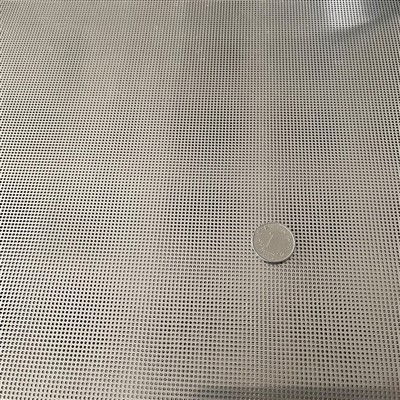
First off, let’s talk a bit about what perforated metal is. It’s basically a sheet of metal that has holes punched or drilled into it. These holes can come in all sorts of shapes – circles, squares, rectangles, and even some funky custom shapes. We use different metals too, like stainless steel, aluminum, and mild steel.
The reason we make perforated metal with holes is for a bunch of different purposes. It could be for filtering, like in industrial settings where we need to separate different materials. Or it could be for decorative reasons, adding a unique look to buildings or furniture. And of course, one of the key aspects we’ll focus on today is its effect on light transmission.
Factors Affecting Light Transmission Through Perforated Metal
There are a few main things that determine how much light can pass through perforated metal.
Hole Size
The size of the holes is a huge factor. If you’ve got big holes, more light can get through. It’s pretty simple – a larger hole means there’s less metal blocking the light. For example, if you have a perforated metal sheet with half – inch diameter holes, it’s gonna let in a lot more light compared to one with quarter – inch holes.
Let’s say you’re using perforated metal for a room divider. A sheet with larger holes will create a more open and airy feel because more light can spread throughout the space. On the other hand, smaller holes can give a more diffused and softer light effect.
Hole Pattern
The pattern of the holes also matters. There are different patterns like a staggered pattern or a straight – line pattern. In a staggered pattern, the holes are arranged in an alternating way. This can cause the light to scatter more as it passes through the metal.
Imagine a perforated metal ceiling with a staggered hole pattern. The light from the fixtures above will bounce off the metal in different directions, creating a kind of ambient lighting effect. A straight – line pattern, on the other hand, might let the light pass through in a more direct way, depending on how the light source is positioned.
Metal Thickness
The thickness of the metal sheet plays a role too. A thicker metal sheet means the light has to travel through more material, which can reduce the amount of light that makes it to the other side. It’s like shining a flashlight through a thick piece of paper versus a thin one – the thick paper blocks more light.
When we’re talking about light transmission, a thinner perforated metal sheet is generally better if you want a lot of light to pass through. But thicker sheets have their advantages too, like being more durable and stronger, which might be important in certain applications.
Applications and Light Transmission Effects
Architectural Applications
In architecture, perforated metal is used in all sorts of ways. For facades, it can be both functional and aesthetic. A perforated metal facade can control the amount of sunlight that enters a building. If the building is in a sunny area, we can choose a perforated metal with smaller holes and a denser pattern to reduce the amount of direct sunlight, which helps in keeping the interior cool.
At the same time, it still allows some light to filter through, creating a nice, diffused light inside the building. This not only makes the space more comfortable but also adds a unique look to the building’s exterior.
For interior partitions, perforated metal can create a sense of separation while still allowing light to pass between different areas. For example, in an office space, a perforated metal partition can divide work areas but won’t make the space feel cramped because the light can move freely.
Lighting Fixtures
Perforated metal is also commonly used in lighting fixtures. When used in a lamp shade, it can transform the light from the bulb. If the holes are small, it will create a soft, glowing effect. The light is diffused as it passes through the tiny holes, making it less harsh on the eyes.
On the other hand, if the holes are large and the pattern is well – designed, it can create a more dramatic lighting effect. The light can project through the holes onto the walls, creating interesting patterns.
Testing and Measuring Light Transmission
We often test the light – transmission properties of our perforated metal products. One way to do this is by using a light meter. We set up a test area with a light source on one side of the perforated metal sheet and the light meter on the other side.
We measure the amount of light that reaches the light meter on the far side. By comparing this measurement to the amount of light emitted by the source, we can calculate the percentage of light that is transmitted through the perforated metal.
We also do visual inspections. We look at how the light behaves in different real – world scenarios. For example, we might set up a mock – up room with the perforated metal installed as a room divider and see how the light spreads throughout the space.
Customizing Perforated Metal for Light Transmission Needs
One of the great things about being a perforated metal supplier is that we can customize the products to meet our customers’ specific needs. If a customer wants a lot of light to pass through, we can increase the hole size and reduce the metal thickness.
If they’re looking for a more diffused light effect, we can choose a smaller hole size and a more complex hole pattern. We can also work with different metals to achieve the desired look and performance. For example, aluminum is a lightweight option that can still be very effective in light transmission, while stainless steel is more durable and can be a good choice for outdoor applications.
Conclusion
So, as you can see, perforated metal has a really interesting impact on light transmission. Whether it’s in architecture, lighting fixtures, or other applications, the hole size, pattern, and metal thickness all play important roles in determining how much and what kind of light gets through.
Decorative Expanded Metal If you’re working on a project that involves light and perforated metal, I’d love to help. We have a wide range of products and the expertise to customize them to your exact requirements. Whether you need a large – scale architectural install or a small – scale lighting project, we’re here to assist. Reach out to start a conversation, and let’s figure out the perfect perforated metal solution for your needs.
References
- "Perforated Metal Handbook" by ABC Publishing
- "Lighting Design Principles" by XYZ Press
- Industry reports on perforated metal applications in architecture and lighting
Anping Yilida Metal Wire Mesh Co., Ltd.
Anping Yilida Metal Wire Mesh Co., Ltd. is one of the most reliable perforated metal manufacturers and suppliers in China, also supports customized service. Please feel free to buy bulk high quality perforated metal made in China here from our factory.
Address: Wire Mesh Development Zone, Anping, Hebei Province, China
E-mail: sales@wiremesh-yg.cn
WebSite: https://www.yilidametal.com/
