In the realm of machining, the milling machine stands as a cornerstone, a versatile tool capable of transforming raw materials into precision components. Among its many accessories, the vise plays a pivotal role, acting as the steadfast anchor that holds workpieces in place during the milling process. As a leading milling machine supplier, I’ve witnessed firsthand the indispensable nature of the vise and its profound impact on the efficiency and quality of machining operations. In this blog, I’ll delve into the role of the vise in a milling machine, exploring its functions, types, and the factors to consider when selecting the right vise for your needs. Milling Machine

The Fundamental Role of the Vise in Milling
At its core, the primary function of a vise in a milling machine is to securely hold the workpiece in place. This stability is crucial for achieving accurate and consistent machining results. When a workpiece is properly clamped in a vise, it remains stationary, allowing the milling cutter to make precise cuts without any unwanted movement. This not only ensures the dimensional accuracy of the finished part but also enhances the surface finish, reducing the need for additional finishing operations.
In addition to providing stability, the vise also plays a key role in positioning the workpiece. By adjusting the vise’s jaws, operators can align the workpiece precisely with the milling cutter, ensuring that the cuts are made at the correct angle and depth. This level of precision is essential for producing complex parts with tight tolerances, such as those found in the aerospace, automotive, and medical industries.
Types of Vises for Milling Machines
There are several types of vises available for milling machines, each designed to meet specific machining requirements. The most common types include:
- Plain Vises: These are the simplest and most widely used vises in milling operations. They feature a fixed jaw and a movable jaw, which are tightened using a screw mechanism. Plain vises are suitable for a wide range of applications, from general-purpose milling to precision machining.
- Swivel Vises: Swivel vises are similar to plain vises, but they have the added ability to rotate 360 degrees. This allows operators to position the workpiece at different angles, making it easier to machine complex shapes and contours. Swivel vises are commonly used in applications where multiple sides of the workpiece need to be machined.
- Angle Vises: Angle vises are designed to hold workpieces at a specific angle. They are typically used in applications where angled cuts need to be made, such as in the production of bevel gears or chamfered edges. Angle vises can be adjusted to different angles, providing flexibility in machining operations.
- Dividing Heads: Dividing heads are specialized vises that are used for indexing and dividing workpieces into equal parts. They are commonly used in applications where precise angular positioning is required, such as in the production of gears, splines, and other precision components. Dividing heads can be manual or motorized, depending on the specific requirements of the application.
Factors to Consider When Selecting a Vise
When selecting a vise for a milling machine, there are several factors to consider to ensure that you choose the right one for your needs. These factors include:
- Workpiece Size and Shape: The size and shape of the workpiece will determine the size and type of vise that you need. For larger workpieces, you may need a vise with a wider jaw opening and a higher clamping force. For smaller workpieces, a smaller vise may be sufficient.
- Machining Requirements: The type of machining operations that you will be performing will also influence your choice of vise. For example, if you will be performing precision machining, you may need a vise with a high degree of accuracy and repeatability. If you will be performing heavy-duty machining, you may need a vise with a higher clamping force and a more robust construction.
- Budget: The cost of the vise is also an important consideration. Vises can range in price from a few hundred dollars to several thousand dollars, depending on the type, size, and features. It’s important to choose a vise that fits your budget while still meeting your machining requirements.
- Compatibility: The vise must be compatible with your milling machine. This includes ensuring that the vise’s mounting holes match the mounting pattern on your milling machine’s table and that the vise’s clamping force is sufficient for the size and weight of the workpiece.
The Importance of Quality Vises
Investing in a high-quality vise is essential for achieving optimal machining results. A quality vise will provide greater stability, accuracy, and repeatability, which will ultimately lead to higher productivity and better-quality parts. In addition, a quality vise will be more durable and require less maintenance, which will save you time and money in the long run.
As a milling machine supplier, I understand the importance of providing our customers with high-quality vises that meet their specific needs. That’s why we offer a wide range of vises from leading manufacturers, including plain vises, swivel vises, angle vises, and dividing heads. Our vises are designed to provide maximum stability, accuracy, and repeatability, ensuring that you can achieve the best possible machining results.
Conclusion
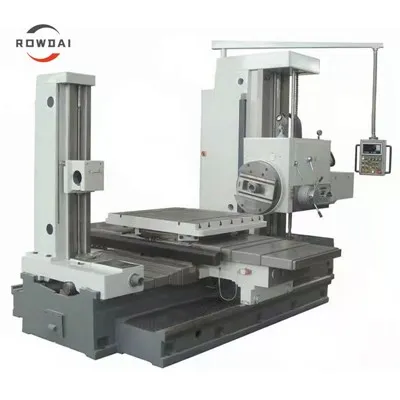
In conclusion, the vise plays a crucial role in a milling machine, providing the stability and precision needed to produce high-quality parts. By understanding the functions, types, and factors to consider when selecting a vise, you can choose the right one for your needs and ensure that your machining operations are efficient and effective.
Vertical Machining Center If you’re in the market for a milling machine or a vise, I encourage you to contact us to discuss your specific requirements. Our team of experts is here to help you choose the right equipment for your needs and provide you with the support and service you need to succeed.
References
- "Machining Handbook," 31st Edition, Industrial Press Inc.
- "Modern Manufacturing Technology," 6th Edition, John Wiley & Sons, Inc.
- "Fundamentals of Machining and Machine Tools," 3rd Edition, CRC Press.
Henan Rowdai Machinery Equipment Co., Ltd.
As one of the most professional milling machine manufacturers in China, we’re featured by quality products and good price. Please rest assured to buy high-grade milling machine for sale here from our factory. If you have any enquiry about cooperation, please feel free to email us.
Address: Building 9, E-Commerce Industrial Park, High-Tech Zone, Zhengzhou, Henan, China
E-mail: rowdai@rowdai.com
WebSite: https://www.rowdai.com/
